If your sales team's goal is more live conversations with the right buyers, but you are stuck doing the work that happens before a conversation even starts - manual research, list building, sequencing, chasing down data, logging calls, you are in the right place.
The sales engagement platforms that actually move the needle today go well beyond sequences. They use AI to find and prioritize the right prospects, reach them across every channel, and then give reps the infrastructure and intelligence to turn those outreach attempts into real conversations that convert. The best ones even close the loop with your CRM, so nothing falls through the cracks.
This blog covers 30+ sales engagement platform tools- from AI-powered outreach and multichannel automation to dialing technology, coaching, and CRM integrations, so you can pick the stack that helps your team stop clicking and start closing.
Let's get into it.
What Is a Sales Engagement Platform?
A sales engagement platform that helps sales teams systematically reach prospects across multiple channels - email, phone, SMS, and track every interaction to optimize outreach over time.
The best modern SEPs go beyond sequencing. They use AI Agents to handle research, personalization, list building, next-step execution, and call coaching, so reps spend less time on overhead and more time in live conversations.
Sales Engagement Software – Key Features to Consider
| Capability | Why It Matters | Tools That Excel Here |
|---|---|---|
| List Building | Finding the right accounts and contacts from day one determines pipeline quality. | Klenty, Apollo, Instantly |
| Data Enrichment | Valid emails and phone numbers are table stakes; stale data kills deliverability. | Klenty, Apollo, Lemlist |
| Account Research | Personalized outreach requires context about each account before the first touch. | Klenty, Outreach, Salesloft |
| Prospect Research | Knowing the individual rep or buyer's priorities converts generic templates into real conversations. | Klenty, Gong, Salesloft |
| Multi-Channel Outreach | Buyers don't live in email - modern SEPs need email, phone, SMS, etc. | Klenty, Outreach, Salesloft, Reply.io |
| Dialing Infrastructure | Connect rates drive pipeline - the right infrastructure is the difference between 1% and 8%+ connect rates. | Klenty |
| Warm Follow-Up | Prospects who don't reply the first time are not dead - timed, contextual follow-ups convert them. | Klenty, Outreach, Salesloft |
| Next Step Execution | Every call ends with a next step - AI that auto-schedules and auto-tasks eliminates drop-off. | Klenty, Outreach |
| Nurture | Accounts not ready now need long-term nurturing sequences that re-route based on behavior. | Klenty, Salesloft |
| Reporting | Activity and outcome data is useless unless it drives better decisions - coaching insights matter most. | Klenty, Gong, Outreach, Salesloft |
1. Klenty
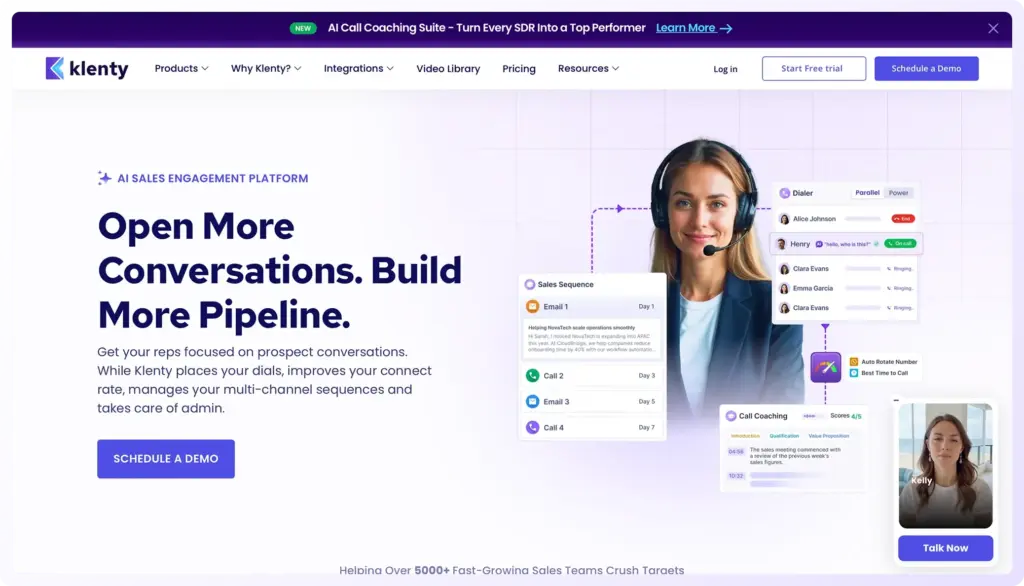
Klenty is an AI-powered sales engagement platform built around one goal: getting more reps into more live conversations, faster. It's the only SEP with a full proprietary dialing infrastructure purpose-built to solve the 1–3% industry-average dial-to-connect problem. Paired with agentic cadences, AI-built prospect lists, and a full call coaching suite, Klenty covers every step of the outbound motion without switching tools.
Pillar 1: Multichannel Outreach, Sequences, and AI Agents
Klenty runs full multichannel outreach across email, phone, and SMS. But what separates it from legacy SEPs is its AI agent layer; reps are no longer writing cadences from scratch or manually researching accounts.
- Agentic Cadences: AI creates a fully personalized, multi-step cadence for each prospect - writes emails, executes account research, and customizes every step. Reps review and approve. Every account gets a unique engagement plan tailored to its context, not a copy-pasted template.
- AI List Builder: Build ICP prospect lists with plain-English prompts - "Find B2B SaaS companies hiring SDRs, expanding in APAC, using Salesforce". Taps into 700M+ contacts, AI scores each account on fit and engagement likelihood, and enriches the list with valid emails and phone numbers.
- AI Account Research: AI researches each account before outreach begins, so every message is grounded in real, current context, not generic assumptions.
- AI Playbooks: Dynamic cadence routing that shifts leads into new sequences based on their behavior. High-intent prospects get accelerated attention; unresponsive accounts move into long-term nurture until their next buying cycle opens.
- Personalization Suite: Liquid templates, video personalization, and AI-powered insights pulled from LinkedIn activity, company news, and tech stack data. Reps choose the data point; AI drafts a true 1:1 message.
Pillar 2: Dialing Infrastructure, Connect AI, and Call Coaching Suite
This is where Klenty separates from every other SEP on this list. Klenty's Connect AI is a proprietary 4-step dialing infrastructure built to structurally address every reason calls go unanswered.
Dialers:
- AI Parallel Dialer: Dials up to 5 prospects simultaneously, connects the rep to the first person who answers - no time wasted on ringing, voicemail, or dead numbers. Built for high-velocity outbound targeting large lists. Executes up to 350 calls per hour.
- AI Power Dialer: Works sequentially, auto-advancing to the next contact the moment a call ends. Distraction-free and maximized for talk time.
- CRM Dialer: Launch calls directly from within Salesforce, HubSpot, Pipedrive, or Zoho - all prospect details and call history visible in a single view, zero tab-switching.
- Click-to-Call Dialer: Initiate a call from any CRM record or active sales sequence for high-context, timely follow-ups.
Connect AI -
Pre-Dial:
- Number Inventory: AI provisions a dedicated pool of healthy call-from numbers for each rep. Numbers are never shared across the team, organized by geography and territory, it eliminates carrier spam-flagging at the root.
- Call Timing Selection: AI analyzes past call connect data, email open times, and prospect timezone to call each prospect at the exact moment they're most likely to pick up, not just timezone-batched guesses.
- Phone Intent: Tracks missed incoming calls, multi-channel engagement signals, and recent outbound interactions to surface prospects with the highest pickup probability as a priority dial list.
During Dial:
- Number Auto-Rotation: AI automatically rotates numbers based on call-from number health, historical pickup behavior, and call volume thresholds. Volume-based rotation switches after a dial limit; pickup-based rotation changes numbers when a prospect didn't answer a prior attempt.
- Local Dialing: AI matches the right local area code to each prospect's region - familiar numbers get answered significantly more often.
- Call Throttling: Managers set maximum dials from a specific number, total daily dial limits per rep, and global dialing caps - preventing carrier-triggered spam flags automatically.
Post-Dial:
- Number Health Reporting: Live dashboard tracking pickup rate, hangup rate, voicemail rate, and average call duration. Underperforming numbers are automatically pulled from rotation and replaced.
- 1-Click Voicemail Drop: Pre-recorded personalized voicemails dropped with a single click - extends call duration (a carrier trust signal), improves callback rates, and keeps dialing speed high.
Call Coaching Suite -
- Rep 360°: A holistic view of each rep - total calls made, calls connected, meetings booked, call scores across talk track areas (opener, elevator pitch, discovery, closing), topics surfacing most often, how objections are handled, and activity heatmaps. Managers walk into 1:1s fully prepared.
- AI Battlecards: The moment a prospect raises a recurring objection or question, Klenty automatically surfaces the right response - competitive intel, objection-handling frameworks, product details. Reps never pause, guess, or improvise mid-call.
- Salesfloor: Managers see every rep on the team in real time - who's dialing, who's on a live call, what's being said. Silent listening with live in-ear coaching while the prospect is still on the line. In-the-moment guidance saves deals before they fall apart.
- AI Call Scorecard: Every call is automatically scored against the prescribed talk track. Flags where reps deviate. No transcripts to dig through - managers review scores and leave coaching notes in seconds.
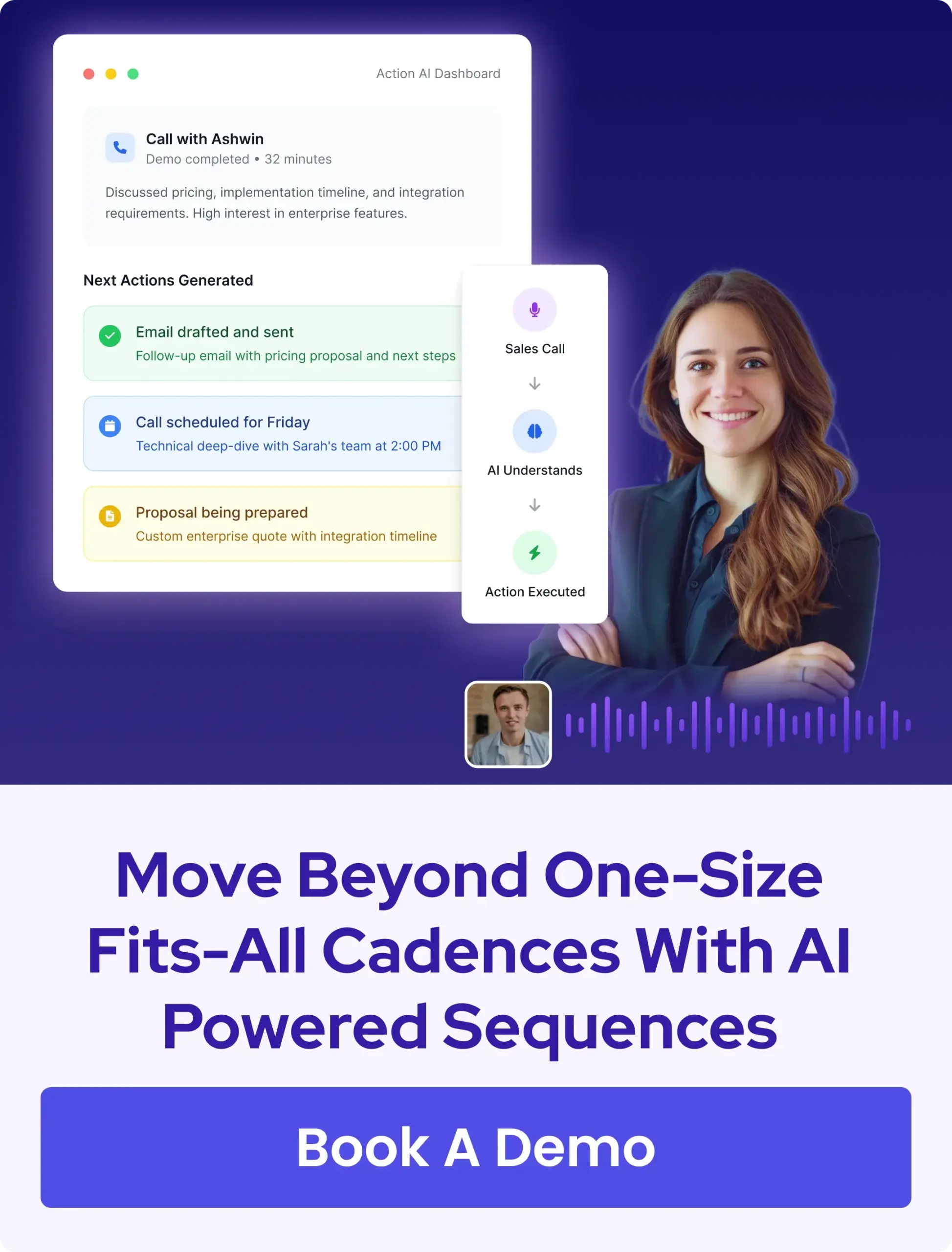
Action AI - Listens to sales conversations, understands what was discussed, and automatically generates the next action. Prospect says, "Call me Friday at 3 pm." Action AI schedules it. Prospect says, "Reach out next week." Action AI selects the smart default follow-up window. Prospect says, "Talk to Sarah, our Head of Procurement." Action AI finds Sarah, adds her to the account, and generates the task. Reps stay focused on dialing.
AI Voicemail Detection - Instantly detects voicemail and skips it automatically - outreach continues even when prospects don't pick up.
Pillar 3: CRM Integration
- Deep 2-way sync with Salesforce, HubSpot, Pipedrive, and Zoho
- All call activity, voicemail drops, outcomes, and AI-generated next steps sync automatically - zero manual data entry
- CRM Dialer puts all prospect context inside the CRM view - no switching tabs, no data gaps
Key Features:
- Agentic Cadences with per-account personalization
- AI List Builder (700M+ contacts)
- AI Parallel Dialer (up to 350 calls/hour)
- Connect AI dialing infrastructure (4-step)
- AI Battlecards and Salesfloor live coaching
- Action AI for automated next-step execution
- Full multichannel: email, phone, SMS
- Native 2-way CRM sync (Salesforce, HubSpot, Pipedrive, Zoho)
Pros:
- Only SEP with a dedicated dialing infrastructure built to structurally improve connect rates - not just dial volume
- End-to-end platform covering list building through call coaching - no stitched-together tools
- Agentic cadences mean every account gets a unique engagement plan, not copy-pasted sequences
- Action AI eliminates post-call admin so reps stay in the dialing flow
Best for - SDR teams who want more live conversations and more pipeline from outbound
2. Outreach
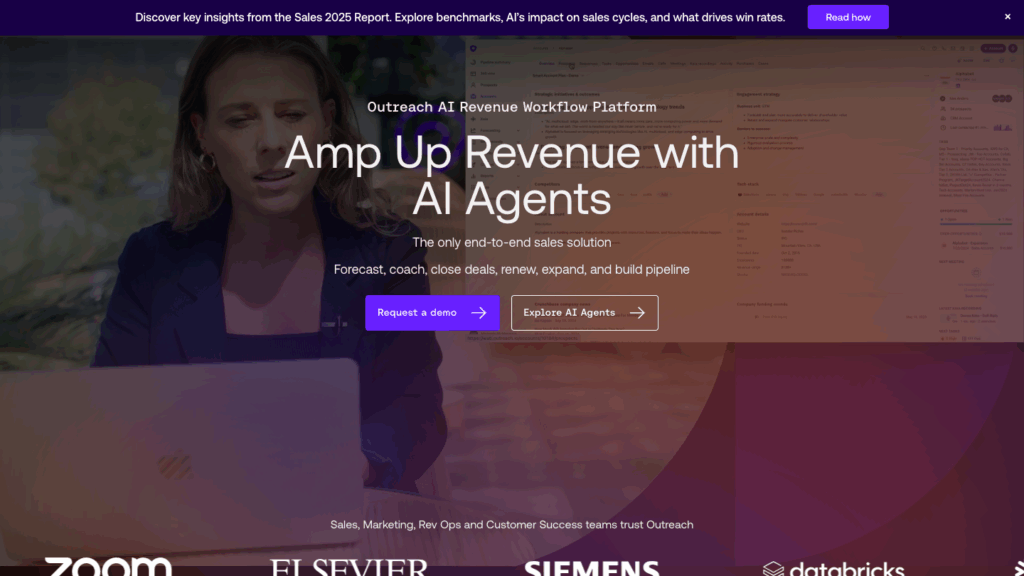
Outreach (now Outreach.ai) positions itself as an AI Revenue Workflow platform - covering sales engagement, deal management, forecasting, and conversation intelligence in one platform. It's purpose-built for enterprise teams with complex, multi-stakeholder selling motions.
Key Features:
- AI Agents for seller research and personalization
- Multi-channel sequences (email, phone, LinkedIn)
- Real-time conversation intelligence with AI battlecards
- Deal health scoring and pipeline management
Pros:
- Strong enterprise-grade analytics and forecasting layer
- AI-assisted deal risk identification and buyer sentiment scoring
- Deep pipeline visibility for sales managers and RevOps
- Real-time conversation guidance during calls
Cons:
- List building and account research still largely depend on manual rep effort or third-party data tools
- Sequences tend to be standardized unless reps invest significant time in personalization
- Pricing is custom with no published rates - can be expensive for mid-market teams
- Heavy platform with a steeper onboarding curve for SMBs
Pricing: Custom quote required across three tiers: Amplify Core, Amplify Plus, and Amplify Pro. No published pricing.
Best for - Enterprise revenue teams with complex, multi-stakeholder selling motions
3. Salesloft
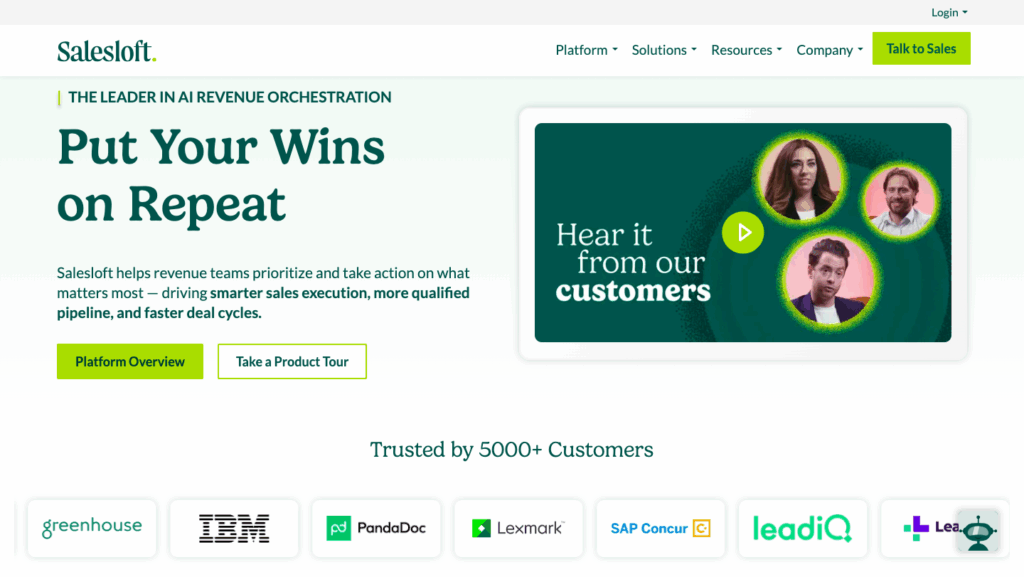
Salesloft calls itself a Revenue Orchestration Platform - combining cadence management, conversation intelligence, deal management, and forecasting. Its Conductor AI layer is embedded across the platform, prioritizing seller actions based on buyer signals.
Key Features:
- Cadence management with multi-channel sequences
- Rhythm module for buyer-signal-based task prioritization
- Conversations module for call recording and coaching insights
- Deals and Forecast modules for pipeline management
Pros:
- G2 Enterprise Leader for 17 consecutive quarters in Sales Engagement
- Conductor AI prioritizes rep workflows based on real buyer intent signals
- Forecast and deal management layers make it a strong RevOps platform
- Drift integration adds AI chat for website lead capture
Cons:
- Core cadences are not dynamically adaptive without manual updates or the paid Rhythm add-on
- Limited native AI list building - teams need Apollo or a separate data provider
- Premium product at a premium price point - less accessible for smaller teams
- Personalization at scale still requires significant rep investment
Pricing: Custom quote only.
Best for - Enterprise teams needing revenue orchestration with AI-prioritized rep workflows
4. Reply.io
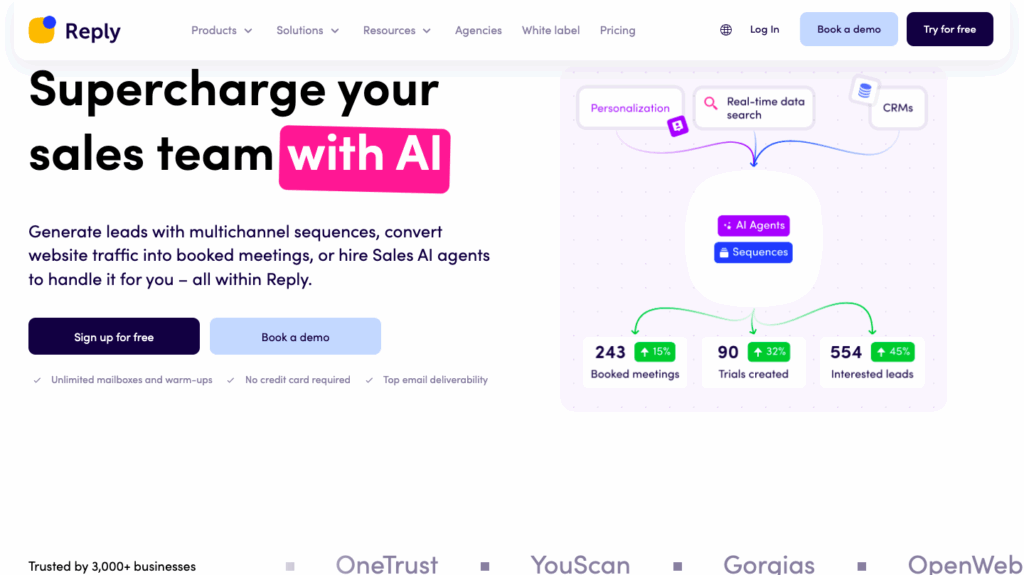
Reply.io is a multichannel sales engagement platform with a broad feature set at a more accessible price point. It has been investing in AI-assisted email writing and inbox management, making it popular with SMBs and agencies.
Key Features:
- Multichannel sequences (email, phone, LinkedIn, WhatsApp)
- AI-assisted email writing and reply handling
- Engagement tracking and inbox management
- Jason AI - an AI SDR for automated outreach and reply management
Pros:
- Accessible entry price with broad channel coverage
- Jason AI handles automated prospect replies, reducing SDR overhead
- Good option for smaller teams or agencies managing multiple clients
- Reasonably fast to set up and launch
Cons:
- Lacks account-level prioritization and AI-driven list building
- Cadences don't dynamically adapt to prospect behavior without manual setup
- Dialing infrastructure is basic compared to dedicated dialing platforms
- Less robust analytics and coaching tools than enterprise alternatives
Pricing: Starts around $49/user/month (varies by plan). Custom pricing for enterprise.
Best for - Smaller teams and agencies managing multichannel outreach at an accessible price
5. Outplay
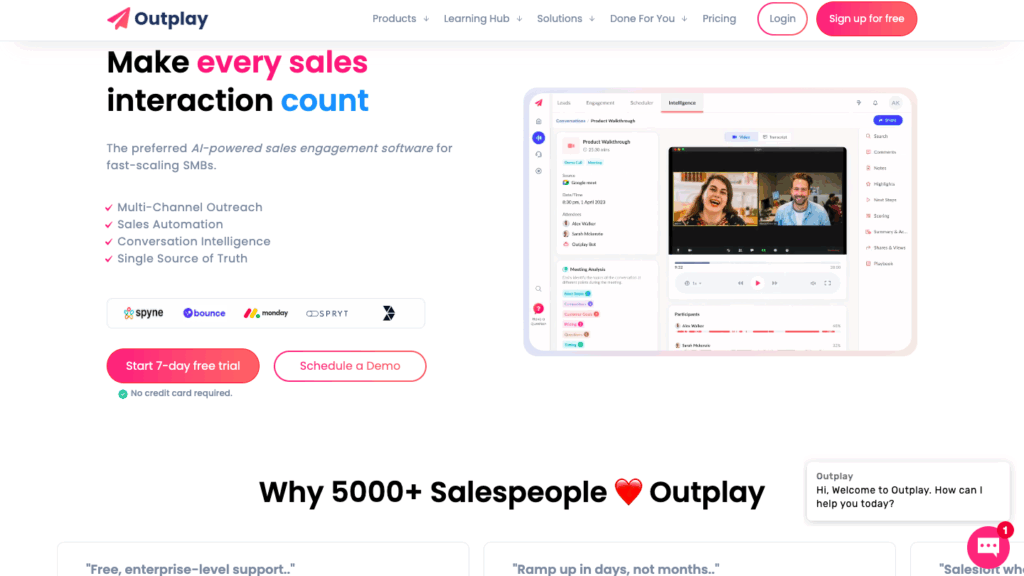
Outplay is a multi-channel sales engagement platform designed for fast-growing sales teams. It positions itself as a cost-effective alternative to Outreach and Salesloft with solid core features.
Key Features:
- Multi-channel sequences (email, phone, SMS, LinkedIn, WhatsApp, Twitter)
- AI-assisted playbooks and engagement tracking
- Meeting booking with calendar integration
- Conversation intelligence and call recording
Pros:
- Strong channel coverage, including WhatsApp and Twitter
- More affordable than enterprise alternatives
- Solid meeting-booking and follow-up automation
- Responsive customer support
Cons:
- Reps must manage research, personalization, and sequencing decisions manually
- AI features are assist-level - not agentic
- Analytics and coaching depth is limited compared to Klenty or Salesloft
- Smaller integration ecosystem
Pricing: Custom pricing.
Best for - Fast-growing sales teams wanting solid multichannel coverage at a lower cost
6. Apollo
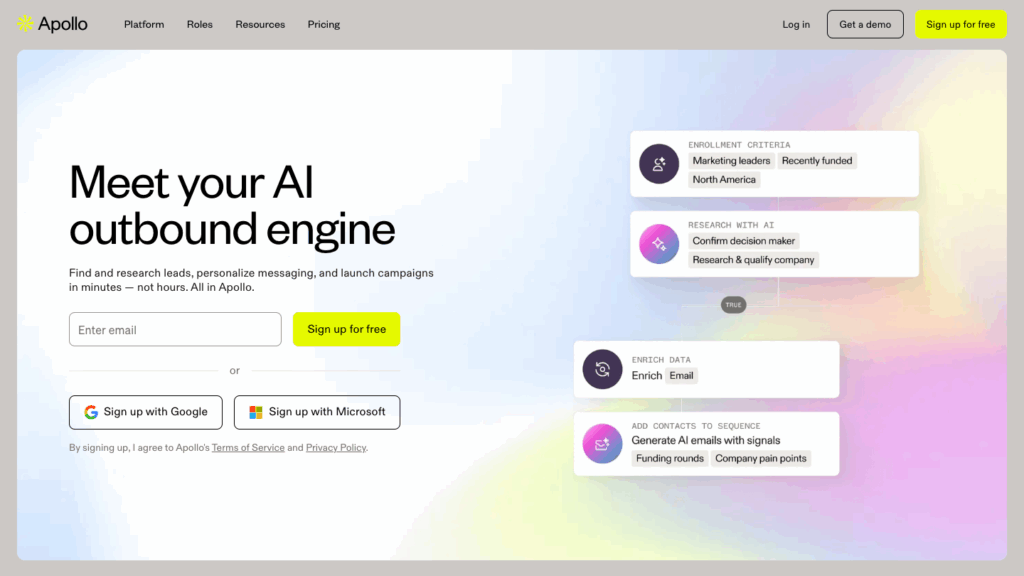
Apollo is one of the most widely used platforms in B2B sales, leading with a 230M+ contact database and building out an increasingly capable sales engagement layer. It's a strong choice for teams that want data and sequences in one tool.
Key Features:
- 230M+ verified B2B contacts with filtering and intent data
- AI-powered multi-touch sequences (email, phone, tasks)
- AI Parallel Dialer (100+ prospects per hour)
- AI-assisted email personalization and templates
- Email deliverability scoring (SPF, DKIM, DMARC)
Pros:
- Strongest database depth at the price point - great for teams building lists natively
- Free-forever starter tier makes it accessible for early-stage teams
- All-in-one data + sequencing reduces tool sprawl
- Good A/B testing and deliverability tools
Cons:
- Sequences are template-driven - targeting and message variation still rely on rep effort
- Call coaching and conversation intelligence are limited vs. dedicated SEPs
- Personalization at scale requires manual work or third-party AI tools
- Dialing infrastructure doesn't match Klenty's Connect AI in terms of connect rate optimization
Pricing: Paid plans start around $49/user/month (Basic). Professional and Organization tiers available at higher prices.
Best for - Teams that want a large B2B contact database and sequencing in one tool
7. Snov.io
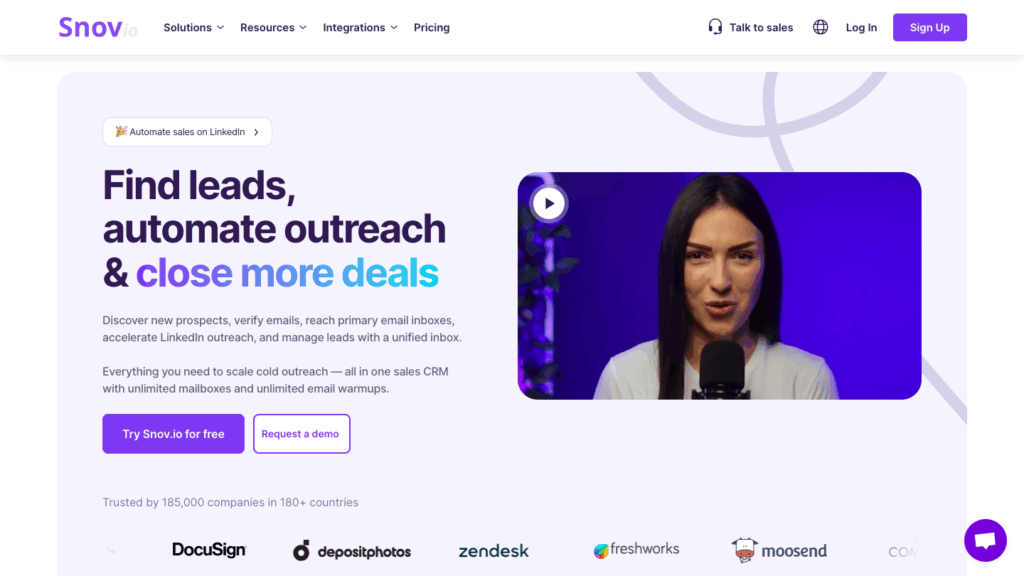
Snov.io is a prospecting and outreach platform that combines a B2B database with email drip sequences and LinkedIn automation. Popular with small teams and startups for its simplicity and price.
Key Features:
- B2B lead database with email finder and verifier
- Conditional and trigger-based email flows
- LinkedIn prospecting via Chrome extension
- Email warm-up and deliverability tracking
Pros:
- Affordable all-in-one tool for early-stage teams
- Easy to set up and use without technical knowledge
- Combined database + outreach reduces external tool dependencies
Cons:
- Sequences require significant manual setup for each campaign
- Not adaptive at the account level — one-size-fits-all flow logic
- Limited multichannel beyond email and LinkedIn
- No AI list building or account research capabilities
Pricing: Free plan available. Paid plans start around $39/month.
Best for - Teams that want a large B2B contact database and sequencing in one tool
8. Hunter.io
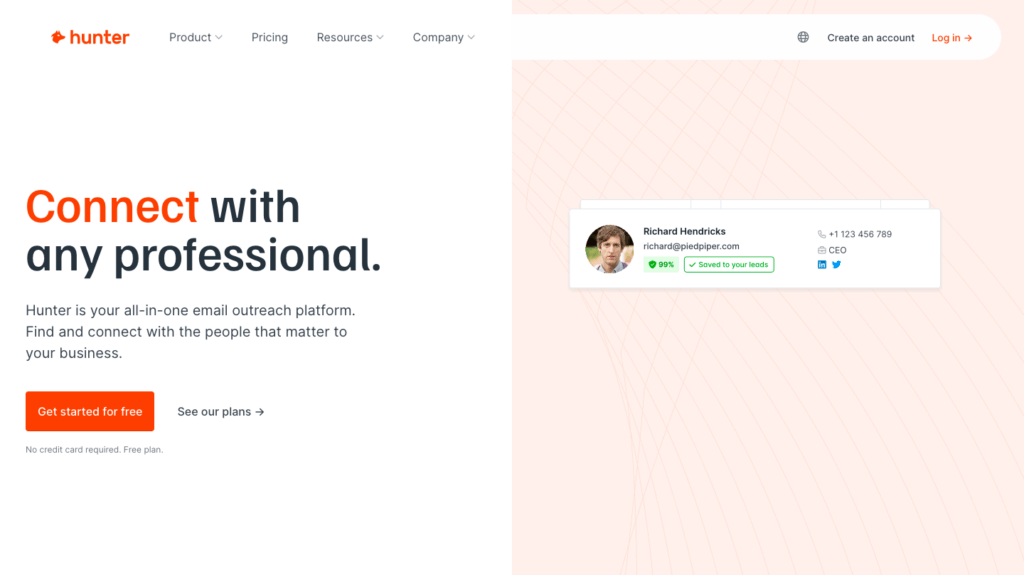
Hunter.io is primarily an email finding and verification tool with basic campaign capabilities layered on. Best for teams that need clean email data and are sequencing through a separate tool.
Key Features:
- Domain search to find emails for any company
- Email verification with confidence scoring
- Basic drip campaign builder
- Chrome extension for LinkedIn and website prospecting
Pros:
- Best-in-class email finding accuracy for domain-based prospecting
- Simple, clean interface with minimal learning curve
- API access makes it a useful data layer for custom stacks
Cons:
- Extremely limited cadence functionality - not a true SEP
- No multichannel outreach, phone dialing, or LinkedIn automation
- Reps must export lists and sequence through a separate platform
- No AI personalization or account research
Pricing: Free plan available (25 searches/month). Paid plans start at $49/month.
Best for - Teams that need accurate domain-based email finding with basic campaign capability
9. Clodura
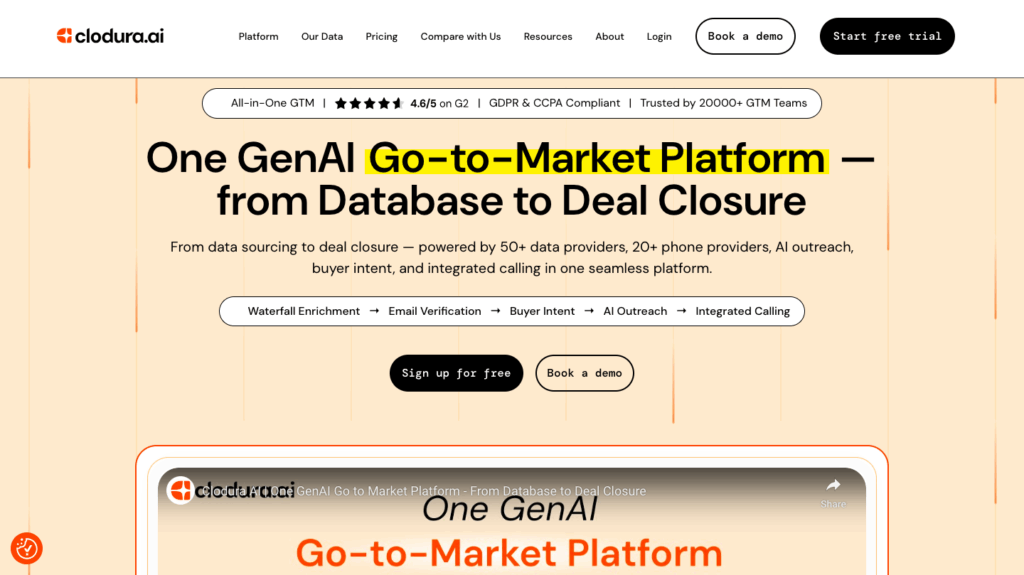
Clodura is a data-first sales prospecting platform with a large B2B database, intent signals, and basic sequencing. Aimed at teams who want database access and lightweight automation together.
Key Features:
- 600M+ B2B contact database
- Intent signals and company trigger tracking (funding, hiring, tech stack changes)
- Follow-up automation with email sequences
- Meeting scheduling and calendar integration
Pros:
- Large database with solid intent data layer
- Trigger signals help reps prioritize timely outreach
- Simple and relatively affordable
Cons:
- Sequencing logic is linear - no adaptive cadences
- Manual prioritization is still required; AI doesn't surface the best-fit accounts proactively
- Limited call and multichannel support
- No real-time coaching or conversation intelligence
Pricing: Custom pricing.
Best for - Teams wanting a large database with intent signals and lightweight automation
10. Lemlist
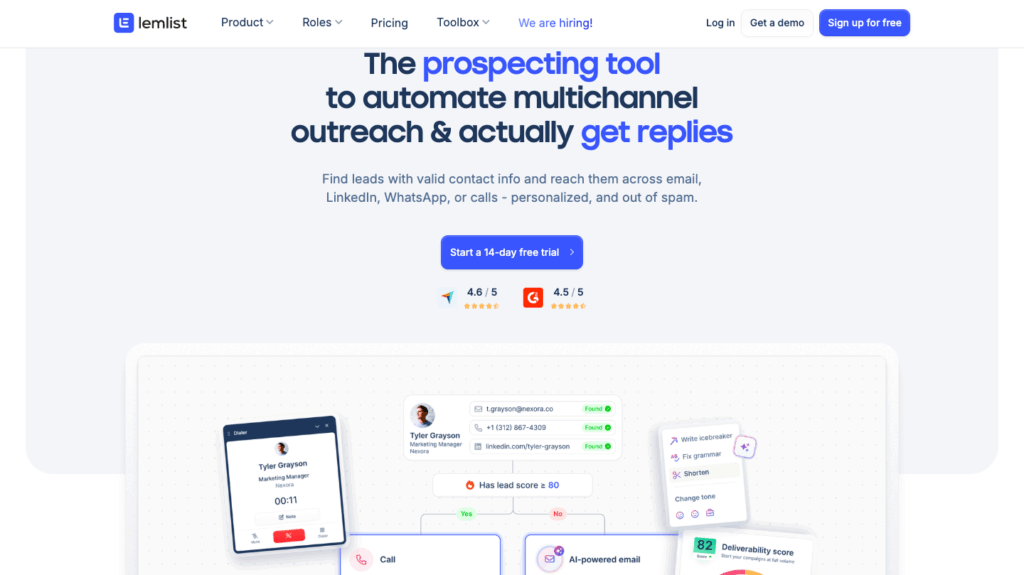
Lemlist built its reputation on visually personalized cold email - images, videos, and custom variables baked into campaigns. It has expanded into a broader multichannel platform, now including LinkedIn automation and a built-in dialer.
Key Features:
- Highly personalized email campaigns (custom images, video thumbnails, liquid syntax)
- Multichannel sequences (email, LinkedIn, WhatsApp, phone)
- Conditional workflows based on prospect engagement
- 600M+ leads database with email and phone finding
Pros:
- Best-in-class visual personalization capabilities
- Database + sequencing + multichannel in one platform
- Competitive pricing relative to feature depth
- Active user community and template library
Cons:
- Personalization quality depends heavily on manual creative work
- List building is database-driven, not AI-agentic
- No proprietary dialing infrastructure for improving connect rates
- Cadences don't automatically adapt based on account-level signals
Pricing: Email Pro at $63/user/month; Multichannel Expert at $87/user/month (both billed annually). Enterprise pricing available for teams of 5+.
Best for - Teams that prioritize visually personalized, high-quality cold email
11. Saleshandy
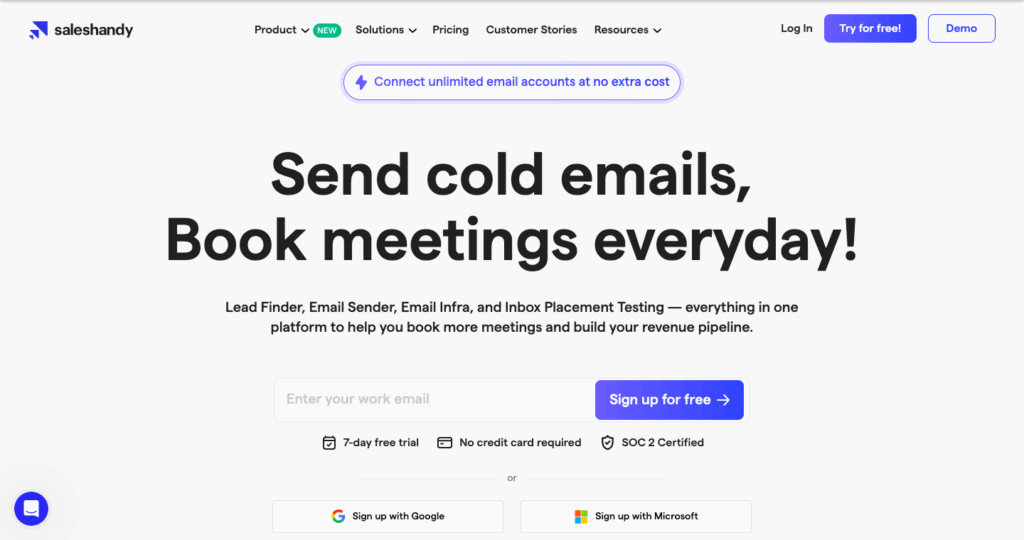
Saleshandy is an email outreach platform focused on cold email at scale, with multi-step conditional sequences, email warm-up, and team collaboration features.
Key Features:
- Multi-step email sequences with conditional branching
- Automated email warm-up and deliverability tools
- Email tracking (opens, clicks, replies)
- Team templates and collaboration
Pros:
- Solid cold email tool with good deliverability infrastructure
- Easy to use with a clean interface
- Agency and team features built in
Cons:
- Requires manual list building - no AI-driven prospecting
- Primarily email-only - limited true multichannel capabilities
- Sequences don't dynamically adapt to prospect behavior
- No dialing, call coaching, or AI account research
Pricing: Starts around $25/user/month. Free trial available.
Best for - Email-first teams running cold outreach at scale with strong deliverability
12. Mixmax
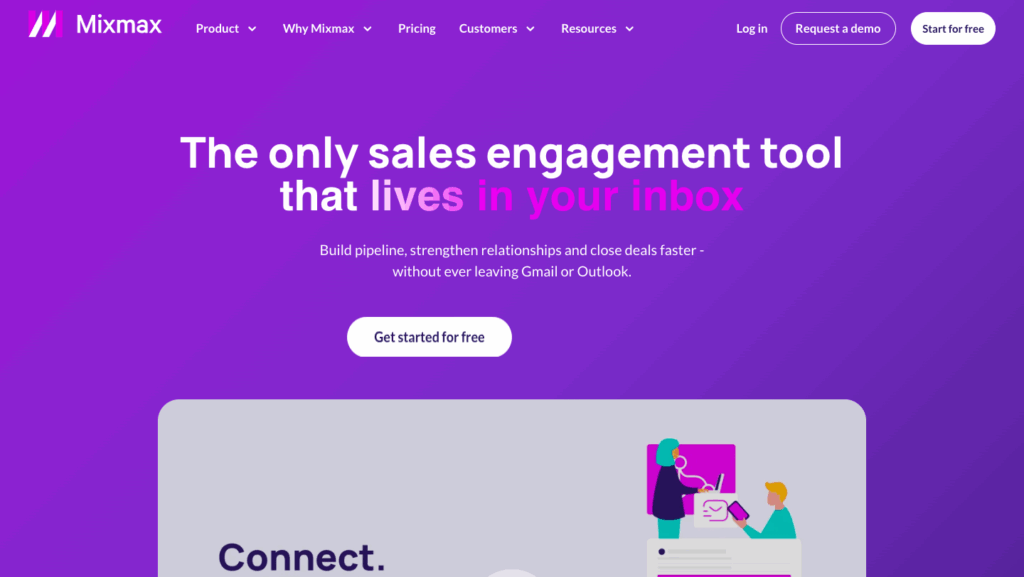
Mixmax is a Gmail-native sales engagement tool that extends Google Workspace with sequences, templates, tracking, and scheduling. Best for small teams or individual sellers already heavily invested in Gmail.
Key Features:
- Email sequences and automation inside Gmail
- Embedded calendar scheduling (one-click meeting booking)
- Email tracking (opens, clicks, link clicks)
- Shared template library with team collaboration
Pros:
- Works entirely within Gmail - near-zero learning curve
- Meeting scheduler is smooth and reduces back-and-forth
- Good for small teams that want simple automation without a complex SEP
Cons:
- Gmail-only - not viable for Outlook shops
- No AI account selection, list building, or personalization
- Limited multichannel support (primarily email-only)
- Not built to scale for large SDR teams
Pricing: Free plan available. Paid plans from $29/user/month.
Best for - Individual sellers or small teams fully embedded in Gmail
13. Yesware
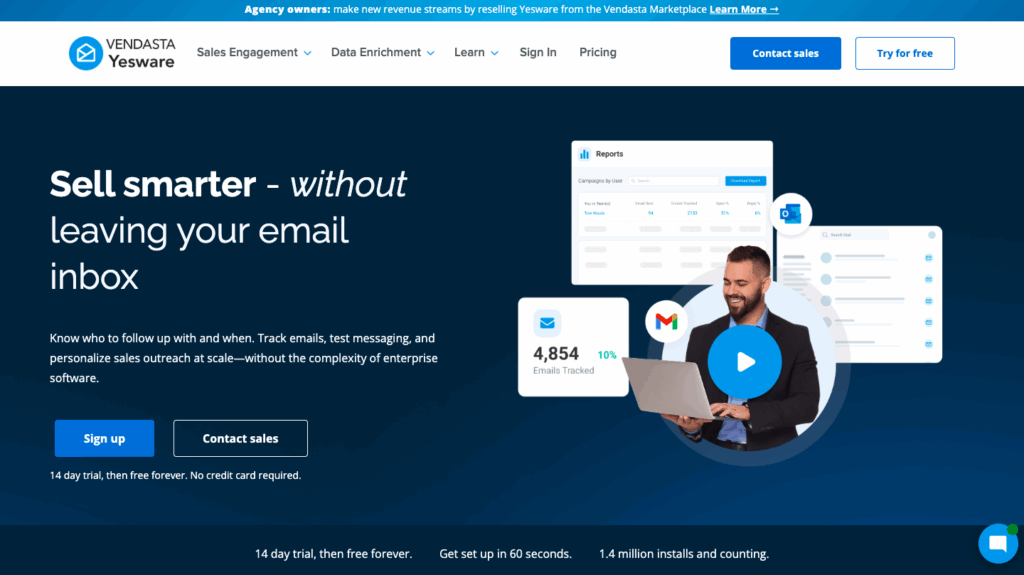
Yesware is a Gmail and Outlook sales engagement add-in with email tracking, templates, and basic sequencing. Geared toward individual AEs and small sales teams who want lighter-touch email automation.
Key Features:
- Gmail and Outlook integration
- Real-time email open and click notifications
- Multi-touch campaigns with email, phone, and LinkedIn steps
- Shared template library and reporting
- Salesforce sync for activity logging
Pros:
- Works across Gmail and Outlook — broader compatibility than Mixmax
- Minimal setup — quick time to value for small teams
- Real-time engagement signals help reps prioritize follow-up
Cons:
- No AI list sourcing or account research
- Lacks sophisticated multichannel cadence automation
- Limited call infrastructure
- Analytics are basic compared to enterprise SEPs
Pricing: Free plan available. Pro plans from $15/user/month.
Best for - Individual AEs and small teams needing lightweight email tracking across Gmail and Outlook
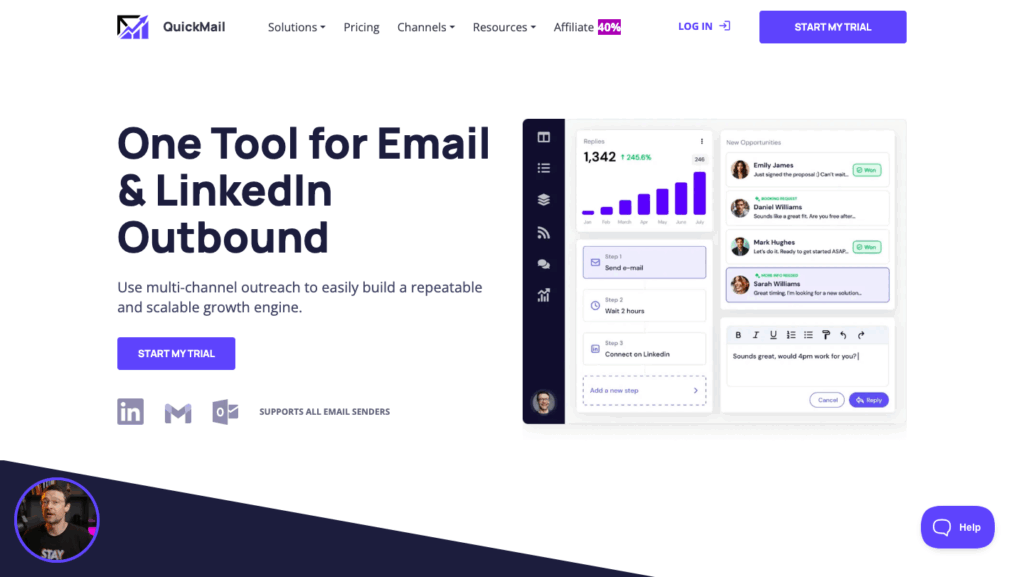
14. QuickMail
QuickMail is an email outreach platform built for cold email deliverability at scale — featuring inbox rotation, warm-up, and automated sequences. Popular with agencies and lean sales teams.
Key Features:
- Inbox rotation across multiple sending accounts
- Automated email warm-up
- Multi-step sequences with conditional branching
Pros:
- Strong deliverability-first architecture
- Inbox rotation at scale reduces single-sender risk
- Good option for agencies managing multiple client campaigns
Cons:
- Manual targeting required — no AI-driven list building
- Primarily email-only with limited multichannel
- One-size-fits-all sequence structure
- No dialing, coaching, or CRM-native features
Pricing: Starts around $49/month. Agency plans available.
Best for - Agencies managing multiple client email campaigns with deliverability as the priority
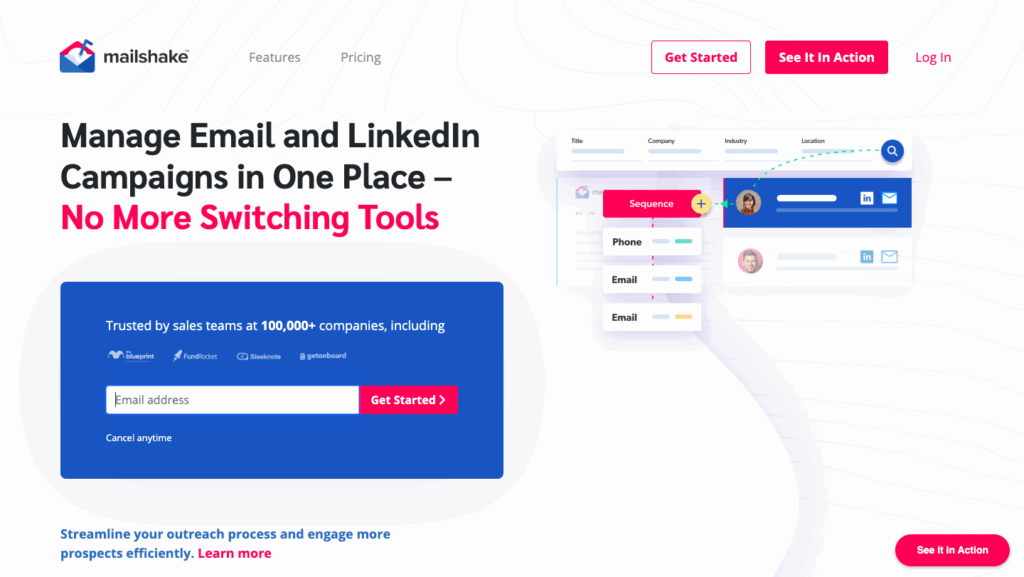
15. Mailshake
Mailshake is a sales engagement platform aimed at SDR teams, featuring AI-generated email templates, lead scoring, and multichannel options, including cold calling.
Key Features:
- AI-generated email and LinkedIn message templates
- Lead catcher with lead scoring
- Multichannel sequences (email, LinkedIn, phone)
- Power Phone Dialer
- CRM integrations (Salesforce, HubSpot, Pipedrive)
- Email deliverability and warm-up tools
Pros:
- AI content assistance speeds up email writing
- Built-in power dialer adds multichannel depth
- Good mid-market option with solid CRM connectivity
Cons:
- AI assists with content generation only — cadences don't adapt based on prospect behavior
- List building is manual; no AI-driven prospecting
- Call infrastructure is basic
- Limited conversation intelligence or call coaching
Pricing: Starts around $58/user/month (billed annually).
Best for - Mid-market SDR teams wanting AI-assisted email writing with a built-in power dialer
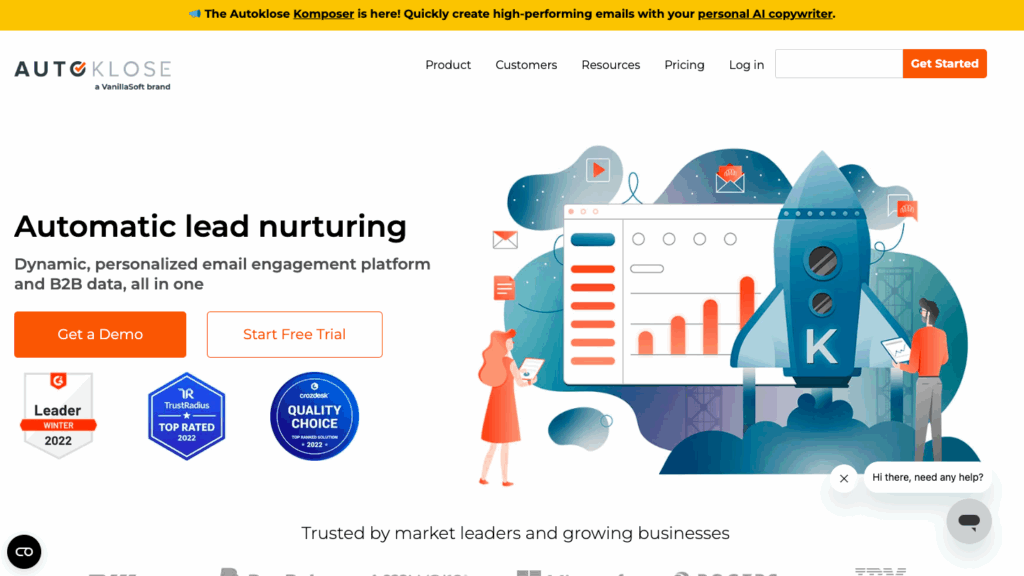
16. Autoklose
Autoklose is an email sequencing platform with a built-in B2B contact database. Designed as an all-in-one for SMBs who want data and outreach without enterprise complexity.
Key Features:
- Built-in B2B contact database
- Email sequencing with open/reply/click tracking
- A/B testing for subject lines and body copy
- CRM integrations and reporting
- Team collaboration features
Pros:
- Database + outreach combination reduces tool switching for smaller teams
- Simple interface with quick campaign setup
- Affordable for SMBs
Cons:
- No adaptive sequencing logic — workflows are uniform across accounts
- Limited multichannel beyond email
- Manual list vetting and personalization still required
- No dialing or call coaching capabilities
Pricing: Plans start around $49.99/user/month.
Best for - SMBs wanting database access and email sequencing without enterprise complexity
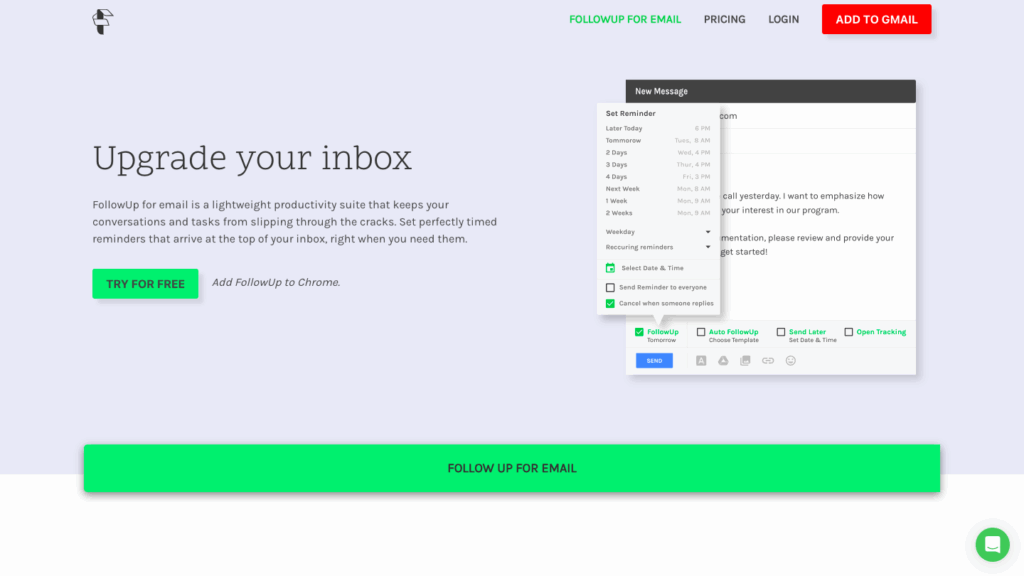
17. FollowUp.cc
FollowUp.cc is a lightweight email follow-up reminder tool - not a full SEP. Best described as a productivity layer for individual sellers who need simple follow-up tracking inside their inbox.
Key Features:
- Email follow-up reminders via BCC or CRM triggers
- Reusable email templates
- Basic open and click tracking
- Gmail and Outlook integration
Pros:
- Extremely simple — zero learning curve
- Low cost for individual users
- Useful supplement for AEs who need basic nudge automation
Cons:
- Not a true sales engagement platform — no sequences, multichannel, dialing, or AI
- No scalability for teams
- Manual work required for everything beyond reminders
Pricing: Starts around $18/user/month.
Best for - Individual sellers who need simple follow-up reminders inside their inbox
18. FunnelFLARE
FunnelFLARE is a sales automation platform with outreach sequences, LinkedIn actions, and task-based workflows. Aimed at SMBs that want sequencing across a few channels without enterprise overhead.
Key Features:
- Outreach sequences with tasks and time delays
- LinkedIn action steps
- Email tracking and automation
- CRM integration (Salesforce, HubSpot)
Pros:
- Simple setup for basic multichannel sequences
- Affordable for small teams
Cons:
- No adaptive cadences — all sequences are linear and manual
- No AI list building, account research, or personalization
- Limited analytics and reporting depth
Pricing: Contact FunnelFLARE for current pricing.
Best for - Small teams needing basic multichannel sequences without enterprise overhead
19. Overloop
Overloop is a B2B prospecting and outreach platform combining LinkedIn lead discovery, email campaigns, and CRM integration. Strong for teams wanting simple multichannel sequences with built-in LinkedIn prospecting.
Key Features:
- LinkedIn profile import and email finder
- Email campaign automation with conditional sequences
- Phone call tasks and LinkedIn automation steps
- Pipeline management
- CRM integrations
Pros:
- LinkedIn + email combination in one tool
- Clean interface with good pipeline visibility
- Solid for small outbound teams
Cons:
- Sequences are generic and don't adapt to account-level signals
- No AI list building or account-level personalization
- Limited analytics depth
Pricing: Starts around $99/user/month.
Best for - Small outbound teams combining LinkedIn prospecting and email in one tool
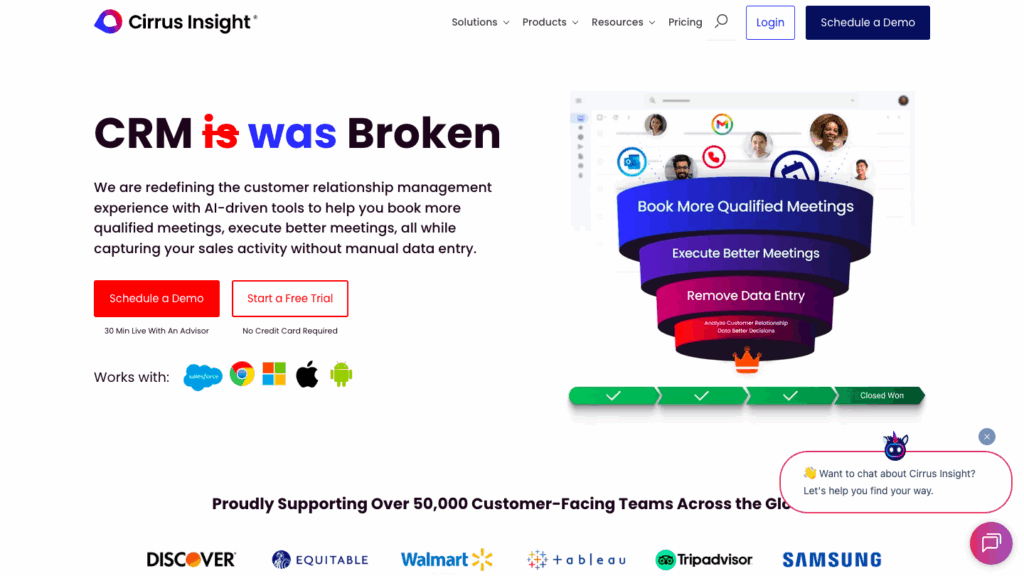
20. Cirrus Insight
Cirrus Insight is a Salesforce-native sales productivity tool that embeds directly into Gmail and Outlook. Primarily a CRM activity logging and meeting scheduling tool with lightweight sequence support.
Key Features:
- Gmail and Outlook sidebar showing Salesforce contact data
- Automatic CRM activity logging
- Meeting scheduling with calendar sync
- Email tracking and follow-up reminders
- Basic email sequences
Pros:
- Seamless Salesforce integration — keeps reps in Gmail/Outlook while accessing CRM data
- Strong for teams where CRM hygiene is a top priority
- Good meeting booking workflow
Cons:
- Not a full SEP — sequencing logic is very lightweight
- No multichannel cadences beyond email
- No AI, call coaching, or list building
- Relies on Salesforce as the source of truth — not standalone
Pricing: Starts around $14/user/month.
Best for - Salesforce-heavy teams who live in Gmail or Outlook and need seamless CRM logging
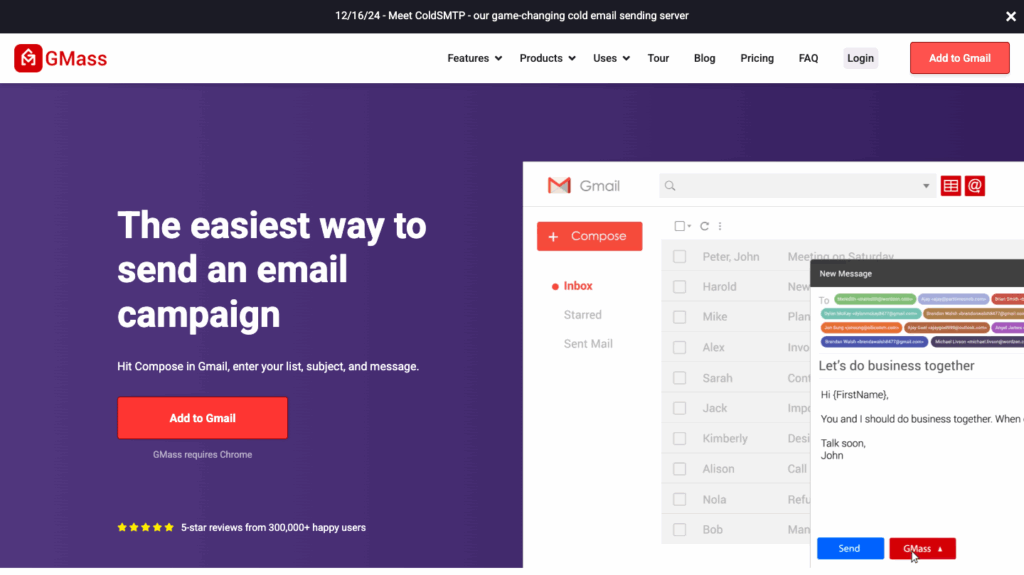
21. GMass
GMass is a Gmail-native mass email tool that adds mail merge personalization, conditional follow-ups, and campaign tracking. Built for high-volume cold email through Gmail.
Key Features:
- Mail merge with personalization variables
- Conditional follow-up sequences
- Email open, click, and reply tracking
- Team collaboration and shared reports
Pros:
- Extremely simple — runs entirely inside Gmail
- Good for high-volume cold email campaigns for small teams or individuals
- Affordable
Cons:
- Gmail-only — limited to individual senders and Google Workspace teams
- No AI prioritization, adaptive cadences, or multichannel support
- Sending limits constrained by Gmail infrastructure
- Not built for enterprise SDR teams
Pricing: Starts at $25/month per user.
Best for - Individuals and small teams running high-volume cold email entirely inside Gmail
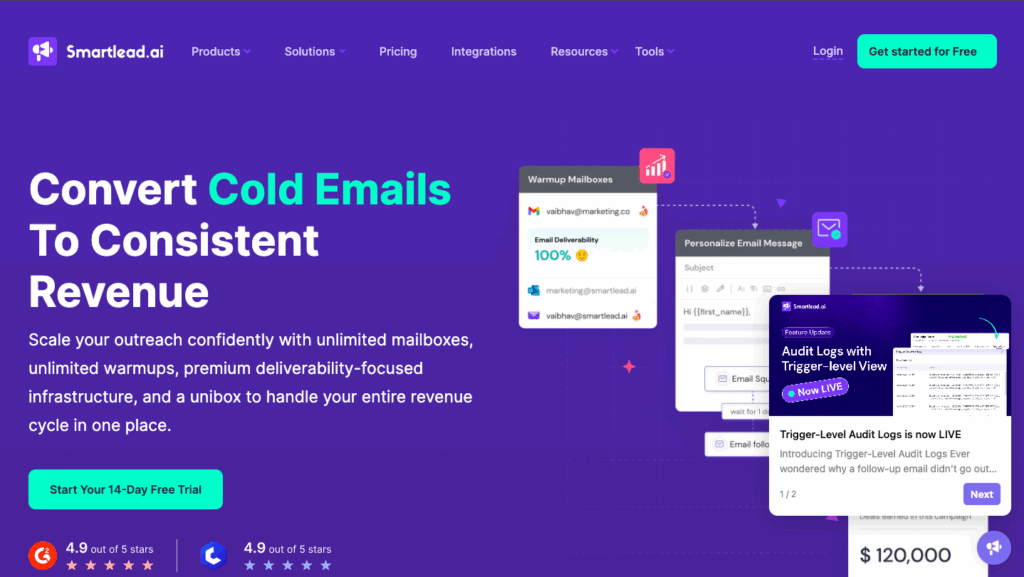
22. Smartlead
Smartlead is a deliverability-first cold email platform built for high-volume outreach. Its core differentiation is unlimited email account connections with automated warm-up and intelligent mailbox rotation.
Key Features:
- Unlimited email account connections with no per-mailbox fee
- Automated warm-up with AI-powered inbox interactions
- Intelligent mailbox rotation across senders
- Multi-step sequences with conditional logic
Pros:
- Best-in-class deliverability infrastructure for high-volume cold email
- Unlimited mailbox connections makes it cost-effective for agencies and large teams
- Strong warm-up algorithm
Cons:
- Cadences are not adaptive at the account level
- No meaningful AI list building or account research
- Limited multichannel support beyond email
- Not a full SEP — best paired with a separate prospecting data tool
Pricing: Base at $39/month; Pro at $94/month; Unlimited Smart at $174/month; Unlimited Prime at $379/month.
Best for - High-volume senders and agencies needing best-in-class email deliverability infrastructure
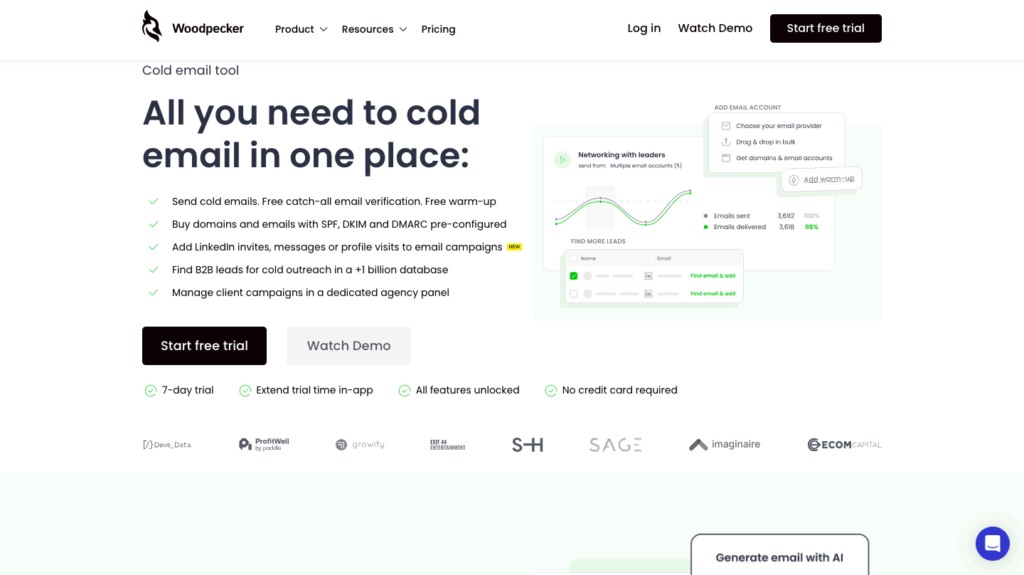
23. Woodpecker
Woodpecker is a cold email and follow-up tool built for B2B outreach with strong deliverability features, A/B testing, and agency-friendly account management.
Key Features:
- Email verification before sending
- A/B testing for subject lines and message copy
- Conditional sequences and follow-up branching
- Email warm-up and deliverability monitoring
Pros:
- Solid deliverability reputation with built-in verification
- Good A/B testing capabilities
- Agency mode makes it a good choice for sales agencies
Cons:
- No AI list building or account-level research
- Primarily email-only — limited multichannel beyond basic LinkedIn steps
- Linear sequences without dynamic routing
- No dialing or call coaching capabilities
Pricing: Starts around $29/month per sending slot. Scales with usage.
Best for - B2B agencies running cold email campaigns with built-in verification and A/B testing
24. Instantly
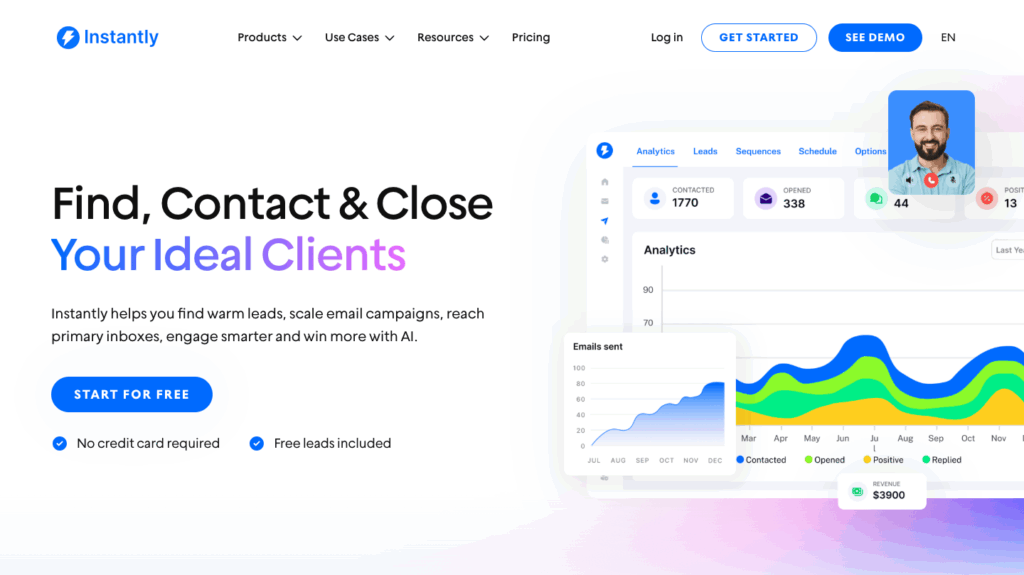
Instantly is a cold email infrastructure and outreach platform built for high-volume senders, combining email warm-up, unlimited sending accounts, and an AI-assisted sequence layer with access to a 450M+ B2B lead database.
Key Features:
- Unlimited email accounts and warm-up
- AI agents for sequence personalization
- 450M+ B2B lead database with enrichment
- High-volume sending infrastructure (up to 500K+ emails/month)
Pros:
- Best infrastructure option for teams sending at very high volume
- Database + warm-up + sequences in one platform
- Aggressive pricing at entry tier
Cons:
- Basic sequencing without adaptive cadence logic
- AI is primarily template-assist — not agentic
- No meaningful dialing or call coaching layer
- Minimal personalization depth for individual accounts
Pricing: Growth at $47/month; Hypergrowth at $97/month; Light Speed at $358/month; Enterprise pricing available.
Best for - Teams and agencies sending very high email volumes with unlimited sending infrastructure
25. Warmy
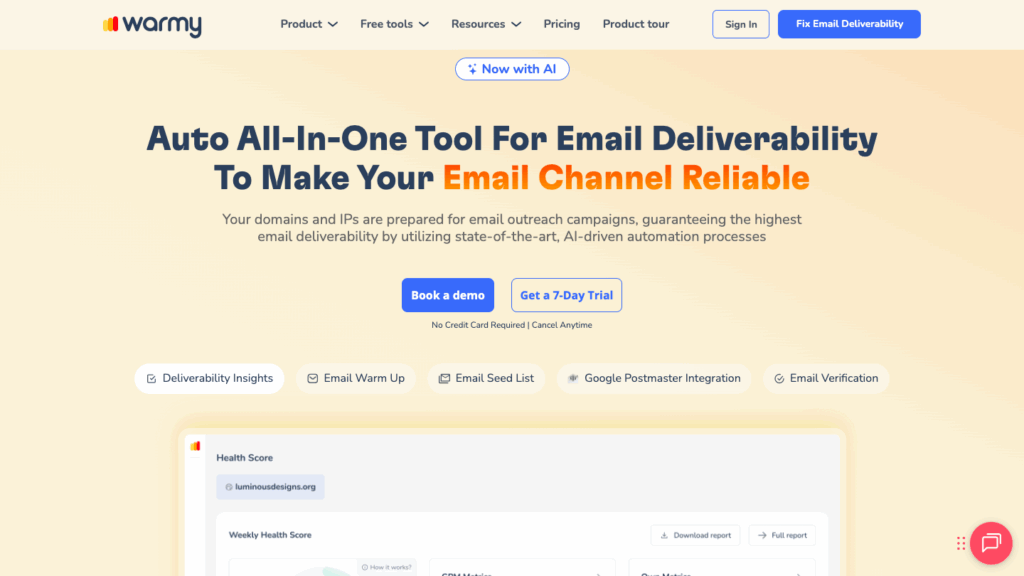
Warmy is a dedicated email warm-up tool focused purely on inbox health. It automates warm-up interactions using AI to simulate human email activity and improve sender reputation over time.
Key Features:
- Automated warm-up with AI-generated inbox interactions
- Progress dashboards showing sender score over time
- Multi-language warm-up capability
- Integration with major email clients
Pros:
- Simple, purpose-built warm-up tool
- AI-driven warm-up interactions are more realistic than basic warm-up sequences
- Clear progress visibility
Cons:
- Single-function tool — no sequencing, outreach, or database
- Must be paired with a separate SEP and data platform
- Not a replacement for a full deliverability infrastructure strategy
Pricing: Starts around $49/month. Plans scale based on mailboxes.
Best for - Teams that need a dedicated, purpose-built email warm-up tool
26. Smartreach
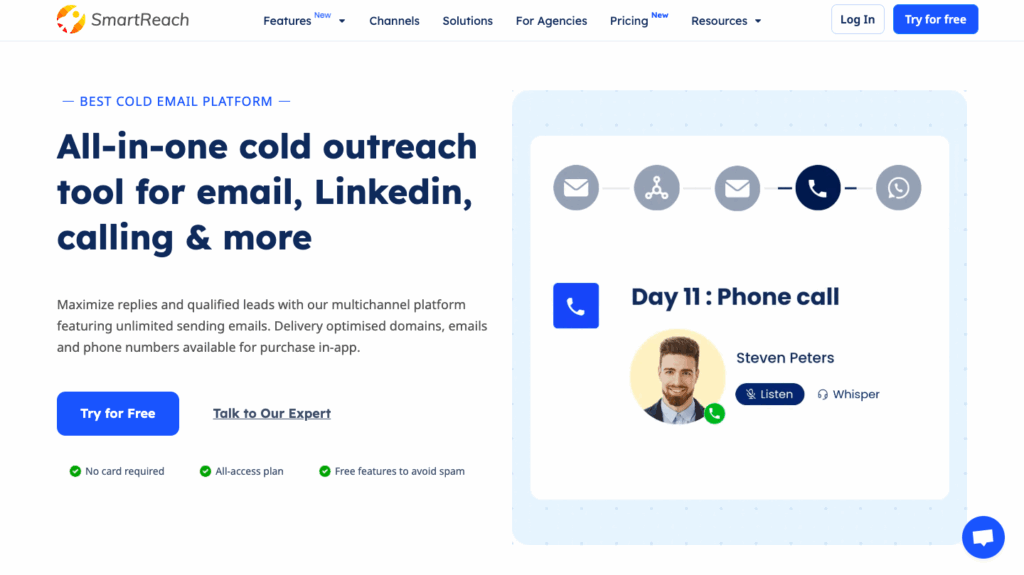
Smartreach is a cold outreach platform focused on email deliverability, warm-up, and outbound sequencing. Similar to Woodpecker in positioning with slightly broader multichannel support.
Key Features:
- Cold email campaigns with warm-up and verification
- Multi-channel steps (email, LinkedIn, call tasks, WhatsApp)
- A/B testing and scheduling optimization
- Team collaboration and shared templates
- CRM integrations
Pros:
- Good deliverability tools at an accessible price
- Broader channel support than pure email tools
- Agency-friendly features
Cons:
- Sequences lack adaptive logic — manual management required
- No AI-driven list building or account research
- Personalization requires significant manual work
Pricing: Starts around $29/user/month.
Best for - Teams with deliverability challenges wanting multichannel support at an affordable price
27. Vanillasoft
VanillaSoft is a sales engagement platform with strong lead routing, queue-based selling, and multichannel communication tools. Built for inside sales teams with high call volumes and structured call playbooks.
Key Features:
- Lead routing and intelligent queue management
- Multichannel communication (email, phone, SMS, voicemail)
- Cadence management with call prioritization
- Analytics and performance reporting
- Integration with major CRMs
Pros:
- Queue-based calling model keeps reps focused on the next best prospect
- Good for high-velocity inside sales teams with structured processes
- Solid call management and voicemail drop features
Cons:
- Interface is not intuitive — significant onboarding investment required
- Reporting is rigid and lacks customization flexibility
- Can be expensive for smaller teams
- Less suited for modern agentic AI or complex multichannel sequencing
Pricing: Custom pricing.
Best for - High-volume inside sales teams with structured call playbooks and queue-based selling
28. Vocus.io
Vocus.io is a Gmail-based email outreach tool with campaign management, scheduling, and basic team features. Suited for individual sellers or small teams embedded in Google Workspace.

Key Features:
- Gmail-native campaign management
- Email scheduling and follow-up reminders
- Team template library
- Open, click, and reply tracking
Pros:
- Simple Gmail-native setup with minimal onboarding
- Low cost for individual users
Cons:
- Gmail-dependent — not viable outside Google Workspace
- Sending limits constrained by Gmail infrastructure
- No multichannel support beyond email
- Not scalable for growing SDR teams
Pricing: Starts around $5/user/month.
Best for - Individual sellers or very small teams embedded in Google Workspace
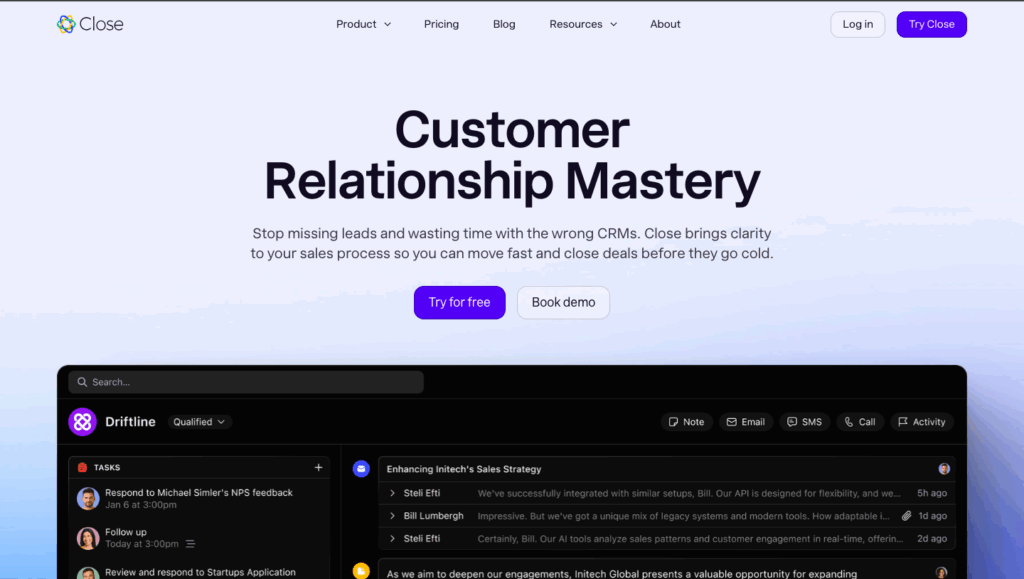
29. Close
Close is an all-in-one CRM with built-in email sequences, power dialing, and multichannel workflow automation. Designed for SMB sales teams who want CRM and engagement in one platform.
Key Features:
- Built-in email, call, and SMS sequences
- Power Dialer and Predictive Dialer
- Pipeline management with activity tracking
- Workflow automation
Pros:
- Single platform for CRM + sequencing + dialing eliminates tool switching
- Power Dialer built-in — no need for a separate dialer tool
- Simple setup and good SMB pricing
Cons:
- Reps must source and build prospect lists independently
- Sequences are standardized — limited AI-driven personalization
- No AI list building, account research, or agentic cadences
- Not suited for enterprise complexity or large SDR teams
Pricing: Starts at $49/month for the Startup plan. Scales with team size.
Best for - SMB sales teams wanting CRM, sequencing, and dialing in a single platform
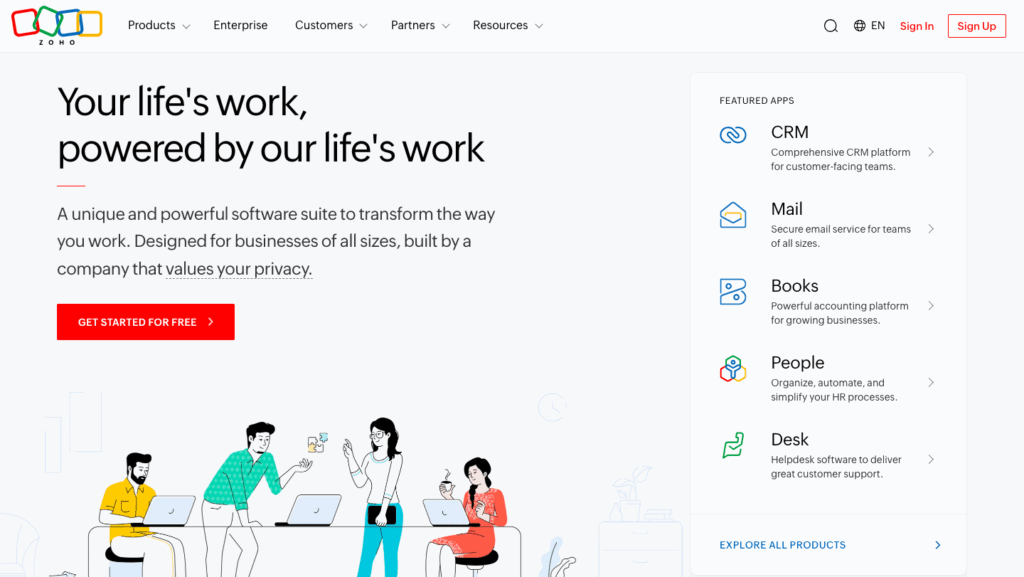
30. Zoho SalesInbox
Zoho SalesInbox organizes a rep's email inbox by pipeline stage and deal context - pulling CRM data into the email experience to prioritize follow-up on active deals.
Key Features:
- Pipeline-organized inbox with deal context
- Email tracking and follow-up reminders
- Salesforce and Zoho CRM integration
- Template library
Pros:
- Unique email prioritization by pipeline stage helps AEs focus on active deals
- Seamless Zoho CRM integration for teams already on Zoho
- Low cost
Cons:
- No adaptive cadences or AI-driven list building
- Very limited multichannel outreach capabilities
- Not a standalone SEP — works best as a Zoho CRM complement
Pricing: Included with Zoho CRM. Custom pricing.
Best for - AEs on Zoho CRM who want their inbox organized by pipeline stage
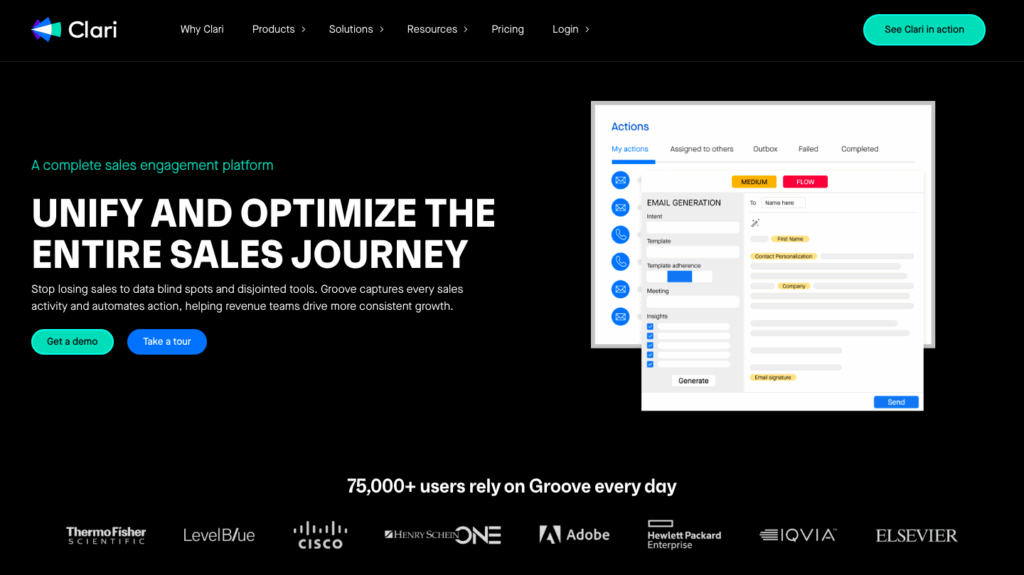
31. Groove by Clari
Groove is a sales engagement platform for revenue teams, deeply integrated with Salesforce. Clari acquired it to extend its revenue intelligence platform with engagement execution capabilities.
Key Features:
- Email and calendar integration (Gmail and Outlook)
- Multi-step sequences with automation rules
- Call management and Salesforce auto-logging
- Flow automation for task management
- Analytics and productivity reporting
Pros:
- Deep Salesforce integration — strong for Salesforce-heavy enterprises
- Clari revenue intelligence data enriches rep workflows
- Good for AE-focused teams managing active pipeline
Cons:
- Reps manage their own list targeting and personalization
- Sequences are standardized — not dynamically adaptive
- Better as a sales productivity layer than a full outbound SEP
Pricing: Custom Pricing
Best for - AE-focused Salesforce teams managing active pipeline with revenue intelligence
32. Bluebird by Salesforce
Salesforce's native sales engagement product - now branded as part of the broader Salesforce Sales Cloud and Einstein AI stack - brings cadences, work queues, and AI-assisted insights into the Salesforce environment.
Key Features:
- CRM-native engagement with work queues
- Email automation and call support within Salesforce
- Einstein AI insights and next-step recommendations
- Deep pipeline integration with Sales Cloud
Pros:
- Zero integration overhead for existing Salesforce users
- Einstein AI adds lightweight predictive scoring
- Full CRM context without switching tools
Cons:
- Manual account targeting still required
- Sequences are standardized with limited adaptive logic
- Einstein AI scoring is add-on cost and requires clean CRM data
- Less specialized than purpose-built SEPs
Pricing: Bundled with Salesforce Sales Cloud Enterprise and above. Custom pricing.
Best for - Existing Salesforce Enterprise users who want native engagement without a separate tool
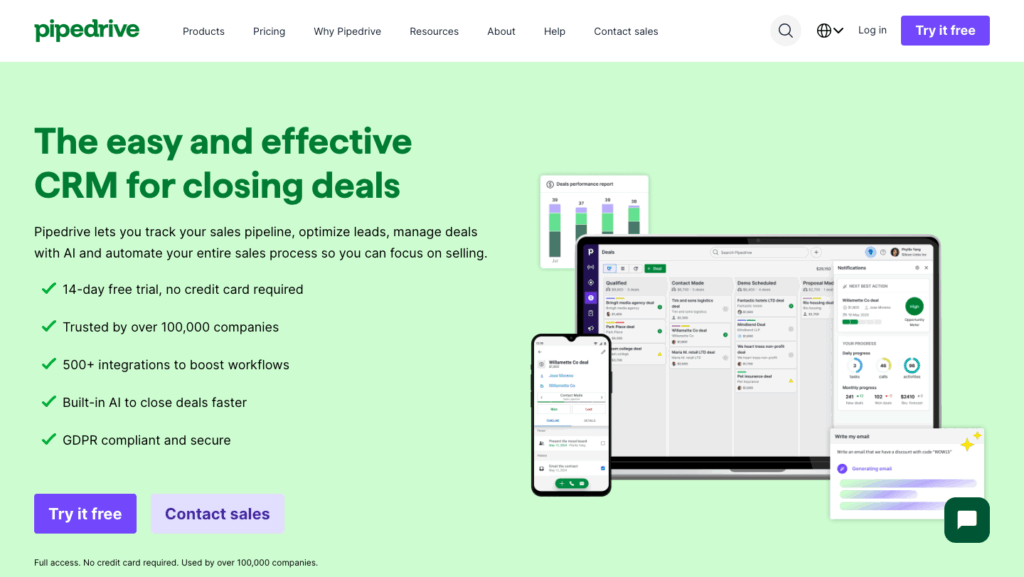
33. Pipedrive Sales Assistant
Pipedrive's Sales Assistant provides AI-driven deal insights and workflow automation within its CRM. The Sequences feature adds lightweight email automation for follow-up campaigns.
Key Features:
- Sequences feature for automated email follow-up
- Workflow automation with trigger-based actions
- AI-powered deal insights and activity suggestions
- Calendar and email integrations
Pros:
- Simple and intuitive for SMBs already on Pipedrive
- AI sales assistant provides lightweight prioritization nudges
- Good value for teams that want engagement features without leaving their CRM
Cons:
- Sequences are linear — no dynamic routing based on prospect behavior
- Limited multichannel support beyond email
- Not a full hybrid cadence platform for high-volume outbound
Pricing: Sales Assistant included with Advanced plan (~$39/user/month). Professional plan (~$59/user/month) for full features.
Best for - SMBs already on Pipedrive wanting lightweight email automation and AI nudges
34. HubSpot Sales Hub
HubSpot Sales Hub brings sequencing, template management, meeting booking, and deal tracking into the HubSpot CRM ecosystem. A natural choice for teams already using HubSpot Marketing Hub or CRM.
Key Features:
- Email sequences for automated multi-step follow-up
- Template library with team sharing and performance insights
- One-click meeting booking (Meetings tool)
- Deal tracking and task management
Pros:
- Seamless integration with HubSpot CRM and Marketing Hub
- Strong template and meeting booking workflow
- Breeze AI adds lightweight email generation assistance
- Good for teams where sales and marketing share a CRM
Cons:
- Target account selection is manual — no AI-driven list building
- Sequences follow standardized paths — no adaptive routing
- Full feature access requires Enterprise tier, which can be expensive
- Not purpose-built for high-volume outbound SDR teams
Pricing: Free tools available. Starter from $20/user/month; Professional from $100/user/month; Enterprise from $150/user/month.
Best for - Teams already on HubSpot CRM or Marketing Hub needing seamless engagement
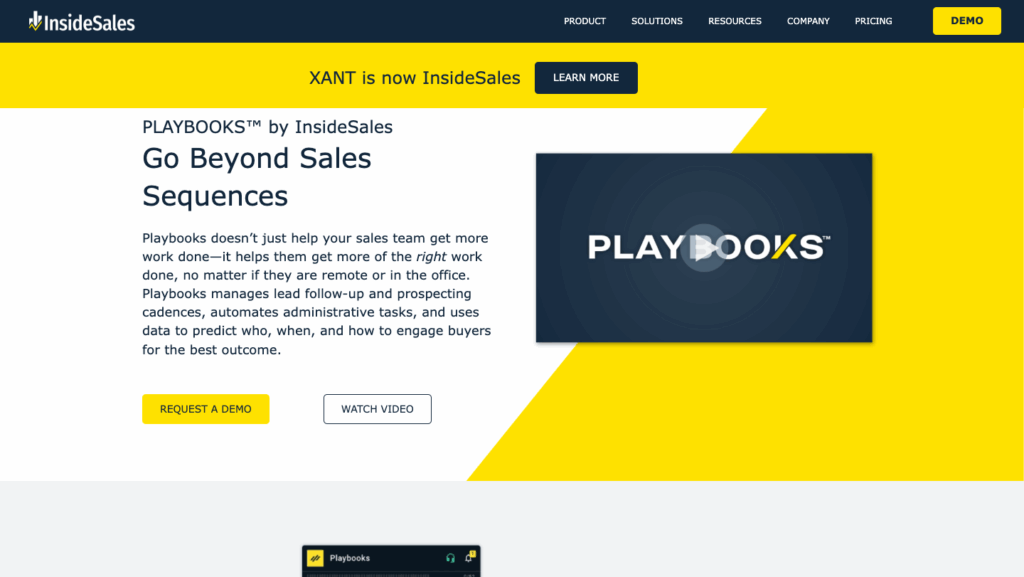
35. InsideSales Playbooks (now XANT)
InsideSales Playbooks is a guided selling platform built on top of Salesforce, offering structured outreach workflows, AI-powered prioritization (using its Neuralytics data engine), and call scripts.
Key Features:
- Guided playbooks with prescriptive daily task queues
- AI-driven prospect prioritization (Neuralytics)
- Email templates and call scripts
- Intent signal data integration
- Salesforce-native integration
Pros:
- Guided selling model keeps reps focused on next-best actions
- Neuralytics AI adds data-driven prioritization based on a large proprietary dataset
- Good for large inside sales teams with structured call playbooks
Cons:
- Reps still make final engagement decisions — not agentic
- Personalization is manual
- Sequences are standardized — not adaptive based on individual account signals
- Complex setup and implementation
Pricing: Custom pricing.
Best for - Large inside sales teams needing AI-prioritized guided selling with structured playbooks
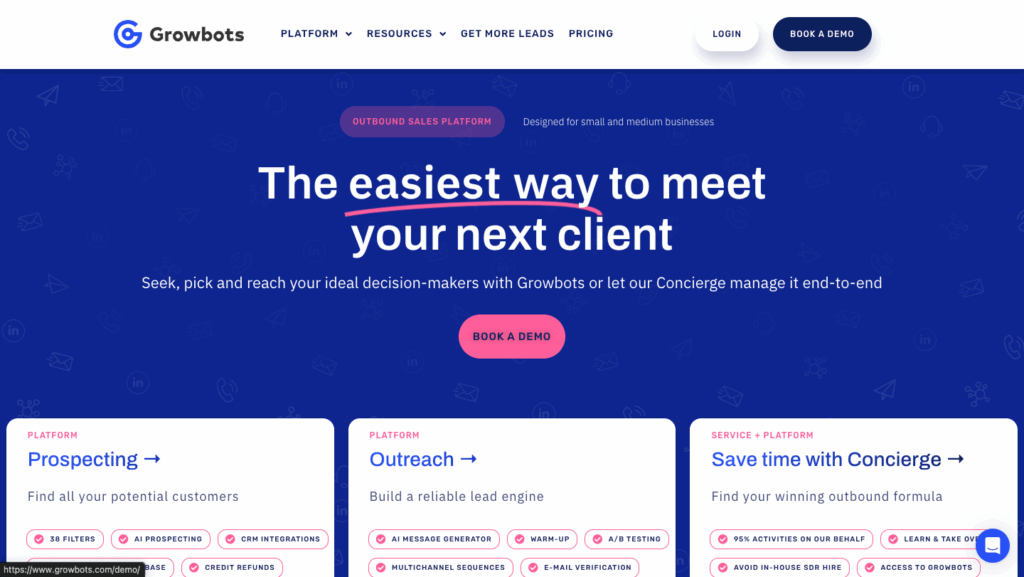
36. Growbots
Growbots is an all-in-one outbound sales platform combining AI-assisted prospecting, a built-in B2B database, and automated email campaigns. Aimed at SMBs that want prospecting and sequencing without enterprise complexity.
Key Features:
- AI-assisted prospect list building
- Built-in B2B contact database with filtering
- Automated multi-step email campaigns
- A/B testing
- CRM integrations
Pros:
- Combines prospecting + sequencing in one affordable platform
- Good for small teams or founders doing their own outbound
- Fast setup and simple interface
Cons:
- Manual list vetting still required — AI assistance is basic
- Sequences are one-size-fits-all — limited personalization depth
- No dialing, call coaching, or multichannel beyond email
- Limited for scaling SDR teams
Pricing: Custom pricing.
Best for - Small teams and founders doing their own outbound who want prospecting and sequencing together
Conclusion
Choosing a sales engagement platform in 2026 is fundamentally a question about what you're optimizing for.
If you want a platform that helps reps send more emails, there are dozens of tools on this list that do that well.
If you want a platform that helps reps have more live conversations and book more meetings from those conversations, the answer is much narrower.
Most SEPs address the outbound execution layer: sequences, templates, and tracking. Fewer address the upstream problem of who to contact and what to say. Almost none address the dialing infrastructure problem - why 97–99% of outbound calls go unanswered and what to do about it structurally.
Klenty is built for the full stack: AI agents that build the list, research the account, write the cadence, and execute outreach - combined with a proprietary dialing infrastructure (Connect AI) that structurally improves connect rates at every step of the dial. If your team's success is measured in live conversations and meetings booked, Klenty gives you the most direct path there.
Book a demo today to see how Klenty can change the way your team thinks about outbound..
Frequently Asked Questions
1. What is a sales engagement platform?
2. Is a sales engagement platform the same as a CRM?
3. What should I look for in a sales engagement platform in 2026?
4. Who needs a sales engagement platform?
5. Which is the best sales engagement platform in 2026?
About the Author