A sales engagement platform is a software tool that helps sales reps manage, automate, and track buyer interactions across email, phone, LinkedIn, and SMS from one place. It eliminates repetitive manual work, personalizes outreach at scale, and gives leaders full visibility into performance. If your reps spend more time on admin tasks than actual selling, a sales engagement platform is the fix.
Sales reps today face a frustrating reality. According to multiple industry studies, the average rep spends only about 28% of their week actually selling. The rest goes to data entry, writing emails, logging activities in the CRM, and figuring out who to call next.
A sales engagement platform solves this problem. It gives your team one system to plan, execute, and measure every prospect interaction, so reps spend less time on busywork and more time on conversations that build pipeline. In this guide, you will learn exactly what a sales engagement platform is, how it works, the features that matter most, and how to choose the right one for your team.
What Is a Sales Engagement Platform?
A sales engagement platform is a software layer that sits between your sales team and your prospects. It manages and automates the way reps interact with buyers across multiple channels: email, phone calls, LinkedIn, and SMS.
Think of it this way. A CRM stores your customer data. A sales engagement platform puts that data to work by helping reps take action on it.
Here is a practical example. Without a sales engagement platform, an SDR starts their morning by opening the CRM, scrolling through contacts, manually drafting an email, copying a template, switching to LinkedIn to send a connection request, and then logging all of it back. Multiply that by 50 to 100 prospects daily, and you can see where the time goes.
With a sales engagement platform, the same SDR opens one dashboard. They see a prioritized list of who to contact, with pre-built sequences that automatically send personalized emails, queue up call tasks, and trigger LinkedIn steps, all in the right order and at the right time.
The core purpose of a sales engagement platform is threefold:
- Centralize outreach across every channel in one workspace
- Automate repetitive tasks like follow-ups, data entry, and scheduling
- Provide data and insights so reps and managers know what is working and what is not
A sales engagement platform is not a CRM replacement. It works alongside your CRM (like Salesforce, HubSpot, Pipedrive, or Zoho) to sync data both ways, so your records are always up to date without reps manually logging every touchpoint.
If your team is still relying on a CRM alone for outreach execution, you are likely leaving pipeline on the table. CRMs are built for record-keeping, not for driving outbound action. A sales engagement platform bridges that gap.
How a Sales Engagement Platform Works
A sales engagement platform operates through a structured workflow that turns raw prospect data into organized, automated outreach. Here is how the process typically works, step by step.
Step 1: Build Your Prospect List
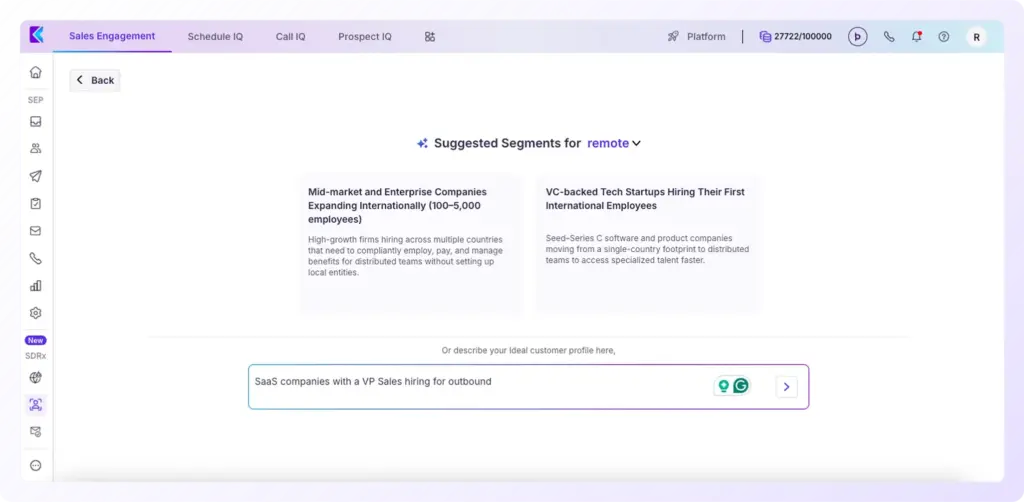
Everything starts with identifying who to reach out to. Modern platforms use AI-powered list building that lets you describe your ideal customer in plain English (for example, "VP of Sales at SaaS companies with 50 to 200 employees in the US") and generates a targeted prospect list automatically.
Some platforms also include built-in lead enrichment that verifies email addresses and finds phone numbers, so you do not waste time on bad data.
Step 2: Create Multi-Channel Sequences
Once you have your list, you build a sequence (also called a cadence). A sequence is a predefined series of touchpoints spread across multiple channels and days. A typical sequence might look like this:
Each step is scheduled automatically. The platform sends emails at optimal times, queues call tasks for the rep, and triggers LinkedIn actions, all without the rep manually tracking any of it.
Step 3: Personalize at Scale
Generic outreach gets ignored. Sales engagement platforms solve this with AI-driven personalization. The platform can pull account-level intelligence (recent funding, job changes, tech stack, company news) and weave it into each message automatically.
This means 100 prospects can each receive a message that feels one-to-one, without the rep spending hours researching and writing each one individually. Tools like AI email writers and email personalization features make this possible.
Step 4: Execute and Automate
As the sequence runs, the platform handles the execution:
- Emails go out automatically at the scheduled time
- Call tasks appear in the rep's daily to-do list with built-in sales dialers (parallel or power dialer) for faster calling
- LinkedIn steps are queued
- If a prospect replies, the sequence pauses automatically to let the rep handle the conversation
Step 5: Track, Measure, and Optimize
Every interaction is tracked. Opens, clicks, replies, call outcomes, and meeting bookings are all logged and visible in real-time dashboards. Managers can see which sequences perform best, which reps are hitting their numbers, and where deals are stalling.
This data feeds back into the process, so your team can iterate on what works and stop what does not.
Key Features of a Sales Engagement Platform
Not all sales engagement platforms are built the same. But the best ones share a core set of features that directly impact your team's ability to generate pipeline. Here are the 8 features you should evaluate.
1. Multi-Channel Outreach
Engage across email, phone, LinkedIn, and SMS from a single interface.
2. Sales Sequences / Cadences
Sales cadences are the backbone. Build automated multi-step sequences with conditional logic.
3. AI-Powered Personalization
AI generates contextually relevant messaging based on prospect data, going far beyond basic mail merge.
4. Built-In Dialer
Parallel dialers and power dialers let reps make significantly more calls per hour.
5. Email Deliverability
Deliverability tools like domain warm-up, validation, and throttling keep you out of spam.
6. CRM Integration
Two-way sync with Salesforce, HubSpot, Pipedrive, or Zoho. Auto activity logging.
7. Analytics & Reporting
Goals and reports track opens, replies, calls, meetings booked, and sequence performance.
8. Prospect Intelligence
Built-in account research gathers company info automatically so reps are always prepared.
Benefits of a Sales Engagement Platform
Adopting a sales engagement platform is not just about adding another tool to your stack. It is about fundamentally changing how your sales team operates. Here are the measurable benefits.
1. Reps Spend More Time Selling
By automating email follow-ups, data entry, and task creation, a sales engagement platform gives reps back hours each day. Instead of spending the morning on admin, they can jump straight into calls and meaningful conversations.
2. Higher Outreach Volume Without Sacrificing Quality
With sequences and AI personalization, your team can reach 3x to 5x more prospects per day while keeping each message relevant and tailored. Volume and quality are no longer a trade-off.
3. Consistent Sales Process
Every rep follows the same proven sequences and playbooks. New hires ramp faster because they have a structured process to follow from day one.
4. Better Pipeline Visibility
Managers see exactly where every prospect stands, which reps are performing, and which sequences are converting. You can even convert your goals into daily activities using activity-level tracking.
5. Improved Email Deliverability
Dedicated deliverability tools mean your emails actually reach the inbox. Features like domain warm-up, email validation, and send throttling protect your sender reputation. Learn more.
6. Multi-Channel Engagement Drives Better Response Rates
Prospects respond to different channels at different times. By engaging across email, phone, LinkedIn, and SMS in a coordinated sequence, you multiply your chances of getting a reply. Explore multi-channel outreach strategies.
7. Data-Driven Optimization
Every action is tracked. You know exactly which subject lines get opens, which call scripts lead to meetings, and which sequences convert best. This turns sales from guesswork into a repeatable, improvable system.
Start tracking your team's "prospecting mileage" — the ratio of meetings booked to outreach activities performed. A sales engagement platform makes this metric easy to measure and improve. Here is a guide on what prospecting mileage is and how to increase it .
How to Choose the Right Sales Engagement Platform
With dozens of options on the market, choosing the right platform can feel overwhelming. Here is a structured framework to guide your decision.
1. Define Your Primary Use Case
Are you building an outbound prospecting engine from scratch? Scaling an existing team? Improving inbound lead response time? Your use case determines which features matter most.
- Outbound-heavy teams need strong sequencing, dialer, and list-building capabilities
- Inbound teams need speed-to-lead automation and CRM-triggered workflows
- Full-cycle reps need a balance of both, plus account-based selling features
2. Evaluate Channel Coverage
Make sure the platform supports all the channels your team uses. Email-only tools will limit you. Look for native support for email, phone (with a built-in dialer), LinkedIn automation, and SMS.
3. Check CRM Compatibility
Your CRM integration should not be an afterthought. Verify that the platform has a deep, native integration with your specific CRM, not just a basic Zapier connection. Look for two-way sync, automatic activity logging, and the ability to trigger actions based on CRM data.
4. Assess AI Capabilities
AI is becoming a differentiator in this space. Evaluate how the platform uses AI: Can it build prospect lists from simple descriptions? Can it write personalized emails? Can it analyze calls and suggest next steps? Platforms with strong AI sales tools will give your team a significant edge.
5. Prioritize Deliverability
If your emails do not reach the inbox, nothing else matters. Ask about domain warm-up tools, email validation, bounce rate monitoring, and spam score testing. Strong email deliverability infrastructure is non-negotiable.
6. Consider Scalability and Pricing
A platform that works for a 5-person team might not work for 50. Look at pricing models (per user vs. flat fee), feature tiers, and whether the platform can grow with your team. Check the pricing structure before committing.
7. Test the Actual Workflow
Do not just read feature lists. Run a real pilot with your team. The best way to evaluate a sales engagement platform is to have your reps actually use it for a week or two and see if it genuinely reduces friction and improves output.
Quick Checklist: Choosing the Right Platform
- Define your primary use case (outbound, inbound, or full-cycle)
- Evaluate multi-channel coverage (email, phone, LinkedIn, SMS)
- Verify deep CRM integration with your specific CRM
- Assess AI capabilities (list building, personalization, call analysis)
- Prioritize email deliverability features
- Check scalability and pricing model
- Run a hands-on pilot with your team
How Klenty Works as a Sales Engagement Platform
Klenty is an AI-powered sales engagement platform that gives SDRs AI agents for every step of the outreach process, from building target lists to researching accounts, running multi-channel cadences, and following up automatically. Instead of reps spending hours on non-pipeline activities like list building, account research, email drafting, cadence management, and CRM updates, Klenty handles the execution so reps can focus on actual prospect conversations.
Klenty helps sales teams book more meetings through three core mechanisms:
- Account and Contact Identification: AI continuously finds and refreshes your ICP list so reps know exactly who to engage every day.
- Tailored Engagement Strategy: Research workflows and messaging recommendations ensure every account gets relevant, personalized outreach.
- Automated Execution with Control: SDRs approve sequences, calls, and follow-ups before they go out, saving hours of manual work while maintaining quality.
Here is a closer look at Klenty's core capabilities:
AI List Builder
Klenty's AI List Builder lets you create prospect lists using simple English prompts, pulling from a 700M+ contact database. The system scores accounts based on ICP alignment, explains the scoring rationale, and auto-enriches contacts with verified email addresses and phone numbers. No more hours spent manually searching databases or cleaning up bad data.
AI Account Research
Before a rep sends a single message, Klenty's AI Account Research surfaces insights including recent funding rounds, tech stack details, hiring trends, social activity, and company growth signals. This gives reps the context they need to write relevant messages without spending 15 minutes researching each prospect manually.
Agentic Cadences
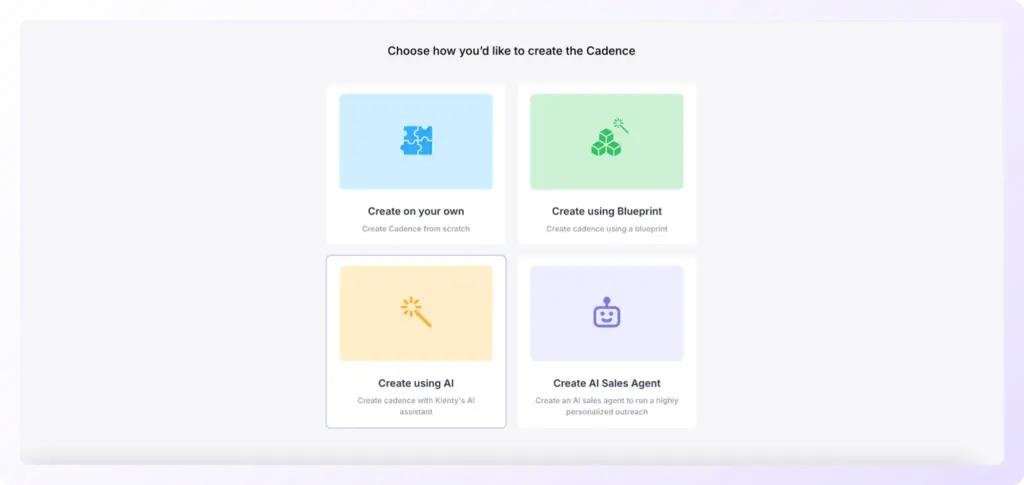
Agentic Cadences go far beyond standard sequences. They let teams design account-specific engagement strategies across email, calling, and research actions. The AI generates personalized sequences, integrates account insights directly into templates, and adapts the approach based on how each prospect is engaging. This means every account gets a strategy tailored to their specific profile rather than a one-size-fits-all template.
AI-Powered Personalization
Klenty leverages real-time insights at the account and prospect level to craft highly relevant messages using AI-powered personalization. The system highlights timely events like funding rounds and hiring trends, making it possible to personalize at scale without sacrificing quality. Each message feels one-to-one even when you are reaching hundreds of prospects.
Action AI
This is one of Klenty's most distinctive features. Action AI listens to your sales conversations, understands what was discussed on the call, and intelligently generates the next action. It automatically creates follow-up tasks, schedules the next contact window, generates personalized follow-up messaging, and even identifies new stakeholders mentioned during conversations. After a call, instead of the rep manually logging notes and creating tasks, Action AI handles all of it.
Multi-Channel Execution
From email outreach to AI parallel and power dialer calling, LinkedIn automation, and SMS, Klenty covers every channel in one platform. The parallel dialer reduces downtime from voicemails, phone trees, and missed connections, letting SDRs focus on real conversations. Reps manage all outreach from a single multi-channel inbox.
Email Deliverability Infrastructure
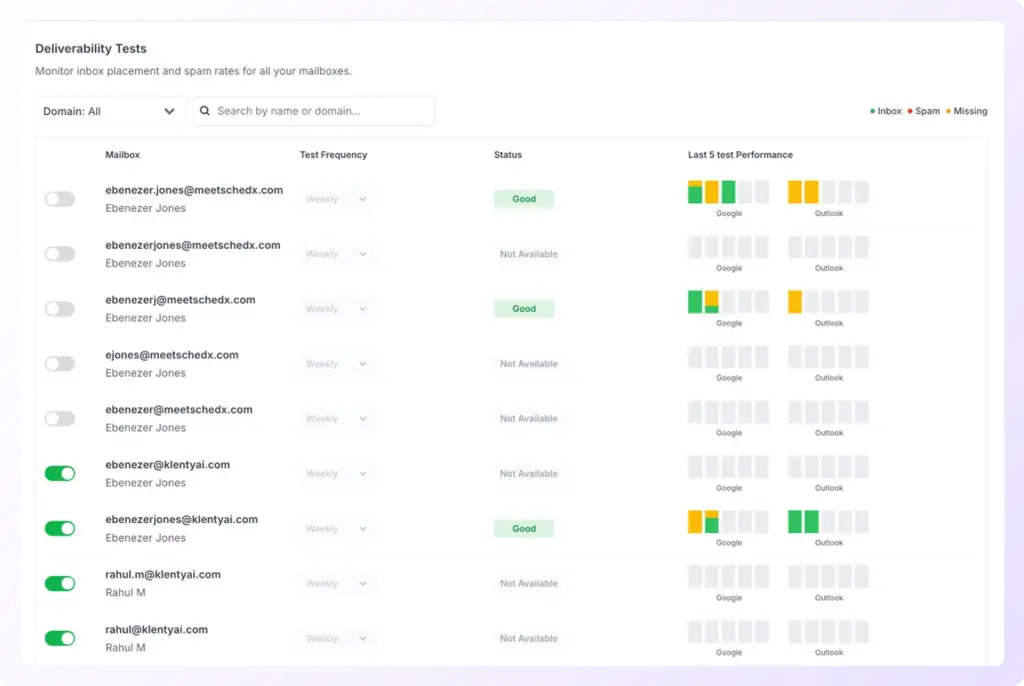
Klenty includes a comprehensive email deliverability infrastructure: domain and mailbox configuration (SPF, DKIM, DMARC), automatic warm-up, inbox rotation, volume throttling, custom domain tracking, email validation, and centralized reporting at both mailbox and domain levels. Your emails land in the inbox, not spam.
Deep CRM Integrations
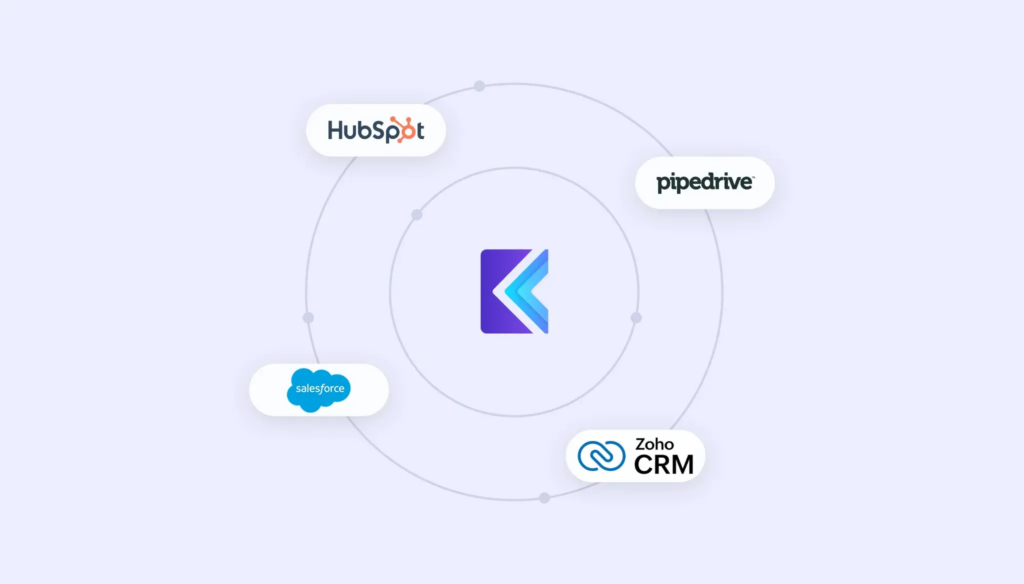
Native integrations with Salesforce, HubSpot, Pipedrive, Zoho CRM provide automatic data sync, trigger-based workflows, in-CRM outreach execution, and complete activity logging. Your CRM stays up to date without reps lifting a finger.
Goals and Performance Tracking
With Goals and Reports, managers set activity targets and track progress in real time. Reps see exactly how they are performing against their daily and weekly goals.
Sales Engagement Platform: Key Takeaways
- A sales engagement platform centralizes and automates outreach across email, phone, LinkedIn, and SMS.
- It works alongside your CRM to turn stored data into executed action.
- The core workflow includes list building, sequencing, personalization, automation, and tracking.
- Look for multi-channel sequencing, AI personalization, dialers, deliverability tools, CRM integration, and analytics.
- Benefits include higher productivity, better pipeline visibility, and data-driven optimization.
- Choose a platform based on use case, CRM compatibility, AI capabilities, deliverability, and scalability.
- Klenty provides AI list building, agentic cadences, action AI, multi-channel execution, and deep CRM integrations.
If you are ready to increase conversations, improve response rates, and build pipeline faster, it is time to upgrade your execution.
See how Klenty helps you book more meetings. Book a demo today.