- Account-Based Selling is the go-to motion for B2B teams selling high-ACV, multi-stakeholder deals, but most sales tools are still built for prospect-based outreach, not account-based execution.
- The biggest challenges teams face: scattered follow-ups, ad-hoc multi-threading, manual next-step scheduling, and no visibility into how accounts progress toward the pipeline.
- This blog covers 20 tools across the ABS landscape: data enrichment, intent signals, engagement platforms, ABM, and more, with features, pricing, and best-fit use cases for each.
- Klenty is the only platform built end-to-end for account-based outreach, from ICP identification to orchestrated multi-threading to AI next-step execution to account stage tracking.
- Use this guide to evaluate tools based on your ABS maturity, must-have features, and how well each platform closes the gap between target accounts and qualified pipeline.
Account-Based Selling has become one of the most widely discussed motions in B2B sales, but also one of the most misunderstood.
Many teams hear "ABS" and assume it simply means going after large accounts or coordinating with marketing on a few campaigns. But true Account-Based Selling is far more foundational and far more transformational.
If your sales team is struggling with inconsistent account follow-up, insufficient buying committee coverage, context leaking between conversations, or heavy Excel work just to track account progression, you are not alone. These are the exact problems that keep the pipeline unpredictable, and deals stuck.
Account-Based Selling solves this by changing the way your team picks accounts to target, works with marketing on campaigns, creates engagement across the buying committee, and builds and manages a pipeline. When done right, it becomes one of the most reliable engines for creating predictable revenue, deeper customer relationships, and a consistent flow of high-quality opportunities.
In this blog, we will break down everything you need to know about Account- Based Selling Tools - what they are, why they matter, key features to look for, and a comparison of the top 20 ABS platforms for 2026. Whether you are just starting with ABS or looking to optimize your existing strategy, this guide will help you make an informed decision.
In This Article
- What is Account-Based Selling?
- Why You Need Account-Based Selling Tools
- Key Features to Look for in ABS Platforms
- Top 20 Account-Based Selling Tools for 2026
- Here is Why Klenty is the Best Account-Based Selling Tool for Your Business
What is Account-Based Selling (ABS)?
Account-Based Selling is a focused outbound strategy where SDRs stop chasing random leads and instead go after high-probability accounts using data, social proximity, and buying-committee insights. Instead of blasting sequences, you work a curated list of accounts, chosen based on relationships, past customer influence, and trigger signals, and activate them through coordinated, multi-threaded plays.
Account-Based Selling is all about prioritizing the right accounts, engaging the right people, and running the right plays to create a predictable pipeline.
Why You Need Account-Based Selling Tools
Investing in a robust Account-Based Selling platform delivers several critical advantages:
- Precise Account Targeting: Use data-driven insights and intent signals to identify accounts that match your ICP and focus resources on accounts most likely to convert, before your competitors reach them.
- Buying Committee Engagement: Identify all stakeholders involved in purchasing decisions and orchestrate multi-threaded, persona-specific outreach across the entire buying group.
- Sales and Marketing Alignment: Give both teams shared visibility into account engagement, coordinate messaging and cadences, and reduce friction in handoffs from SDR to AE.
- Multi-Channel Orchestration: Execute coordinated outreach across email, phone, and ads, with automated follow-ups triggered by account behavior.
- Account Intelligence: Access real-time data on account activity, track trigger events that signal buying intent, and monitor competitive intelligence within target accounts.
- Measurable ROI: Track account progression through defined stages, attribute revenue to specific activities, and optimize strategies based on what actually drives the pipeline.
Top 20 Account-Based Selling Tools for 2026
Let us explore the leading Account-Based Selling tools available in 2026 that can help your team refine strategies and increase revenue.
1. Klenty
Klenty is a sales engagement platform that helps sales teams discover ICP accounts, multi-thread to the entire buying committee in each account, relay account context from one conversation to the next, and generate qualified opportunities.
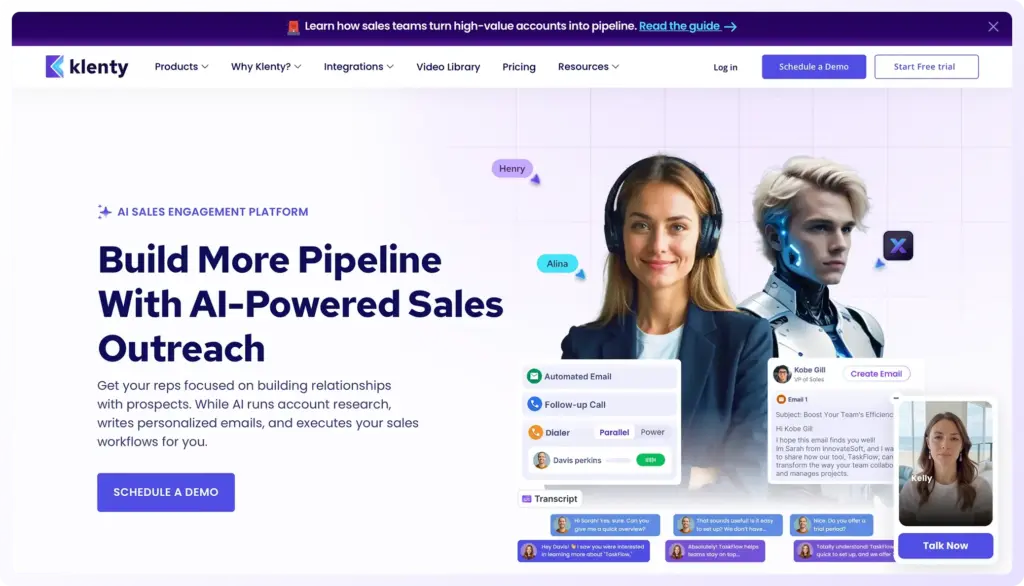
Unlike traditional sales engagement tools focused on prospect-level outreach, Klenty is designed from the ground up to execute account-level strategies with precision and consistency.
Here is how Klenty enables account-based execution:
Key Features
Build Your Target Account Universe
ICP Account Mapping and List-Building
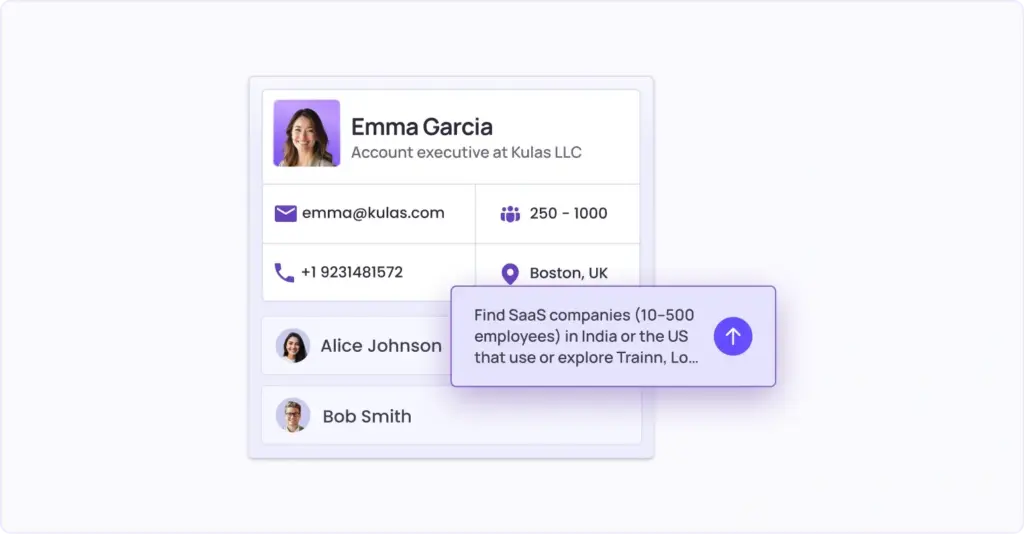
Describe your ICP in natural language and build your target account list in seconds. AI-powered account discovery eliminates manual research and ensures you are targeting the right accounts from day one, so your reps spend time on accounts that actually convert, not on building spreadsheets.
Orchestrate Coordinated Engagement Across Buying Committees
Account Action Window
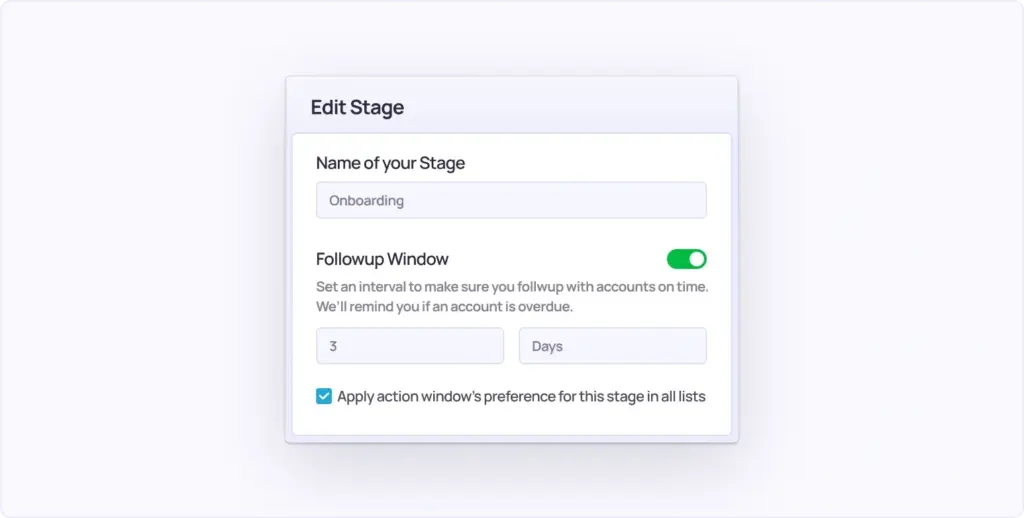
Every target account is at a different stage in its buying journey. Some need urgent action and immediate follow-up to turn into an opportunity - they are in-market. Others need more time, a longer nurture cycle before they are ready to talk to sales.
The problem is that all account actions pile up on your dashboard, leaving no room for prioritization. With traditional sales engagement tools, there's never been a way to control the velocity of rep execution against a set of accounts.
Account Action Windows changes that.
Choose the time period within which actions need to be taken for accounts in each stage. Klenty alerts you when they are overdue. The deeper an account is in its buying journey, the faster reps execute - systematically progressing cold accounts toward an opportunity by following up at set intervals.
Here is what you can do with Account Action Windows:
- Set the frequency, messaging, and channels for every prospect in an account to be engaged.
- Control the velocity of rep execution based on where each account sits in the buying journey.
- Ensure coordinated outreach across the entire buying committee so emails, calls, and LinkedIn touches hit the right people at the right time, not in random bursts.
- Get alerted when action windows are overdue so no account slips through the cracks.
Outreach Methodology (Multi-Threading)
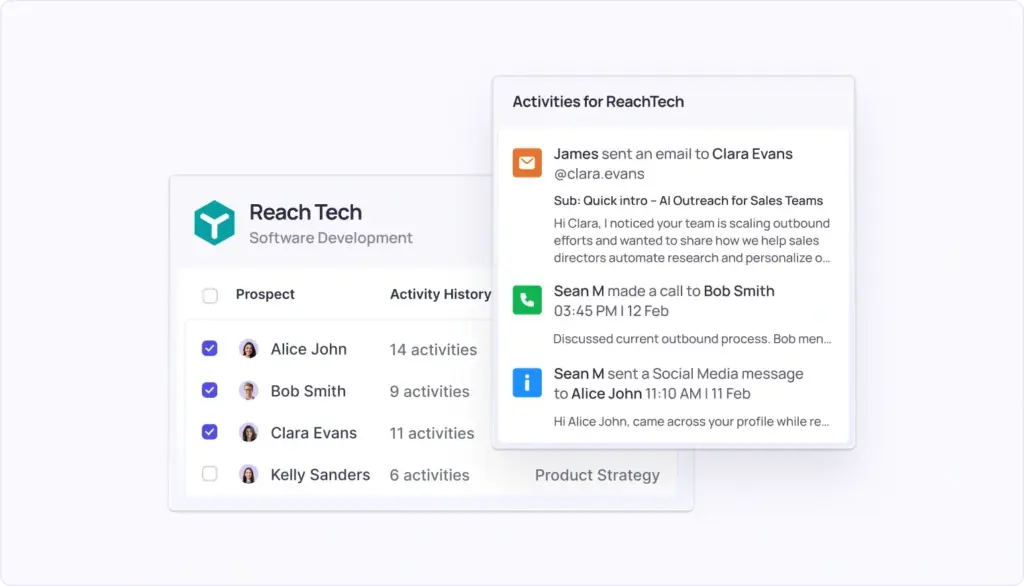
Enforce adherence to top-down, bottom-up, or custom multi-threading workflows. Systematically engage executives, mobilizers, and users within each account based on your preferred approach, ensuring no key stakeholder is left untouched, and every account gets full buying committee coverage.
AI Next Step Execution
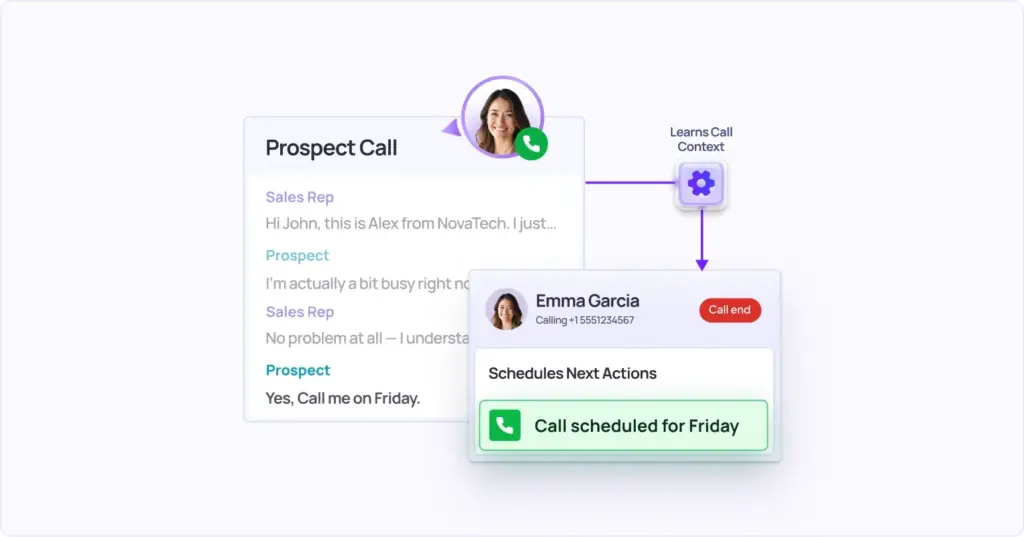
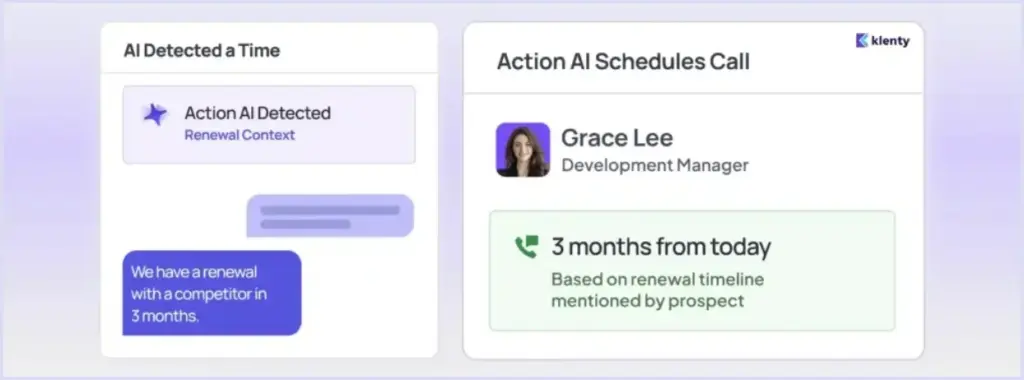
Klenty’s Action AI listens to your sales conversations, understands what was discussed on the call, and intelligently generates the next action. You can focus on dialing, not managing next steps, execute the right tasks at the right time, and save time with auto-generated follow-up messaging.
Time-Based Next Actions
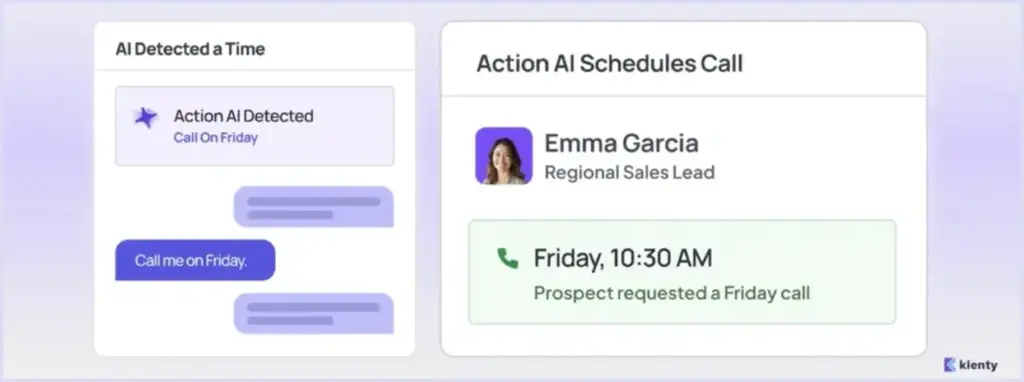
Prospect says, “Call me on Friday.” → Action AI schedules a call for Friday with the prospect.
Channel-Based Next Actions
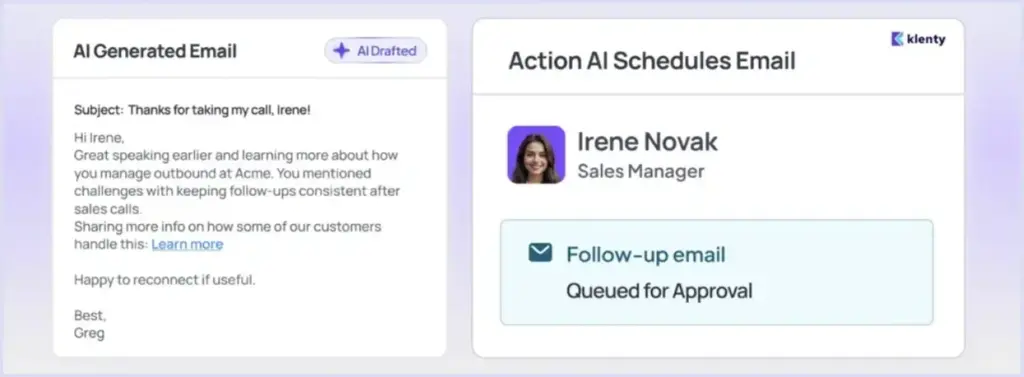
Prospect says, “Send me an email.” → Action AI creates a personalized email and queues it up for approval.
Context-Based Next Actions
Prospect says, “We have a renewal with a competitor in 3 months.” → Action AI schedules a call in 3 months with a call context.
Account Playbooks
Not all accounts are alike. Only 3% of your cold accounts are in-market at any given time; the rest need outreach that adapts to their needs, timing, and fit.
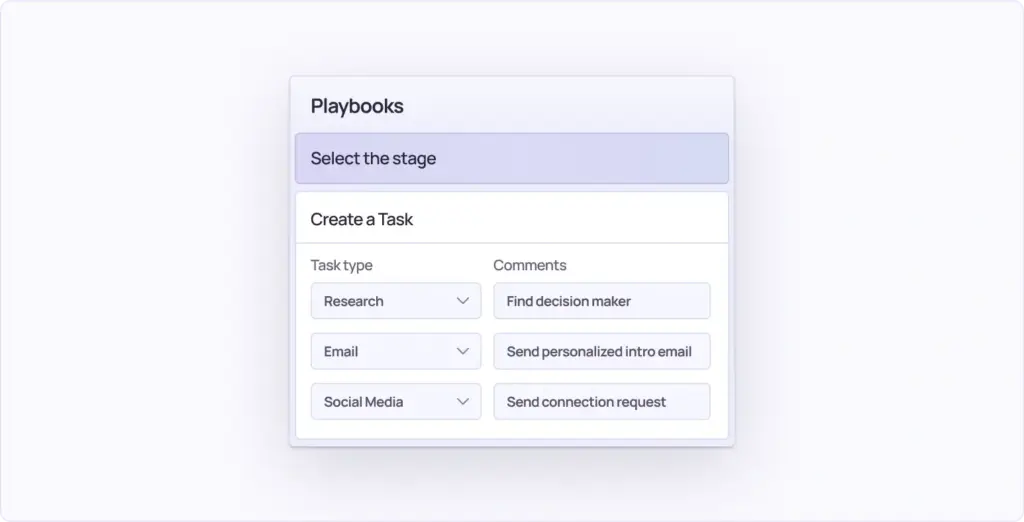
Traditional sales outreach tools are built purely for demand capture, leaving the other 97% of accounts without a structured way to be nurtured toward a buying decision.
Account Playbooks are built for both - helping you capture demand and create it.
Trigger the Right Play at the Right Stage
Set entry and exit criteria for each account stage and define the activities that need to happen as soon as accounts meet the criteria - across emails, calls, and tasks. When accounts show specific signals or reach certain stages, the right plays trigger automatically, so your team responds to buying intent in real time instead of discovering it weeks later in a pipeline review.
Control Velocity and Urgency of Execution
Not all stages carry the same urgency. Set Account Action Windows for each stage to control how fast reps execute. For instance, accounts in a "Decision-Maker Contacted" or "Meeting Booked" stage can be set to require execution instantly or within 24 hours, while earlier-stage accounts follow a longer, more measured cadence.
Orchestrate Playbooks Account-by-Account
Label accounts as "interested," "right contact identified," or "good fit, not now," and execute the right sequence of activities for an entire account before moving on to the next. This ensures outreach is coordinated across the entire buying committee - enrolling every prospect in customized follow-ups based on org-wide engagement level, so no account context is lost mid-play.
Account Panel
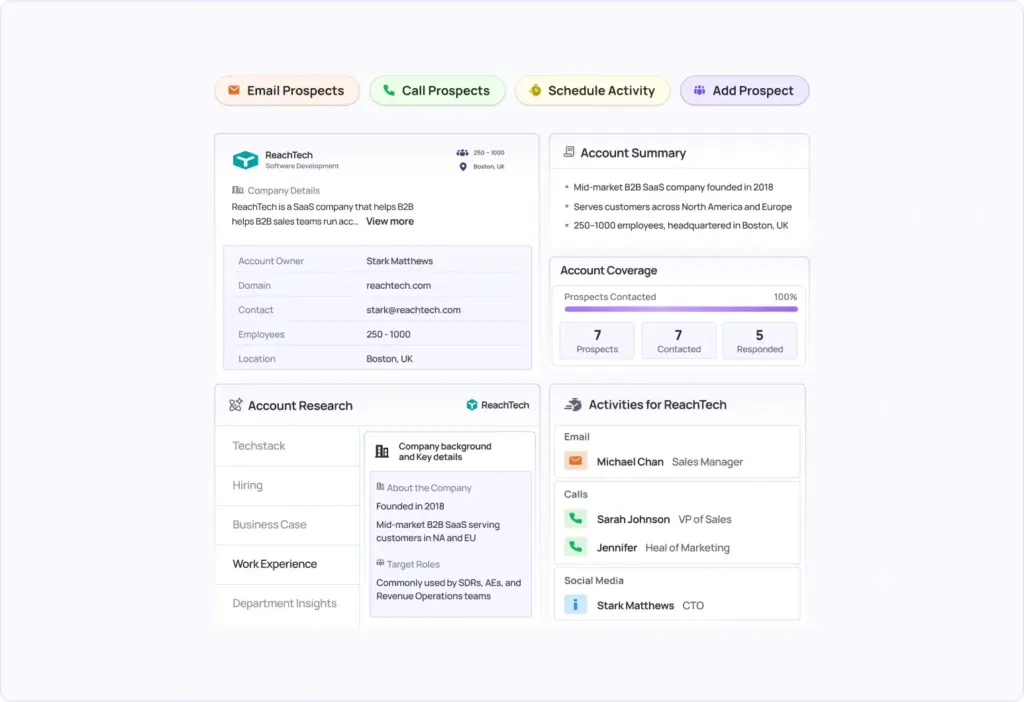
Klenty’s Account Panel helps you to -
Execute Outreach Account-by-Account
Unlike traditional sales engagement tools that are built around individual prospects, the Account Panel lets you group prospects by account and execute emails, calls, and tasks at the account level. Reps can move through research, sending emails, making calls, and finding fresh prospects - all without jumping between tools or losing context mid-execution.
Review the Entire Account's Engagement History
Rather than patching together individual prospect interactions in a spreadsheet, get a consolidated picture of every interaction across all stakeholders in an account, out of the box. Reps walk into every call informed, and managers see the full picture without chasing updates.
Multi-Thread Across the Buying Committee
Know exactly which prospects exist in an account, track coverage across hierarchies, roles, and titles, and add fresh prospects to ensure all relevant stakeholders are being engaged. No contact goes untracked, and no decision-maker falls through the cracks.
Run a Well-Researched, Consultative Sales Process
Basic account details, past conversation summaries, and AI-powered account research insights surface at the moment of dial, so every outreach stays relevant, timely, and specific to the account your rep is working on.
Track Account Progression and Optimize Coverage
Account Stages
Traditional sales outreach tools leave you with an Account Development Gap - you do not know which accounts are moving toward an opportunity and which are stuck, you can't define tailored strategies for each stage, and there's no systematic way to nurture demand across accounts that aren't ready yet.
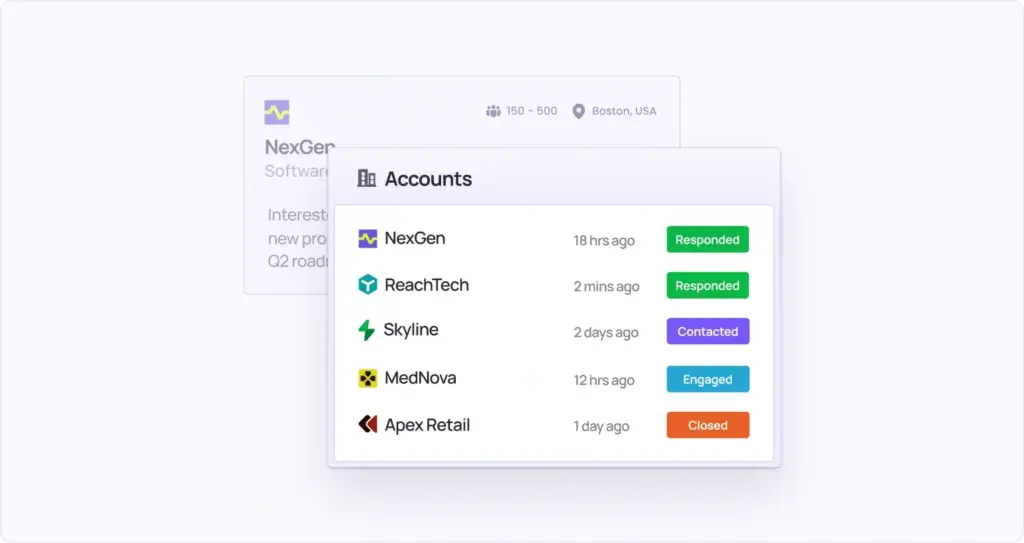
Klenty's Account Stages fixes this with CRM-like stages built specifically for sales outreach.
Define a Custom Pipeline for Account-Based Outreach
Create a custom pipeline for each account list and set up stages that reflect the actual steps accounts go through before turning into an opportunity. Every account has a defined place in the journey; nothing falls into a grey area.
View and Drill Into Accounts at Every Stage
With one click, dig into all accounts sitting at any stage of your pipeline. Drill deeper into account-level details like prospects contacted, notes, next steps, and activity history, all consolidated in a single table view so nothing needs to be chased down manually.
Set Custom Strategies for Each Stage
Define entry and exit criteria for each account stage and prescribe the series of actions that need to happen as soon as an account moves in. Each stage gets its own tailored outreach strategy, so reps always know exactly what to do next, for every account, at every step.
Prescribe the Urgency of Execution at Each Stage
Prevent account rotting. Set deadlines for actions to occur at each stage of the pipeline so accounts at advanced stages get immediate attention, and no high-intent account sits idle waiting for a rep to take action.
Account Coverage Analysis
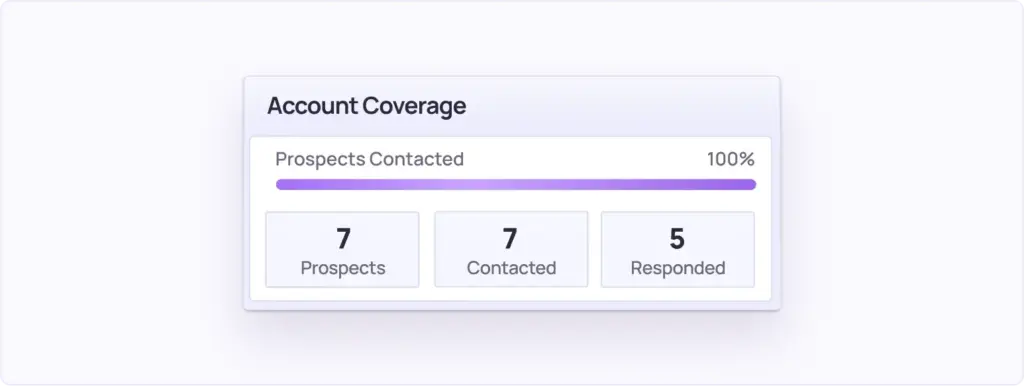
Review the percentage of ICP prospects engaged in any given account and identify gaps for deeper multi-threading. This ensures you are not leaving key stakeholders untouched, the single biggest reason ABS deals stall or die in the pipeline.
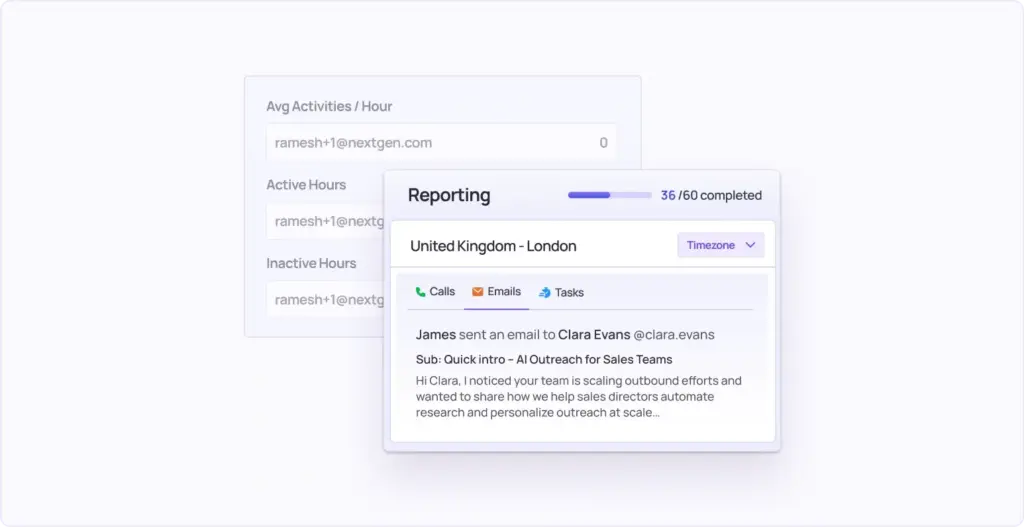
Account-Level Reporting
Track SDR activity across daily, weekly, and monthly timelines and contrast it against target account progression. You measure what actually matters, account movement and pipeline created, not just email volume or call counts that look busy but produce nothing.
Best For - B2B sales teams running Account-Based Selling motions who need to systematically engage buying committees, maintain context across conversations, and track account progression from target to closed deal. Ideal for organizations selling $20K+ ACV products with complex buying groups and sales cycles that require multi-threaded engagement.
2. Clay
Clay is a powerful data enrichment and automation platform that integrates with over 100 data providers to help sales teams build and enrich account lists at scale. It automates prospect research across multiple databases, enabling you to create comprehensive, personalized outreach campaigns.
Key Features
- Waterfall Enrichment across 100+ premium data sources to maximize coverage without multiple subscriptions
- Claygent AI agent that searches public databases, navigates gated forms, and finds unique data points
- Conditional workflow logic that runs different providers for different companies and builds in automatic fallbacks
Pros
- Eliminates hours of manual research and data enrichment
- Exceptional data coverage through multi-provider waterfall approach
- Highly flexible workflow automation
- Intuitive interface despite powerful capabilities
Cons
- Can be expensive with heavy data usage across multiple providers
- Learning curve for advanced workflow creation
- Requires familiarity with data enrichment concepts
- Credit-based pricing can be hard to predict
Pricing
- It has a free plan with 100 credits/month for exploring the platform.
- Starter plan starts at $149/month with 2,000 credits/month.
- Explorer plan starts at $349/month with 10,000 credits/month.
- Pro plan starts at $800/month with 50,000 credits/month. Enterprise plan has custom pricing.
Best For - Revenue teams that need comprehensive data enrichment and automation to power highly personalized Account-Based Selling campaigns at scale.
3. Salesloft
Salesloft is a leading sales engagement platform that uses generative AI to create relevant experiences for target accounts. The platform helps sales teams scale outbound communication, improve seller efficiency, and manage the entire sales process with powerful automation, conversation intelligence, and analytics capabilities.
Key Features
- Rhythm AI engine that organizes your book of business by prioritizing accounts based on likelihood of conversion
- AI Agents suite with 26+ agents covering account research, buyer identification, deal coaching, and personalized email generation
- Conversation Intelligence that provides deeper insights from sales calls with comprehensive data extraction and analytics
Pros
- Excellent for automating diverse communication channels
- Strong conversation intelligence features
- Seamless Salesforce integration reduces manual data entry
- Intuitive cadence builder with customization options
Cons
- Can be complex to set up and configure initially
- Limited dialing capabilities compared to dedicated dialer tools
- Occasional instability issues reported by users
- Higher price point than some alternatives
Pricing
- It offers two plans: Advanced (sales engagement, deal tracking, AI insights) and Premier (adds revenue forecasting).
- Pricing is not publicly listed. It is custom based on team size and features.
- Typically ranges from $75–$150+ per user/month, billed annually.
Best For - Mid-market to enterprise sales teams that need comprehensive engagement automation with strong Salesforce integration and conversation intelligence.
4. Outreach
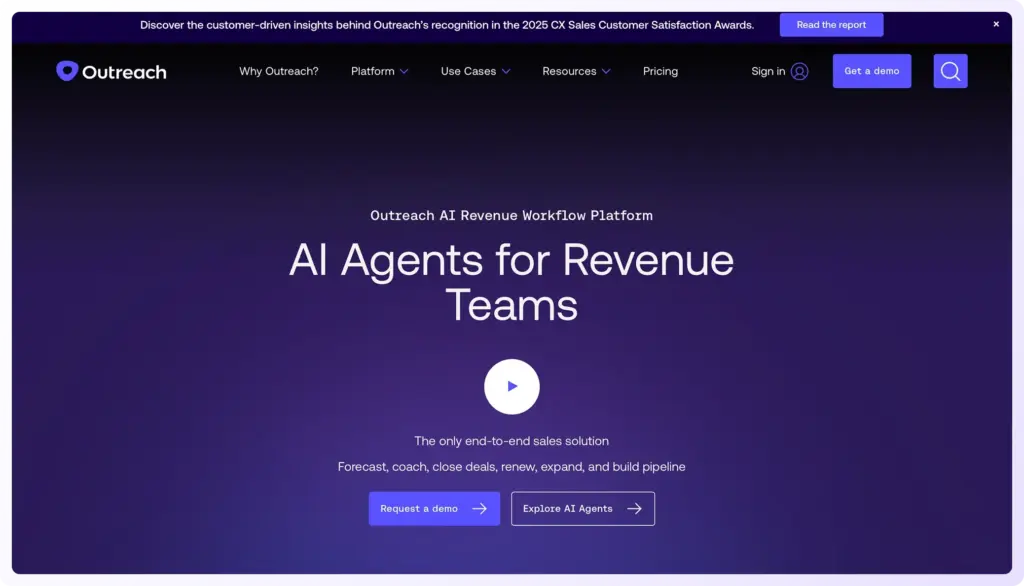
Outreach is a comprehensive sales execution platform designed to help teams implement Account-Based Selling strategies at scale. With powerful workflow automation, multi-channel engagement tools, and advanced analytics, Outreach enables sales teams to operate with precision and consistency across their entire account base.
Key Features
- AI Revenue Workflow Platform unifying prospect engagement, customer retention, and revenue intelligence with integrated AI Agents
- Smart Email Assist and advanced sequences with multi-channel engagement across email, calls, LinkedIn, and live chat
- Kaia AI conversation intelligence for real-time meeting assists, post-meeting insights, and coaching recommendations
Pros
- Highly customizable sequences for complex Account-Based campaigns
- Strong analytics and reporting capabilities
- Robust integration ecosystem
- Good mobile app for field sellers
Cons
- Steep learning curve for new users
- Higher pricing structure
- Some users report occasional sync issues
- Can feel overwhelming without proper training
Pricing
- Pricing is not publicly listed.
- The Standard plan starts at approximately $100/user/month, billed annually.
- The Professional plan adds AI-powered deal scoring and advanced analytics at a higher tier.
Best For - Enterprise sales organizations running sophisticated Account-Based programs who need maximum customization and advanced workflow capabilities.
5. Apollo.io
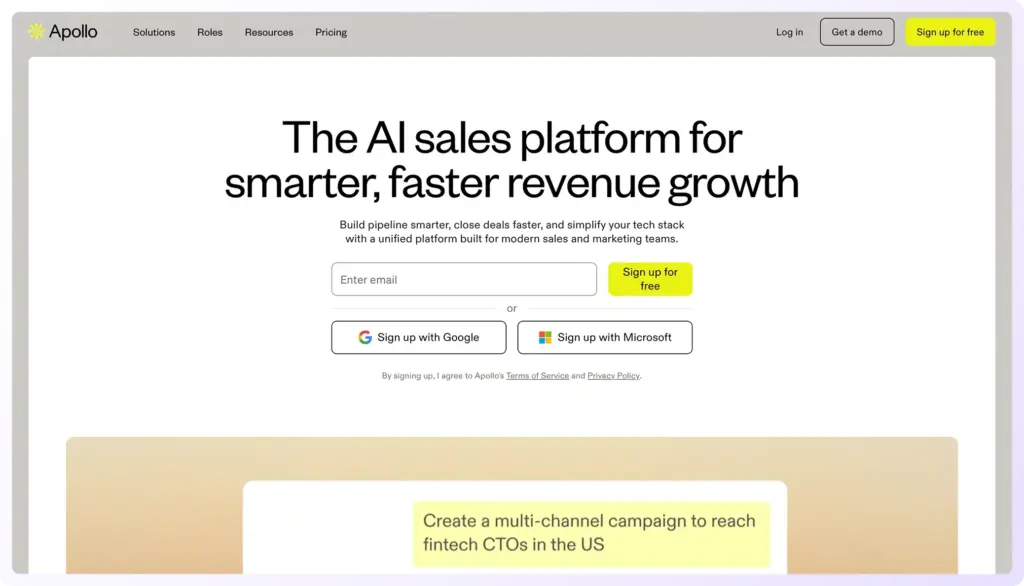
Apollo.io is an all-in-one sales intelligence and engagement platform that combines a massive B2B database with powerful outreach tools. It enables Account-Based Selling teams to find contacts, engage them with sequences, and track results.
Key Features
- Powered by Apollo Data, one of the largest B2B data networks with 265M+ contacts and 60M+ companies, with 91% email accuracy
- AI-powered sales assistants that automate research, scoring, outreach, and recommend next best actions
- End-to-end pipeline management from prospecting and sequences to deal tracking, with built-in CRM capabilities
Pros
- Competitive pricing with generous contact credits
- Large, regularly updated database
- Good balance of data and engagement features
- User-friendly interface
Cons
- Data accuracy can vary by region and industry
- Less sophisticated cadence logic than specialized platforms
- Limited conversation intelligence features
- Reporting could be more robust
Pricing
- It has a free plan with limited credits and basic prospecting features.
- Basic plan starts at $49/user/month, billed annually.
- Professional plan starts at $79/user/month, billed annually.
- Organization plan starts at $119/user/month, billed annually (minimum 3 users).
Best For - Sales teams that want data access and engagement tools in a single, affordable platform without needing enterprise-level sophistication.
6. ZoomInfo Sales
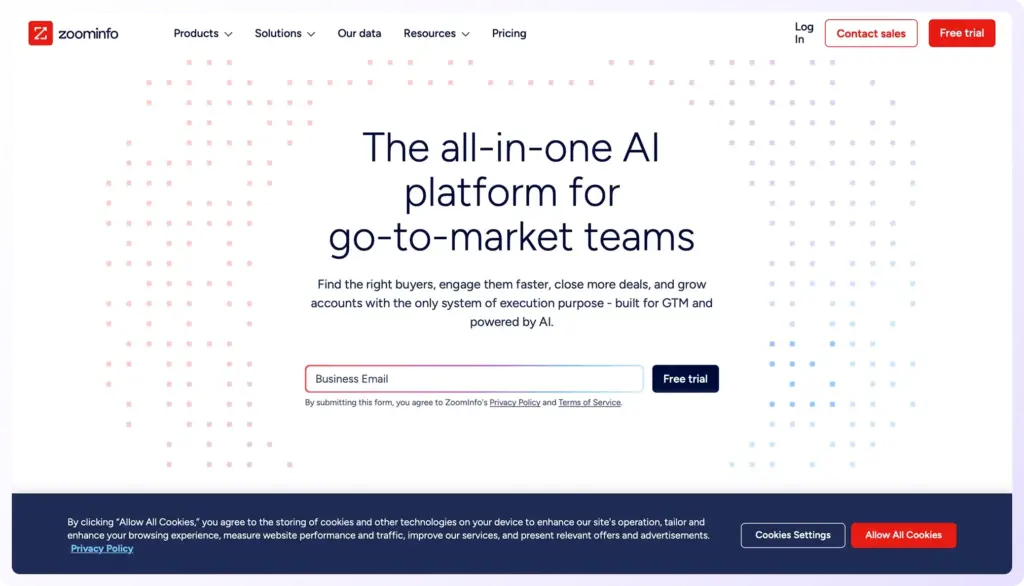
ZoomInfo Sales is a leading B2B sales intelligence platform that gives Account-Based Selling teams deep, real-time data on target accounts and buying committees. It combines firmographic, technographic, and intent data with engagement tools.
Key Features
- Buyer Intent Data that surfaces accounts actively researching topics related to your solution, so reps prioritize accounts already showing in-market signals
- Chorus Conversation Intelligence that records, transcribes, and analyzes sales calls to surface deal risks, coaching opportunities, and account insights
- Buying Committee Builder that maps out all relevant stakeholders within a target account, including org charts, reporting lines, and contact-level data
Pros
- One of the largest and most accurate B2B contact and company databases
- Strong intent data for prioritizing the right accounts at the right time
- Excellent buying committee visibility for multi-threading
- Deep integrations with Salesforce, HubSpot, Outreach, and Salesloft
Cons
- Higher price point, often cost-prohibitive for smaller teams
- Data accuracy can vary for niche industries or international markets
- Full value requires using multiple modules, which adds cost
- Can feel overwhelming without a dedicated RevOps resource to manage it
Pricing
- Pricing is not publicly listed; custom quotes are based on team size and features selected.
- Typically ranges from $15,000–$40,000+/year depending on database access, intent data, and add-ons.
Best For - Mid-market to enterprise ABS teams that need rich account intelligence, intent signals, and buying committee data to fuel multi-threaded outreach at scale.
7. N.Rich
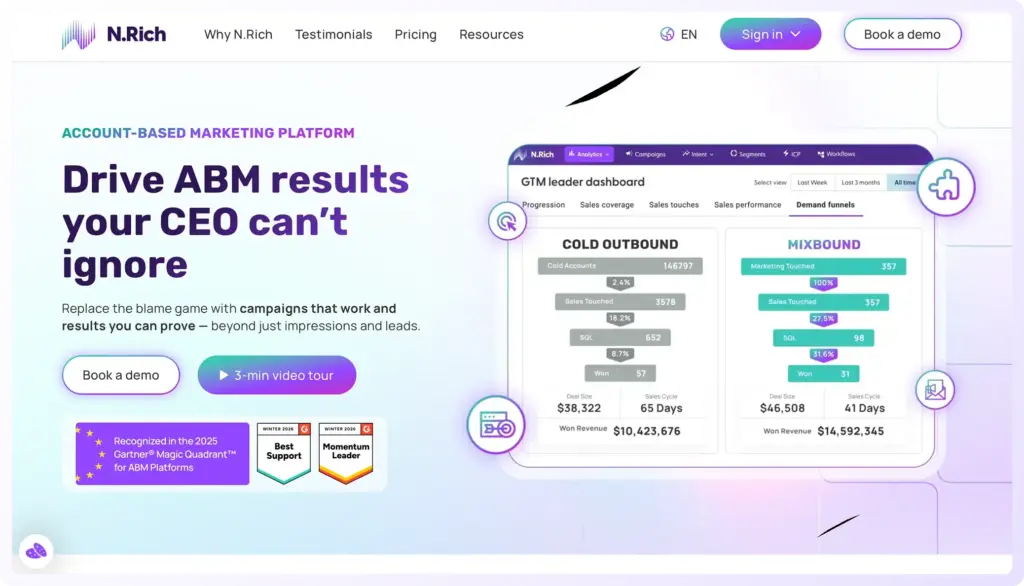
N.Rich is an account-based go-to-market platform designed primarily for mid-market and enterprise B2B companies. It provides user-friendly tools for ABM intent identification, account-targeted advertising, and multi-channel engagement.
Key Features
- Purpose-built B2B DSP for account-based programmatic advertising charged on engagement, not impressions
- Dynamic ICP Builder that creates and scores account lists using firmographic, technographic, and intent signals
- First and third-party intent data showing which companies are visiting your site and exploring relevant topics across the web
Pros
- User-friendly platform with minimal learning curve
- Strong intent identification capabilities
- Super responsive and helpful support team
- Good for coordinating advertising with sales outreach
Cons
- May have targeting limitations for specific sectors
- Some challenges gathering insights from certain countries
- Limited compared to more comprehensive ABM platforms
- Smaller ecosystem than market leaders
Pricing
- Custom pricing based on account volume and campaign requirements.
Best For - Mid-market and enterprise companies running targeted advertising campaigns to high-value accounts with extended sales cycles.
8. Momentum Data
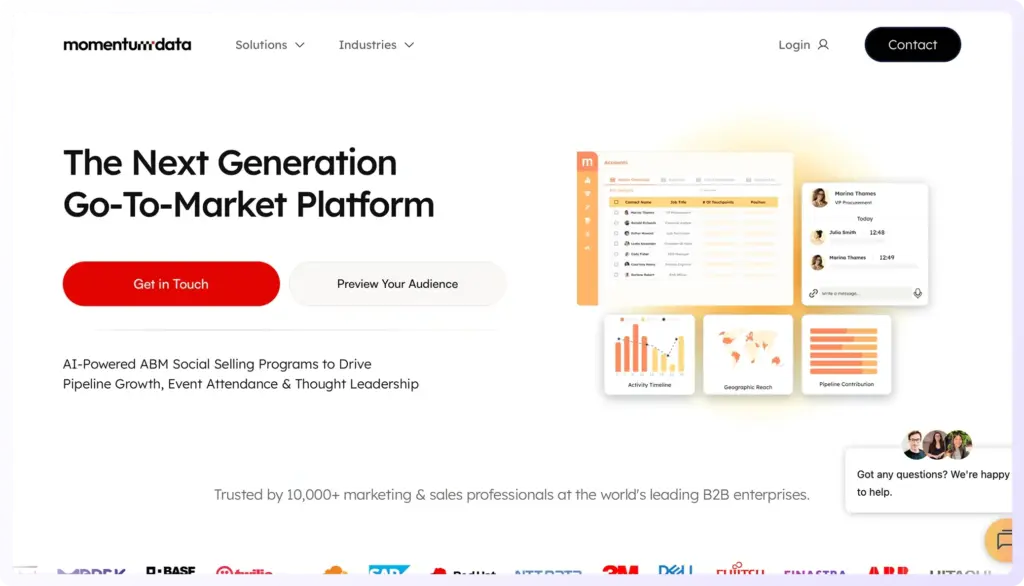
Momentum Data is a next-generation ABM technology that uses AI and Robotic Process Automation to identify and engage relevant target audiences. The platform navigates sales teams' social networks to execute multi-touchpoint engagement with prospects.
Key Features
- AI-powered social selling that navigates your sales team's social networks to engage relevant prospects
- Robotic Process Automation (RPA) that executes multi-touchpoint engagement across social channels at scale
- Sales network mapping that identifies the best social paths into target accounts
Pros
- Innovative approach using social network mapping
- Strong focus on social selling and LinkedIn
- Good for building credibility through smart touchpoints
- Measurable ROI with clear attribution
Cons
- Relatively newer platform with smaller user base
- May require sales team buy-in for social engagement
- Limited information on pricing and packaging
- Narrower feature set compared to full ABM platforms
Pricing
- Pricing is not publicly listed.
Best For - Enterprise marketers who want to leverage social networks and execute sophisticated multi-touchpoint engagement campaigns.
9. Userled
Userled provides marketing teams with tools to create and distribute personalized experiences, such as advertisements, web content, and landing pages, for targeted accounts and contacts.
Key Features
- AI-powered content creation that generates personalized ads, web pages, and landing pages in seconds
- Multi-channel distribution of personalized experiences across advertising, email, and web
- Engagement tracking that notifies sales when accounts hit readiness thresholds
Pros
- Saves time developing personalized campaigns
- AI-powered creation generates assets in seconds
- Good for branding and awareness campaigns
- Easy to create account-specific experiences
Cons
- Relatively newer platform
- Limited third-party reviews available
- May lack some advanced ABM features
- Smaller integration ecosystem
Pricing
- Pricing is not publicly listed.
Best For - Marketing teams that need to quickly create and deploy personalized experiences for target accounts across multiple channels.
10. Metadata.io
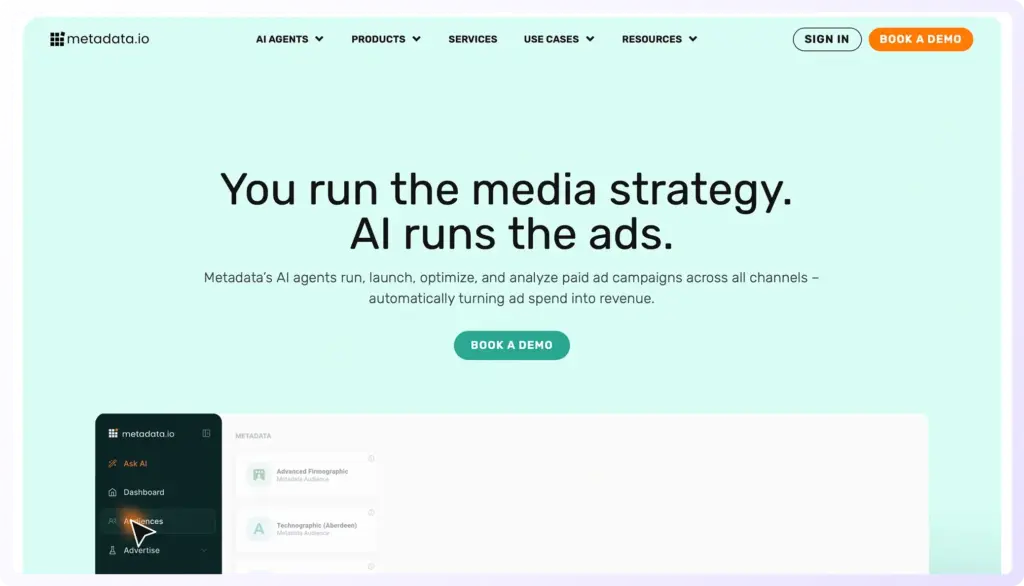
Metadata.io uses artificial intelligence to help B2B marketers execute account-specific marketing campaigns at scale across multiple touchpoints.
Key Features
- AI-powered campaign automation that launches and optimizes multi-channel ad campaigns across paid social, display, and search
- Automated audience building and targeting using firmographic, technographic, and intent data
- Experimentation engine that runs thousands of campaign variations to find best-performing combinations
Pros
- Significantly reduces manual campaign management work
- Strong AI-powered optimization capabilities
- Good for running campaigns across multiple channels
- Time-saving automation features
Cons
- Higher price point
- Primarily focused on paid advertising channels
- Learning curve for advanced features
- May not suit organizations with limited ad budgets
Pricing
- Pricing is not publicly listed.
Best For - B2B marketing teams running significant paid advertising budgets who want AI-powered automation and optimization.
11. Cognism
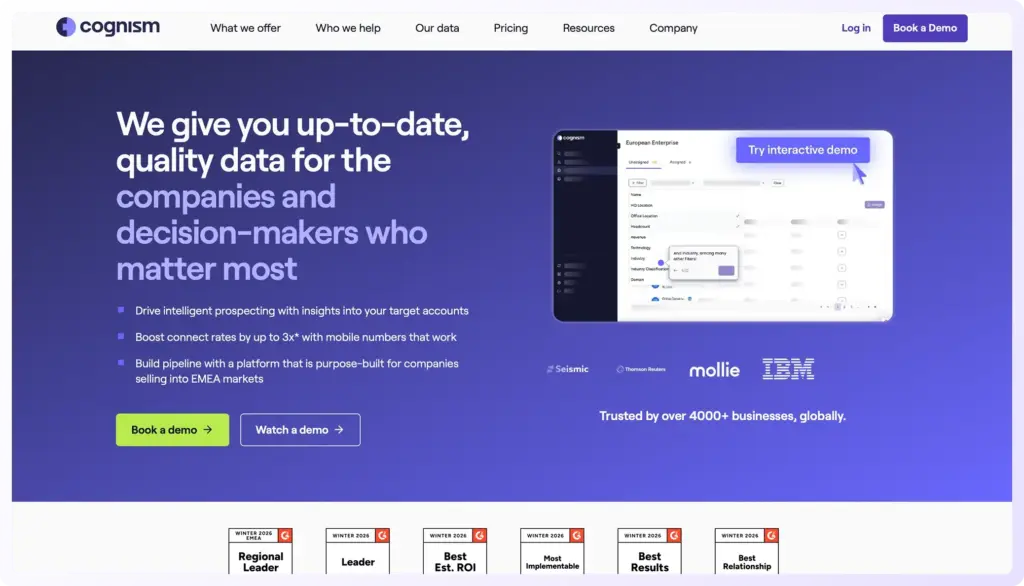
Cognism is a sales intelligence platform that provides high-quality B2B data with a strong focus on compliance and accuracy, with particular strength in European markets.
Key Features
- Diamond Data® providing phone-verified mobile numbers with 3x improvement in connect rates over industry average
- Sales Companion AI that delivers personalised account insights and next-best profile suggestions directly to reps
- Full GDPR and CCPA compliance with the most extensive global coverage of Do-Not-Call registries
Pros
- Exceptional data quality, especially for phone numbers
- Strong focus on compliance for regulated industries
- Excellent coverage in European markets
- Real-time data verification
Cons
- Higher price point than some data providers
- Engagement tools less developed than dedicated platforms
- Coverage varies by region
- Requires integration with separate engagement platform
Pricing
- Pricing is not publicly listed.
Best For - Enterprise Account-Based Selling teams in regulated industries who prioritize data quality and compliance over breadth of features.
12. LeanData
LeanData is a revenue orchestration platform designed to help B2B companies understand potential buyers better and deliver messages that resonate through advanced workflows, lead scoring, and segmentation.
Key Features
- AI-powered lead-to-account matching with 95% accuracy that connects every buyer signal to the right CRM records
- No-code visual workflow builder with drag-and-drop routing automation for leads, contacts, and accounts
- SLA management that tracks and enforces response times with automated alerts and re-routing for missed leads
Pros
- Solves complex routing challenges for enterprise sales teams
- Native Salesforce integration
- Powerful lead-to-account matching
- Excellent for account-based routing strategies
Cons
- Only available for Salesforce users
- Can be complex to set up initially
- Higher price point
- Requires Salesforce expertise to optimize
Pricing
- Custom pricing based on Salesforce edition and number of users.
Best For - Enterprise Salesforce organizations with complex routing needs and Account-Based Selling motions.
13. DataFox (Oracle)
DataFox (now part of Oracle) uses machine learning to give marketers and sellers valuable insights about target accounts, analyzing news, performance data, and leadership changes.
Key Features
- Machine learning engine that analyzes thousands of data signals to score and prioritize target accounts
- Real-time company signal tracking including funding rounds, executive changes, product launches, and expansions
- Native integration with Oracle CX suite for seamless data flow across sales and marketing
Pros
- Strong machine learning capabilities
- Good for tracking account changes and signals
- Comprehensive company intelligence
- Integration with Oracle ecosystem
Cons
- Now part of Oracle, so more enterprise-focused
- May require Oracle CX suite for full benefits
- Less flexible than independent platforms
- Pricing not transparent
Pricing
- Pricing is not publicly listed.
Best For - Enterprise organizations using Oracle CX suite who need AI-powered account intelligence and signals.
14. Adobe Marketo Engage
Adobe Marketo Engage is part of Adobe Experience Cloud and enables marketing and sales teams to collaborate in creating, managing, and executing personalized customer engagements at scale.
Key Features
- AI-powered marketing automation that automates and scales personalized campaigns across email, web, social, and ads
- Account-based marketing modules with account scoring, named account targeting, and account-level engagement dashboards
- Multi-touch attribution and revenue analytics connecting marketing activities to pipeline and closed revenue
Pros
- Comprehensive marketing automation capabilities
- Strong ABM-specific features
- Excellent for large-scale campaigns
- Deep analytics and reporting
Cons
- Complex setup and administration
- Steep learning curve
- Higher price point
- May be overkill for smaller teams
Pricing
- Custom pricing based on database size and feature modules.
Best For - Enterprise marketing organizations running sophisticated multi-channel campaigns with significant resources for marketing automation.
15. ON24
ON24 is among the few ABM tools that allow B2B marketers to host online events like webinars to identify potential buyers, engage target accounts, and increase conversions.
Key Features
- Interactive webinar and virtual event platform with engagement tools like polls, surveys, Q&A, and resource downloads
- AI-powered content hubs that repurpose event content into on-demand personalized experiences
- Native CRM integrations that push attendee engagement data directly into Salesforce and marketing automation platforms
Pros
- Excellent for thought leadership and education
- Effective way to engage multiple stakeholders from target accounts
- Strong engagement analytics
- Good for demonstrating expertise
Cons
- Requires investment in content creation
- Limited value if accounts don't attend events
- Not a complete Account-Based Selling platform
- Success depends on promotion and attendance
Pricing
- Custom pricing based on event volume and feature requirements.
Best For - B2B companies that use thought leadership and education to engage target accounts and identify opportunities.
16. Sendoso
Sendoso is a sending platform that helps Account-Based Selling teams break through digital noise with physical touchpoints like personalized gifts, direct mail, and corporate swag.
Key Features
- On-demand sending platform with global warehouse network for personalized gifts, direct mail, branded swag, and eGifts
- Address confirmation technology that creatively verifies recipient details before shipping
- Integrations with Salesforce, HubSpot, Outreach, and Salesloft to trigger sends directly from existing workflows
Pros
- Highly effective for breaking through to hard-to-reach accounts
- Creates memorable, tangible touchpoints
- Good for multi-touch Account-Based campaigns
- Addresses can be confirmed creatively
Cons
- Can become expensive with heavy use
- Requires budget allocation beyond software fees
- ROI measurement can be challenging
- Not appropriate for all industries or accounts
Pricing
- Custom pricing based on volume and feature tier.
Best For - Enterprise Account-Based Selling teams targeting high-value accounts who want to combine digital and physical touchpoints for maximum impact.
17. Highspot
Highspot is a sales enablement platform that helps Account-Based Selling teams by providing the right content, training, and guidance at the right time.
Key Features
- AI-powered content management that organizes, recommends, and surfaces the most relevant sales assets for each opportunity
- Guided selling with Smart Pages that deliver account-specific plays, talk tracks, and competitive intelligence
- Digital Sales Rooms for sharing personalized content experiences with buying committees and tracking engagement
Pros
- Makes it easy for sellers to find relevant content
- Strong analytics on content effectiveness
- Good for training and onboarding
- Helps ensure consistent messaging
Cons
- Requires investment in content creation
- Not a direct selling or engagement tool
- Higher price point
- Value depends on content quality
Pricing
- Custom pricing based on number of users and feature modules.
Best For - Sales organizations that need to equip Account-Based Selling teams with the right content and training for complex sales cycles.
18. Terminus
Terminus is a comprehensive Account-Based Marketing platform designed to target account segments using B2B data from internal and external sources for multi-channel campaigns.
Key Features
- Multi-channel account-based advertising across display, LinkedIn, connected TV, and audio channels
- Chat experiences that identify and engage target accounts visiting your website in real time
- Email signature marketing that turns every employee email into a targeted, trackable marketing channel
Pros
- Comprehensive multi-channel ABM capabilities
- Strong advertising platform with good targeting
- Unified view of account engagement
- Good for aligning sales and marketing
Cons
- Higher price point
- Can be complex to implement fully
- Requires coordination across teams
- Some features may require additional services
Pricing
- Custom pricing based on features and target account volume.
Best For - Mid-market to enterprise companies running comprehensive multi-channel Account-Based Marketing programs that align with sales.
19. HockeyStack
HockeyStack is an attribution and analytics platform that provides full-funnel revenue attribution, forecasting, and performance analytics for measuring ABS programs.
Key Features
- Multi-touch revenue attribution that connects every marketing and sales touchpoint to pipeline and closed revenue
- Unified analytics dashboard combining data from CRM, marketing automation, ad platforms, and website into one view
- Revenue forecasting and cohort analysis that predicts which campaigns and activities are most likely to generate pipeline
Pros
- Clear visibility into what drives revenue
- Excellent for measuring Account-Based programs
- User-friendly interface
- Good for sales and marketing alignment
Cons
- Requires multiple tools integrated to show full value
- Data quality depends on source systems
- Can be complex to set up initially
- Pricing increases with data volume
Pricing
- Custom pricing based on data volume and feature requirements.
Best For - Revenue operations teams that need comprehensive analytics to measure and optimize Account-Based Selling and marketing programs.
20. Fireflies.ai
Fireflies.ai is a conversation intelligence platform that captures and analyzes sales calls with AI-powered transcripts, summaries, and insights.
Key Features
- AI-powered meeting transcription with 90%+ accuracy across 69 languages and multiple audio formats
- Smart summaries and action items generated automatically from every call using AskFred AI assistant
- Topic and sentiment tracking that identifies key moments, objections, and buying signals across conversations
- Seamless integrations with CRMs, dialers, and collaboration tools to auto-log meeting notes and follow-ups
Pros
- Affordable compared to enterprise conversation intelligence platforms
- Easy to set up and use
- Accurate transcription
- Good for documenting account conversations
Cons
- Less sophisticated than dedicated conversation intelligence platforms
- Limited advanced analytics
- May not capture all nuances in complex conversations
- Integration depth varies by platform
Pricing
- It has a free plan with 800 minutes of transcription storage.
- Pro plan starts at $10/user/month, billed annually ($18/month billed monthly).
- Business plan starts at $19/user/month, billed annually ($29/month billed monthly).
- Enterprise plan starts at $39/user/month, billed annually with custom pricing.
Best For - Sales teams that need affordable conversation intelligence to document Account-Based calls and share insights across the team.
Here is Why Klenty Is the Best Account-Based Selling Tool for Your Business
Most sales engagement platforms were built for activity-first, prospect-based outreach. They are great if you want to load up thousands of prospects and fire a sequence.
But for sales teams running lower-volume, account-based cold outreach in high-ACV environments, problems show up immediately, sequences are built for prospects, not accounts, multi-threading is ad-hoc, and there's no way to track account progression to pipeline.
This creates an Account Development Gap, which is the gap between the pipeline your sales team should be creating from target accounts and the pipeline you end up with, because you're not developing enough conversations with the account's buying committee.
Klenty is purpose-built to close this gap. Here's how:
1. Systematic Account Execution Over Manual Task Overload
With most platforms, account tasks: finding the right contacts, sending emails, and making calls pile up as overdue items in scattered dashboards.
Klenty's Account Panel gives you one place to review and execute all account tasks, account research, and engagement timelines. No context switching. No missed follow-ups.
2. Structured Follow-Up for Every Account
In prospect-based platforms, stakeholders in the same account end up in different sequences, leading to chaotic outreach.
With Klenty, you set the frequency, messaging, and channels with which all prospects in an account need to be touched through Account Actions, ensuring every stakeholder in the buying committee receives coordinated outreach.
3. Orchestrated Multi-Threading
Most tools can't track account coverage or the order in which stakeholders are engaged. Klenty lets you set your multi-threading methodology (top-down, bottom-up, or custom), monitor account coverage percentage, and ensure SDRs' multi-thread conversations with the entire buying committee like clockwork, not as an afterthought.
4. AI Next Step Execution
Competitors summarize cold call conversations, but the next steps still need to be scheduled manually.
Klenty's Action AI goes further. It understands the next steps discussed in your cold calls, executes the next step (finding a contact, scheduling a call or task, writing a follow-up email), and queues it up for approval. Every conversation drives account momentum toward an opportunity.
5. Out-of-the-Box Account Development Stages
No more manipulating spreadsheets or relying on ops teams to understand which accounts to prioritize. Klenty lets you define and track account development through stages. Instantly know which accounts are closest to opportunity creation, which accounts are stuck, and prioritize SDR efforts accordingly, all without building custom dashboards or reports.
6. Everything Else You Need to Run Account-Based Outreach at Scale
Beyond the core ABS engine, Klenty also gives your team:
- ICP Account Mapping: Describe your ICP in natural language and build your true ICP list in seconds
- Account CRM Import and Label/Tag-Based Segmentation: Bring accounts directly from your CRM and organize them with flexible tagging
- Account Rotting Alerts: Get notified when accounts go cold so no deal slips through the cracks
- Account-Level Reporting: Track SDR activity across daily, weekly, and monthly timelines and contrast against target account progression
- Parallel and Power Dialers: Dial multiple prospects simultaneously or sequentially, something most ABS-focused competitors don't offer
- AI Voicemail Detection and Phone Number Enrichment: Skip voicemails automatically and find prospect phone numbers through a waterfall data model
- Deep CRM Integrations: Works with Salesforce, HubSpot, Pipedrive, Zoho.
The bottom line: Klenty is the only platform that connects the entire account development workflow end-to-end: from ICP identification to multi-threaded engagement to AI-driven next steps to pipeline tracking. If your sales team is running account-based outreach and you want to close the Account Development Gap, Klenty is built exactly for that.
- ABS is not ABM: Account-Based Selling is a sales-led motion focused on direct outreach and multi-threading buying committees — not marketing campaigns.
- The right tool depends on your ABS maturity: Early-stage teams benefit from data and enrichment tools, while scaling teams need orchestrated engagement and account-level tracking.
- Multi-threading is the single biggest differentiator: Tools that systematically engage the entire buying committee outperform those that treat outreach as prospect-by-prospect.
- AI should execute next steps, not just summarize calls: The real productivity gain comes when follow-ups, tasks, and contacts are automatically generated from conversation context.
- Track account progression, not just activity: Knowing which accounts are stuck and which are close to opportunity creation turns ABS from a strategy into a pipeline engine.
- Klenty connects the full ABS workflow: From ICP identification to multi-threaded outreach to AI-driven next-step execution to account stage tracking.
Conclusion
Klenty connects the entire account development workflow.
With Klenty, your sales team can identify true ICP accounts, multi-thread the entire buying committee with structured outreach, let AI execute next steps after every conversation, and track exactly how each account is progressing toward the pipeline, all from one platform.
No more scattered sequences, manual follow-ups, or guesswork about which accounts to prioritize. Just a repeatable, systematic process that turns cold accounts into qualified opportunities.
If you are serious about running account-based sales outreach that actually generates pipeline and not just activity, Klenty is built exactly for that.
Book a demo to see how Klenty helps your sales team turn target accounts into a qualified pipeline with account-based selling.
Frequently Asked Questions (FAQs)
What is the difference between Account-Based Marketing and Account-Based Selling?
How many accounts should I target in an Account-Based Selling program?
Do I need a dedicated ABM platform, or can I use my existing CRM?
How long does it take to see results from Account-Based Selling?
Can small businesses benefit from Account-Based Selling?
About the Author