Salesloft is a revenue orchestration platform. It offers strong cadence management and deal intelligence, but has limited dialing infrastructure, no parallel calling, and manual post-call workflows.
Teams exploring Salesloft alternatives are usually looking for more. Common needs include stronger calling infrastructure, better email deliverability, account-based outreach, transparent pricing, or lighter administrative overhead.
The 10 best Salesloft alternatives in 2026 include Klenty, Outreach.io, Apollo.io, HubSpot Sales Hub, Gong, Reply.io, Lemlist, Orum, Groove, and Instantly.ai.
Klenty stands out as the top alternative for calling-first SDR teams. It offers Connect AI dialing infrastructure, account-based engagement workflows, and AI-powered next-step execution.
Salesloft is one of the most recognized names in sales engagement, but widespread adoption does not mean it is the right fit for every team. Whether it is the absence of parallel dialing, manual post-call workflows, or the lack of dedicated email deliverability infrastructure, there are real gaps that keep calling-first SDR teams from hitting their numbers.
If you are evaluating whether Salesloft is worth the investment or actively looking for something better, you are in the right place.
This blog breaks down 10 of the best Salesloft alternatives in 2026, so you can find the platform that actually matches how your team sells.
What is Salesloft?
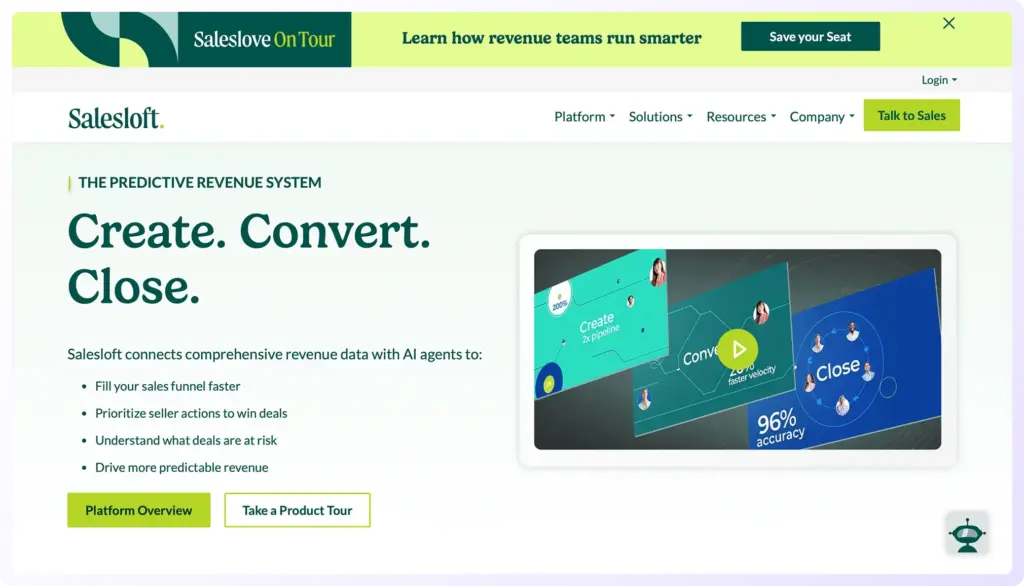
Salesloft is an AI-powered revenue orchestration platform designed to help sales teams manage prospect engagement, monitor deal health, and forecast pipeline performance from a single workspace. Founded in 2011 and serving over 5,000 organizations globally, Salesloft covers the customer lifecycle with tools for cadence management, conversation intelligence, deal intelligence, and forecasting.
Also Read – What Is Salesloft?
Salesloft Pros:
- Comprehensive revenue orchestration with cadence, deal, and forecast modules under one roof
- Strong cadence management with branching logic and step-level analytics
- Advanced conversation intelligence with AI-generated call summaries and topic detection
- Deal intelligence that surfaces buyer engagement patterns and deal risk signals
- Deep integrations with Salesforce, HubSpot, and other major CRMs
Salesloft Cons:
- No parallel dialing or calling infrastructure - just a basic dialer without number health management or connect-rate optimization
- No real-time call coaching at scale - managers can leave feedback post-call, but cannot monitor or whisper to reps during live conversations
- No dedicated email deliverability infrastructure - teams must rely on third-party warm-up and inbox placement tools
- Manual post-call workflows - reps must pause dialing to schedule follow-ups, log notes, and decide next steps
- Built for prospect-level cadences, not account-based engagement across buying committees
- No structured multi-threading - no systematic framework for coordinating outreach across stakeholders within an account
- No built-in contact database or research tools - reps depend on separate data providers for list building
- Opaque, custom-only pricing - no public tiers, making budgeting and procurement difficult for smaller teams
- Heavy admin configuration burden - requires dedicated RevOps resources to maintain cadences, fields, and integrations
- No account progression tracking - no way to monitor accounts through custom pipeline stages
Salesloft Pricing:
Salesloft offers custom pricing only, based on modules - Cadence, Conversations, Deals, and Forecast. Implementation services are priced separately.
Also Read – Salesloft Pricing Guide
Why Explore Salesloft Alternatives?
Salesloft works well for enterprise revenue teams focused on prospect-level cadences and pipeline visibility. But for SDR teams that run high-volume calling motions, operate with tight budgets, or need genuine account-based workflows, the platform creates friction rather than removing it.
The core issues come down to three areas:
Calling is an afterthought. Salesloft has a dialer, but it's not a calling platform. There's no parallel dialing, no number health management, no local presence dialing, and no live coaching infrastructure. Teams that depend on the phone as their primary channel are left to build workarounds or stack additional tools.
Everything after the call is manual. Once a call ends, Salesloft hands the work back to the rep - scheduling follow-ups, logging notes, and deciding next steps all require manual effort. At scale, this creates inconsistency and follow-up failures.
Account-based motions aren't supported. Salesloft cadences target individual prospects. There's no structured way to run multi-threaded outreach across an entire account, track buying committee engagement, or monitor account progression through stages.
If any of these gaps are slowing your team down, the tools below offer more purpose-built solutions.
Also Read – Salesloft Reviews
What Are the Best Salesloft Alternatives & Competitors in 2026?
Here's a quick-reference comparison of the top 10 Salesloft alternatives:
| Tool | Key Features | Pricing | G2 Rating |
|---|---|---|---|
| Klenty | Connect AI dialing, Call Coaching Suite, Account-based outreach, Action AI next-step execution, Multichannel sequences | $35/user/month | 4.6/5 |
| Outreach.io | AI-powered revenue workflow, Sequences, Deal management, Forecasting | Custom pricing | 4.3/5 |
| Apollo.io | Prospect database, Email sequences, Built-in dialer | $49–$99/user/month | 4.8/5 |
| HubSpot Sales Hub | CRM + engagement, Email tracking, Pipeline management | $15–$150+/seat/month | 4.4/5 |
| Gong | Revenue intelligence, Conversation analytics, Deal risk alerts | Custom pricing | 4.7/5 |
| Reply.io | Email sequences, AI personalization, Multi-channel outreach | $49–$89/user/month | 4.6/5 |
| Lemlist | Email outreach, Dynamic personalization, Deliverability tools | $39–$159/month | 4.6/5 |
| Orum | Parallel dialing, High-volume calling, Live floor coaching | $250/user/month | 4.6/5 |
| Groove | Salesforce-native engagement, Activity capture, Flow automation | Custom pricing | 4.6/5 |
| Instantly.ai | Email infrastructure, Domain warmup, Cold outreach at scale | $37–$358/month | 4.9/5 |
1. Klenty
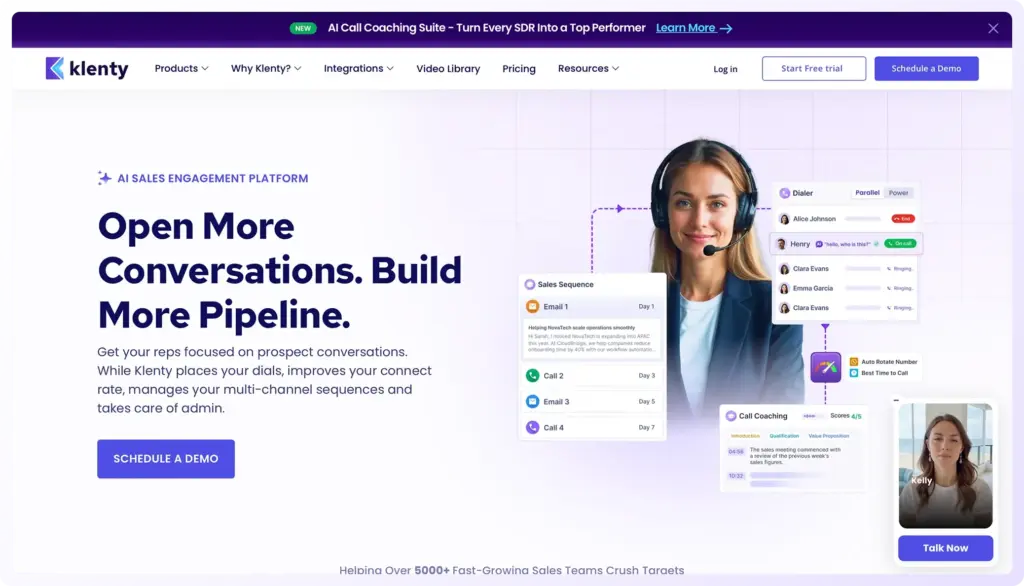
Klenty is a sales engagement and dialing platform built specifically for calling-first SDR teams. Unlike Outreach, which treats calling as an add-on, Klenty is architected around the phone with proprietary infrastructure for number health, connect-rate optimization, and live coaching wrapped inside a full account-based engagement system.
Key Features:
- AI List Builder - Describe your Ideal Customer Profile in natural language and get a pre-validated list of matching accounts in seconds, eliminating manual prospecting and list-building entirely.
- Agentic Cadences - AI agents autonomously research accounts, write tailored 1:1 emails for each prospect, and refresh stale templates with fresh personalization, executing outreach steps without rep involvement.
- AI Account Research - Researches every prospect across 150+ data sources to surface business priorities and build a customized value proposition for each account before a single outreach touch.
- Parallel dialer - Simultaneously connect with 10+ prospects at once, routing reps only to live answers and eliminating time lost to rings, voicemails, and wait time.
- Power dialer - Run through prospect lists automatically across email, calls, and texts, keeping reps in a continuous outreach flow without manual dialing between contacts.
- Connect AI - A four-phase dialing infrastructure that manages number inventory, rotates numbers based on health metrics, applies local area codes, and continuously optimizes connect rates pre-dial, mid-dial, and post-dial.
- AI Call Coaching Suite - Rep 360° gives managers a full view of SDR performance across calls, scores, objections, and activity patterns; Salesfloor lets managers monitor every live call in real time and intervene instantly; AI Battlecards surface competitive intel and objection responses mid-call without reps breaking flow; AI Call Scorecards automatically evaluate every recorded call against talk tracks and flag coaching gaps.
- Action AI - Automatically generates context-aware next steps after every call, so reps never have to pause their dialing flow to manage post-call work.
- Account-based outreach - ICP Account Mapping, Account Action Windows, Account Playbooks, and Account Stages give teams a structured way to run multi-threaded engagement across entire accounts.
- Multichannel Outreach - Email, phone, and SMS sequences with built-in deliverability infrastructure and dedicated sending domains
G2 Rating: 4.6/5
Pricing:
Starting at $35/user/month, with free onboarding and 24×5 support included
Best for: Calling-first SDR teams that need a full sales engagement platform with dialing infrastructure, live coaching, and account-based outreach in one place
2. Outreach.io
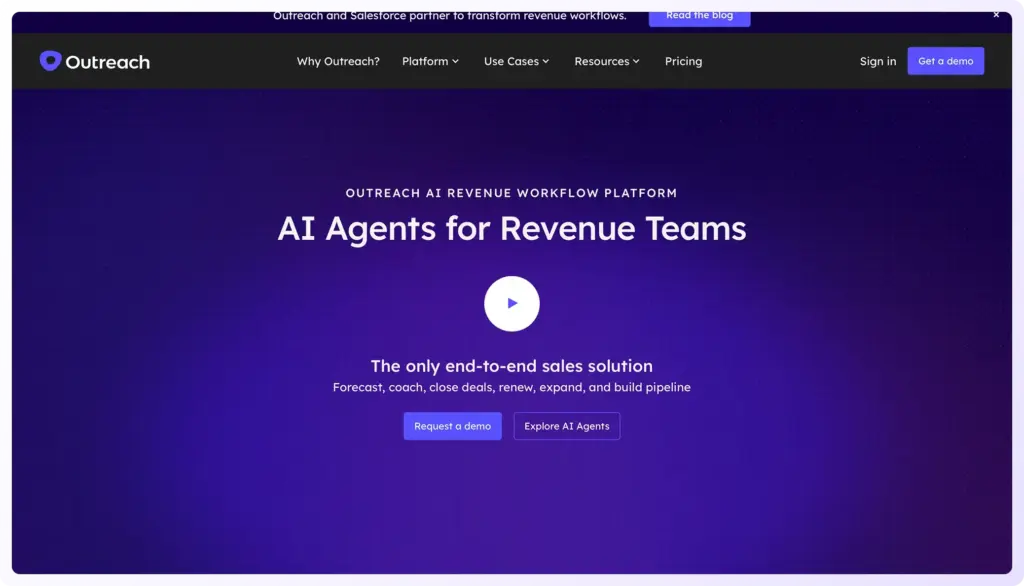
Outreach.io is an AI-powered revenue workflow platform that helps sales teams manage prospecting, engagement, and deal management from a single workspace. It's the most direct Salesloft competitor and serves many of the same enterprise use cases, making it a natural evaluation option for teams moving off Salesloft.
Key Features:
- Sequences - Build and automate multi-step outreach across email, phone, and LinkedIn with conditional logic and step-level analytics
- Deal management - Track deal health, identify risk signals, and surface buyer engagement patterns across active opportunities
- Kaia (AI assistant) - Real-time call transcription, competitor mentions, and post-call summaries powered by AI
- Forecasting - Roll-up forecasting with AI-assisted predictions, deal-level scoring, and scenario modeling
G2 Rating: 4.3/5
Pricing: Custom pricing only, with modular packages for Engage, Call, Meet, Deal, Forecast, and Amplify.
Best for: Enterprise revenue teams that want sequences, deal intelligence, and forecasting under one roof.
3. Apollo.io
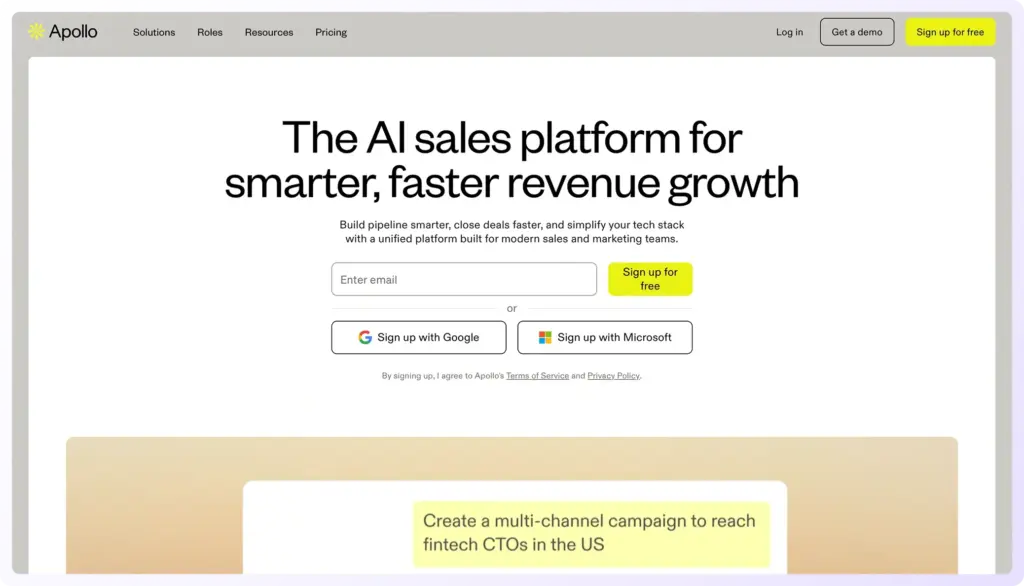
Apollo.io is a prospecting and sales engagement platform that combines a B2B contact database with outreach execution tools, making it appealing for smaller teams that want prospecting and sequencing in one place. It's particularly popular with early-stage sales teams that need to move quickly without a large tech stack.
Key Features:
- B2B contact database - Access to over 275 million contacts with email addresses, phone numbers, and firmographic data, searchable by job title, industry, revenue, and more
- Email sequences - Automated multi-step email cadences with A/B testing, send-time optimization, and performance analytics
- Built-in dialer - Click-to-call functionality with call recording, auto-logging to CRM, and basic power dialing
- AI email personalization - Generate personalized email copy at scale using AI prompts and prospect data from the database
G2 Rating: 4.8/5
Pricing: Free plan available; paid plans from $49/user/month up to $99/user/month.
Best for: Early-stage teams that need a prospect database and outreach sequencing without managing multiple tools.
4. HubSpot Sales Hub
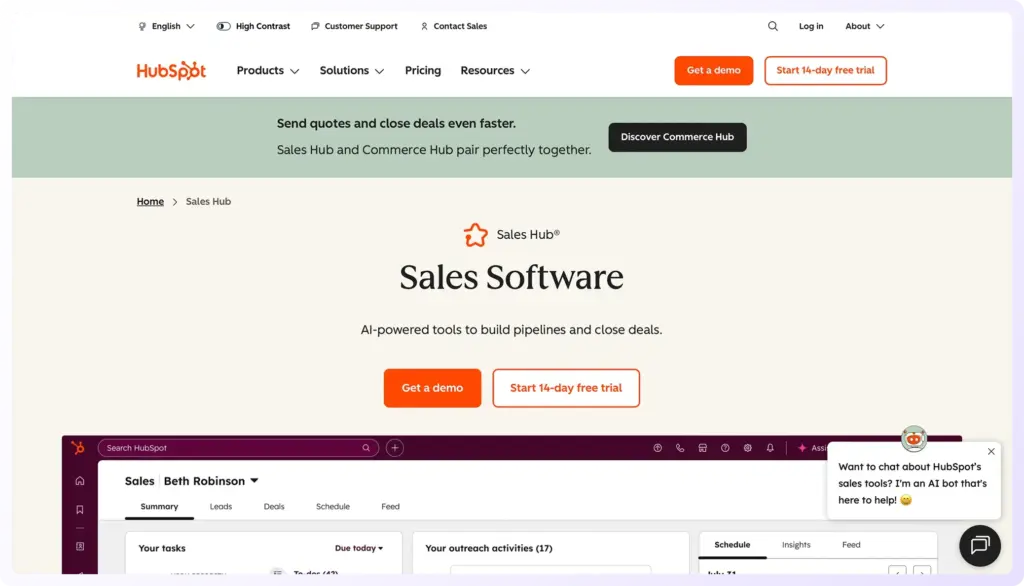
HubSpot Sales Hub is the sales execution layer of HubSpot's broader CRM platform, combining contact management, email sequencing, pipeline tracking, and calling in one place. It's a strong fit for teams already on HubSpot CRM who want engagement tools without switching platforms.
Key Features:
- Email sequences - Automated multi-step email and task sequences that pause when a prospect replies or books a meeting, reducing irrelevant follow-ups
- Pipeline management - Drag-and-drop deal boards with customizable stages, probability tracking, and deal rotation rules
- Calling tool - Built-in VoIP dialer with call recording, transcription, and automatic logging to the CRM contact record
- Meeting scheduler - Shareable booking links that sync with rep calendars and auto-create deal records on conversion
G2 Rating: 4.4/5
Pricing: Free plan available; paid tiers from $15/seat/month to $150+/seat/month depending on features.
Best for: Teams already on HubSpot CRM that want sales engagement without switching platforms.
5. Gong
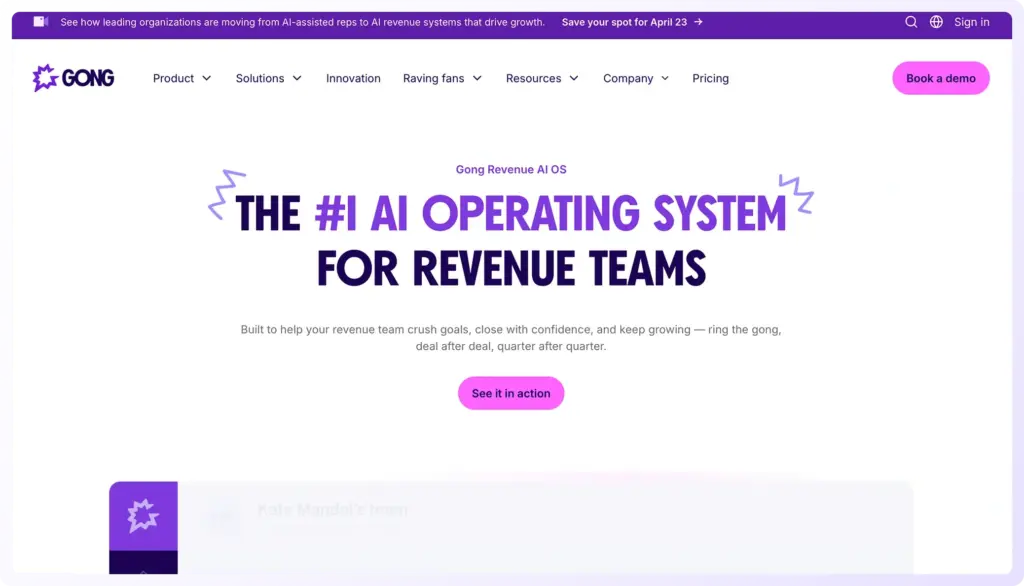
Gong is a revenue intelligence platform that captures and analyzes every customer interaction - calls, emails, meetings - to give sales leaders visibility into what's working across deals, reps, and pipeline. It's less of a sequencing tool and more of an insight layer for teams that want to understand and replicate top-rep behavior.
Key Features:
- Conversation intelligence - Automatically records, transcribes, and analyzes sales calls with AI-generated summaries, topic detection, and sentiment analysis
- Deal intelligence - Tracks buyer engagement across every touchpoint, surfaces risk signals, and flags deals at risk of slipping before they do
- Coaching workflows - Managers can leave timestamped call feedback, create scorecards, and share call snippets for team-wide coaching libraries
- Forecast intelligence - AI-driven pipeline predictions based on actual rep activity and engagement data rather than manual CRM updates
G2 Rating: 4.7/5
Pricing: Custom pricing.
Best for: Sales leaders who want deep visibility into rep performance, deal health, and pipeline risk through conversation intelligence.
6. Reply.io
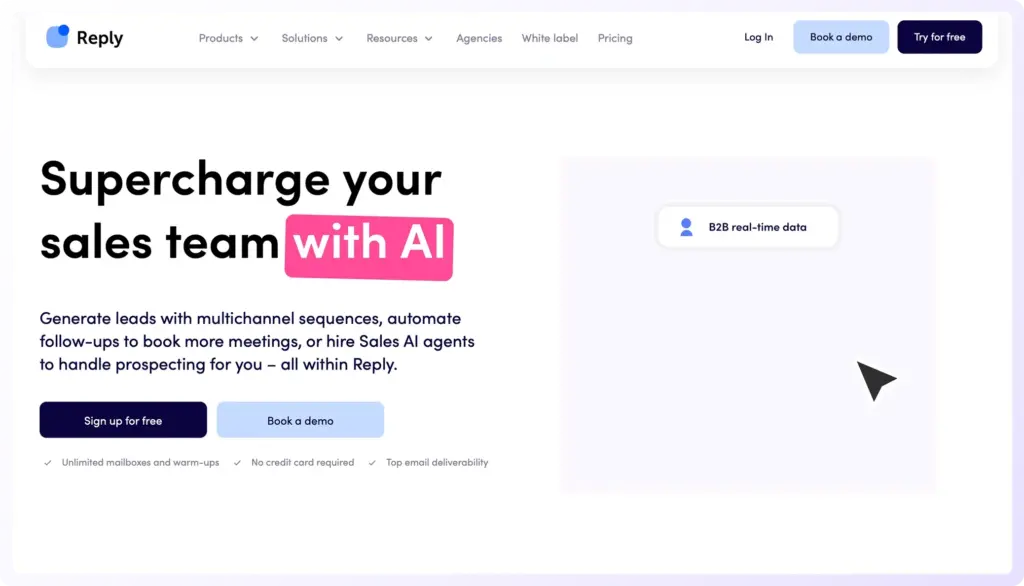
Reply.io is a multichannel sales engagement platform built around AI-powered email personalization and automated outreach sequences. It appeals to teams that want to run high-volume email programs with personalization at scale and connect those efforts to phone, LinkedIn, and WhatsApp touchpoints.
Key Features:
- AI email personalization - Generate personalized opening lines and email variations at scale using prospect data, LinkedIn activity, and company news
- Multichannel sequences - Coordinate automated outreach across email, phone calls, LinkedIn messages, SMS, and WhatsApp from a single sequence builder
- Reply AI SDR - An AI sales development rep that manages inbound lead responses, books meetings, and handles basic objections autonomously
- Email deliverability tools - Built-in email warm-up, spam testing, and health monitoring to protect sender reputation
G2 Rating: 4.6/5
Pricing: $49–$89/user/month depending on plan; agency and custom pricing also available.
Best for: Teams running high-volume multichannel outreach with AI-driven email personalization at scale.
7. Lemlist
Lemlist is an email outreach platform known for its dynamic personalization capabilities - letting teams insert personalized images, video thumbnails, and landing pages into cold email sequences at scale. It's a popular choice for teams prioritizing email deliverability and creative differentiation in the inbox.
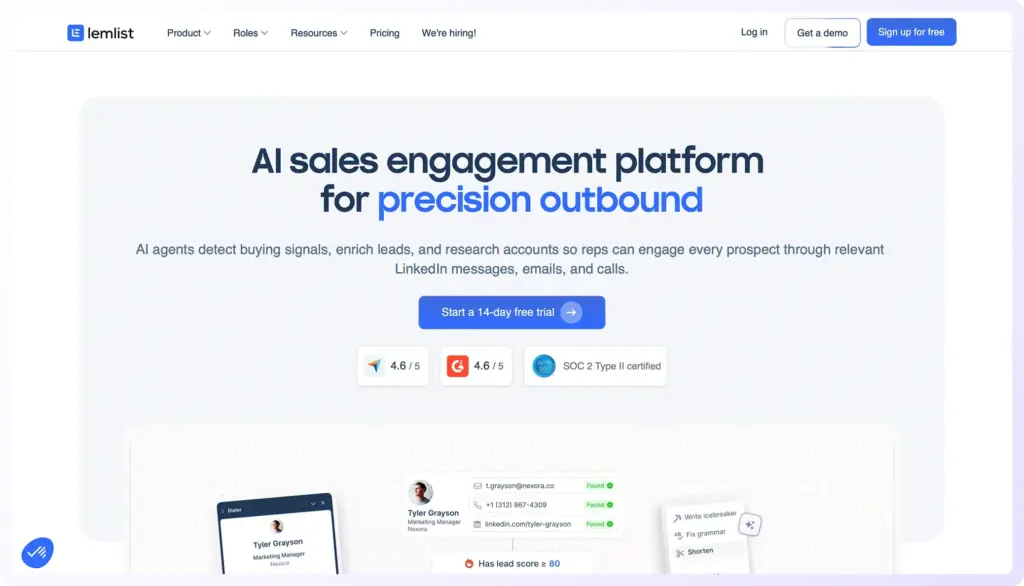
Key Features:
- Dynamic image personalization - Automatically insert prospect-specific text, logos, or screenshots into email images to increase reply rates
- Email warm-up (lemwarm) - Automated domain and mailbox warm-up network that gradually builds sender reputation before campaigns launch
- Multichannel sequences - Combine email, LinkedIn visits, LinkedIn messages, and cold calls into a single automated sequence
- Deliverability monitoring - Real-time spam score tracking, inbox placement tests, and alerts when sender health degrades
G2 Rating: 4.6/5
Pricing: $39–$159/month depending on plan; free trial available.
Best for: Teams that want creative, highly personalized cold email campaigns with strong deliverability controls.
8. Orum
Orum is a parallel dialing platform built to help outbound sales teams dramatically increase live conversations per hour. It automates the manual parts of high-volume calling - dialing, voicemail detection, and disposition logging, while adding a virtual salesfloor experience that keeps remote teams energized and accountable.
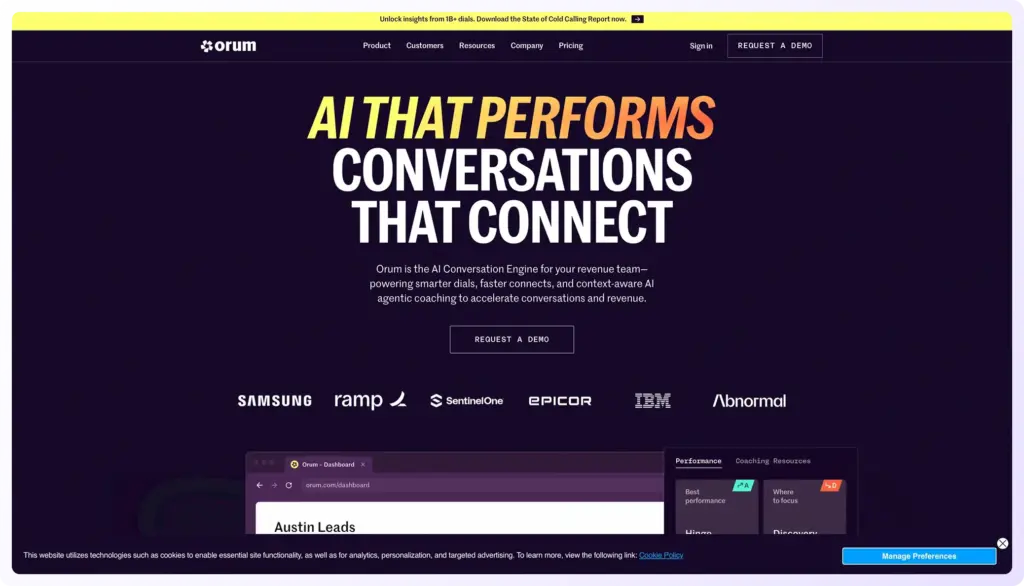
Key Features:
- Parallel dialing - Dial multiple numbers simultaneously and connect reps only when a live person picks up, eliminating time spent waiting on rings and voicemails
- AI voicemail detection - Automatically detects voicemails with high accuracy and drops pre-recorded messages without requiring rep intervention
- Live salesfloor - A shared virtual environment where managers can monitor live calls, listen in, whisper to reps, and track team performance in real time
- Call dispositions and auto-logging - Reps disposition calls with one click; outcomes sync automatically to Salesforce and other connected CRMs
G2 Rating: 4.6/5
Pricing: Starting at $250/user/month (Launch plan); custom pricing for larger teams.
Best for: Outbound teams whose primary goal is maximizing live conversations per hour through parallel dialing.
9. Groove
Groove is a Salesforce-native sales engagement platform designed for revenue teams that run their operations primarily inside Salesforce. Because it's built directly on the Salesforce platform rather than sitting alongside it, Groove eliminates the data sync issues and activity capture gaps that commonly affect other engagement tools.
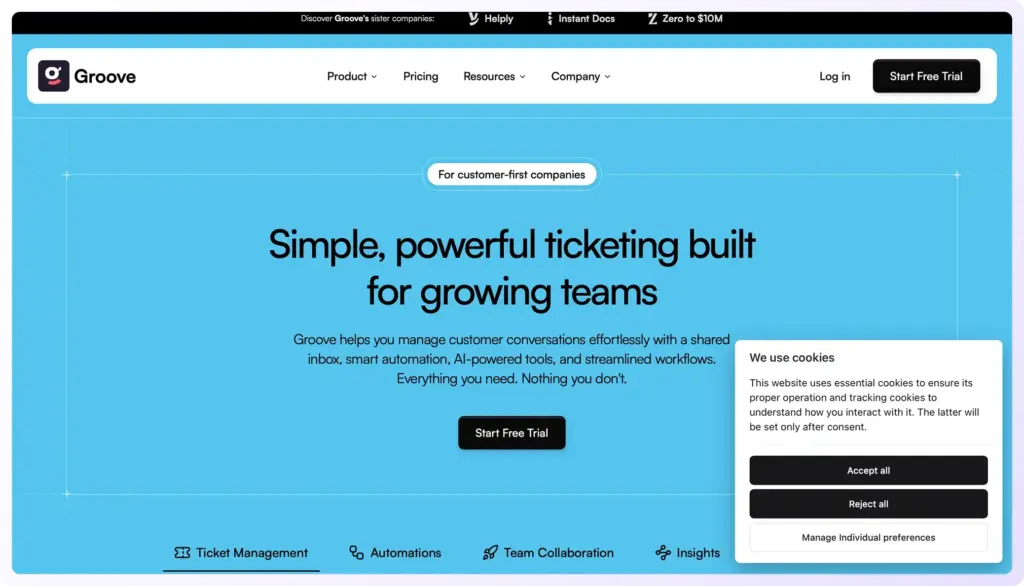
Key Features:
- Salesforce-native architecture - All activity - emails, calls, tasks, meetings - writes directly to Salesforce records in real time with no sync delays or data gaps
- Flow automation - Build multi-step sales sequences (Flows) that can be triggered manually, by rep action, or by Salesforce field changes and workflow rules
- Omnichannel outreach - Manage email, phone, LinkedIn, and direct mail steps from a single sequence builder integrated with the Salesforce record
- Auto-capture - Automatically logs emails, calendar events, and call activity to the correct Salesforce objects without rep manual entry
G2 Rating: 4.6/5
Pricing: Custom pricing only.
Best for: Salesforce-heavy revenue teams that need native activity capture and sequence automation without sync issues.
10. Instantly.ai
Instantly.ai is an email outreach platform built for teams running cold email at a significant scale. Its core strength is the managed sending infrastructure - teams can connect unlimited sending accounts, warm them up automatically, and run large-volume campaigns without damaging deliverability.
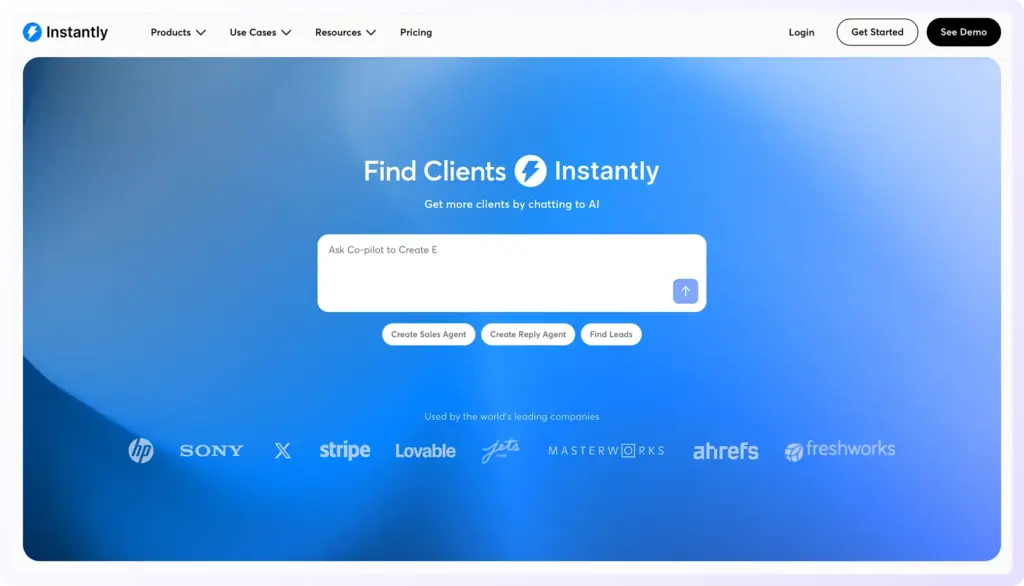
Key Features:
- Unlimited sending accounts - Connect and manage multiple email accounts across domains with centralized campaign management and rotation logic
- Automated email warm-up - Every connected mailbox participates in an AI-driven warm-up network that builds and maintains sender reputation automatically
- Campaign builder - Build email sequences with conditional branching, A/B variant testing, and personalization variables pulled from uploaded prospect lists
- Unibox (unified inbox) - Manage replies from all connected inboxes in a single interface, with AI-suggested reply labels and one-click response drafts
G2 Rating: 4.9/5
Pricing: $37–$358/month depending on plan; Hypergrowth and Light Speed tiers available for high-volume senders.
Best for: Teams running large-scale cold email campaigns across multiple domains who need managed sending infrastructure.
Why Klenty Stands Out as the Best Salesloft Alternative
Both Salesloft and Klenty are built for B2B sales teams running structured outreach programs. Both offer cadences, CRM integrations, and multi-channel capabilities. But the comparison breaks down quickly when you look at what calling-first SDR teams actually need day-to-day.
Salesloft treats calling as an add-on. Klenty is built around it.
Klenty has Connect AI - a proprietary four-phase infrastructure that manages number inventory per rep, selects optimal call windows based on prospect email activity and timezone, rotates numbers based on health metrics, applies local area codes, and continuously monitors number health post-dial. The result is a meaningfully higher connect rate without reps manually managing any of it.
Klenty doesn't leave reps stranded after the call ends.
Klenty's Action AI listens to the conversation and automatically generates the right next action: a follow-up call, a draft email, a LinkedIn message. Reps never have to break their dialing flow to manage post-call work.
Klenty is built for accounts, not just prospects.
Klenty gives teams ICP Account Mapping to build target lists by describing their ideal customer in natural language, Account Action Windows to control outreach velocity by account stage, Account Playbooks triggered by buying signals, and Account Coverage Analysis to identify multi-threading gaps across the buying committee.
Klenty coaches reps while calls are happening.
Klenty's AI Battlecards surface the right response to prospect objections during the call. Salesfloor lets managers monitor live conversations and whisper guidance in real time. AI Call Scorecards evaluate every call against talk tracks automatically. The coaching infrastructure in Klenty is woven into how the platform works.
Also Read – Salesloft vs Klenty
Conclusion
Both Salesloft and Klenty give you multichannel outreach and a dialer. But Klenty gives you the infrastructure to make those dials actually connect, the coaching tools to make every rep better on every call, and the account-based framework to turn those conversations into pipeline systematically.
You get Connect AI to fix your connect rate, a full Call Coaching Suite to coach reps in real time at scale, parallel and power dialers to increase daily call volume, and account-level engagement tools to make sure every buying committee conversation is tracked and followed through.
- You'll get a 14-day free trial to explore all of Klenty's features with a dedicated account manager, so that you can make a well-informed decision.
- Choose transparent, affordable plans, starting at just $35/user/month, so you never pay for features you don't need.
- Experience end-to-end customer support: free onboarding, 24x5 live chat, proactive deliverability help, and regular strategy reviews, all included, no hidden fees.
- Get an easy-to-use interface built for productivity, so your reps can launch campaigns, sync with any major CRM, and start booking meetings almost instantly.
Azeus Convene , a board management software company, needed to cut IT spend during a global recession without disrupting its sales workflows. Their reps had used Outreach.io before, but found they could get the same sales engagement value at a much more affordable price. The team chose Klenty to keep costs low while still running sophisticated outbound.
With Klenty, they booked more meetings with multi-channel outreach, increased responses through highly personalized touchpoints, and saved hours every week by removing CRM admin work. Advanced capabilities, competitive pricing, and strong customer support helped them reduce software costs without compromising sales performance.
“I’m a big fan. We get an enormous amount of value. In comparison with the market, whether it be Salesloft or Outreach, you are priced well enough that it is a simple decision.”
Ready to turn every call into a pipeline opportunity?
Klenty gives your SDR team the dialing infrastructure, AI-powered follow-ups, and account-based workflows to convert conversations into closed deals, without the manual overhead. Schedule a Demo.
Frequently Asked Question - Salesloft Alternatives
1. Why would a sales team look for Salesloft alternatives?
2. What features should you prioritize in a Salesloft alternative?
3. Does Klenty solve the common problems of Salesloft?
4. Is switching from Salesloft to Klenty difficult?
5. How do I know which Salesloft alternative is right for my team?
About the Author